
Looking for a Mexican name for a boy? You are probably picturing Santiago or Diego, and both are strong picks. The catch is that the most popular Mexican boy names are also the most popular names everywhere else in the West, so choosing one barely registers as Mexican. This guide goes past the obvious five, explains where the names come from, and shows you how a name reads inside a full Mexican name, because that is where the tradition actually lives.
In this guide
- What “Mexican name” actually means
- The names Mexican parents choose most
- Classic Spanish names with real history
- Short names that are easy to say in English
- Old Spanish names you rarely hear in the US
- Names rooted in Mexico’s Indigenous languages
- Two-part names and how they are used
- How to choose a name that fits your family
- Frequently asked questions
- Final thoughts
What “Mexican name” actually means

Here is what surprises most people. A Mexican name is not one word. It is a structure.
A typical Mexican name carries four parts: a first given name, a second given name, the father’s surname, and the mother’s surname. You normally hear just the first given name and the first surname, so a boy whose full name is Santiago Andrés Ruiz Delgado goes by Santiago Ruiz. Mexico follows the same two-surname model used across the Spanish-speaking world, and until December 2025 the order was fixed as paternal then maternal. A Supreme Court decision that December let parents pick the order by mutual consent and made it easier to pass down compound surnames.
That structure changes how you shop for a first name. A name like Salvador does not stand alone in Mexico the way it does in English. It gets paired, and two given names are ordinary enough that many Mexican boys grow up with them. A second name is often where a family honors a saint, a grandparent, or a saint’s day. The child is usually called by one given name in daily life, so the pairing matters less than you would think, but it is real.
Two spelling habits come with the language. Male given names generally end in -o, like Rodrigo, and female names generally end in -a, like Andrea. It is a tendency rather than a law, and exceptions exist, but it is a genuine signal of how Spanish marks gender.
The names Mexican parents choose most

Start with real data, because it shows what sounds current in Mexico right now.
Mexico’s national statistics agency, INEGI, publishes registered births data that includes given names. In figures covering registrations from 2017 through 2020, the most common male names were Santiago, with 46,943 people registered, then Mateo at 35,482, Sebastián at 25,554, Leonardo at 23,687, and Matías at 21,953. Reporting on those figures listed Emiliano, Diego, Miguel Ángel, Daniel, Alexander, Alejandro, Jesús, and Gael behind them.
The list barely moved. When INEGI’s 2022 data came out, the same names still led the table, with Santiago, Mateo, Sebastián, and Leonardo holding their spots. A name that stays popular for years is one Mexican families like hearing called across a courtyard, not one that spiked for a single season.
How narrow the pool is, matters too. Roughly 400,000 distinct names were registered in Mexico in one year, but only about 160,000 belonged to boys. Names repeat.
A separate view from the parent community shows where things are heading. BabyCenter’s survey of Mexican parents found Santiago first again in 2025, pushed the letter A to the most common first initial across the top 100 names for both sexes, and flagged Noé and Adán as standout modern picks. It also spotted parents leaning toward near-duplicates, pairing Leo with León, Dariel with Daniel, or Leonel with Leonardo. That is a useful trick when you want something current without going truly unusual.
Classic Spanish names with real history

These are the workhorses. Grandparents recognize them, they survive spelling changes, and each one carries a meaning you can explain.
- Santiago. Spanish for Saint James, from santo, saint, plus the older form Yago. The most registered boy’s name in Mexico.
- Mateo. Spanish for Matthew, a Hebrew name carried through Greek and Latin.
- Sebastián. From Latin Sebastianus, meaning a person from Sebaste, a city in Asia Minor.
- Leonardo. The Spanish form of the Germanic Leonard, built from elements meaning brave lion.
- Matías. The Spanish form of Matthias, from a Hebrew name meaning gift of God.
- Salvador. From Latin Salvator, meaning savior. Deeply religious here, much less common in English.
- Rodrigo. Spanish for Roderick, from a Germanic name meaning famous ruler.
- Gonzalo. Descends from the medieval Gundisalvus, a Latin form combining battle and halo.
- Emiliano. Spanish form of the Roman family name Aemilianus, carrying the idea of striving to excel.
- Tadeo. Spanish for Thaddeus, from an Aramaic name meaning brave heart.
- Alejandro. Spanish for Alexander, from the Greek for defender of mankind.
- Gael. Comes from the Gaelic term for the Gaels, the people who speak Gaelic languages.
- Miguel. Spanish, Portuguese, and Galician form of Michael.
- Ángel. From Latin Angelus, the heavenly messenger.
- Rafael. The Spanish form of Raphael.
- Esteban. Spanish for Stephen, from a Greek name meaning crown.
- Tomás. From the Aramaic Te’oma, meaning twin.
- Daniel. From Hebrew, meaning God is my judge.
Short names that are easy to say in English
Short names travel well. They get said correctly the first time and they never force anyone to learn a new spelling.
- Diego. A Spanish name, possibly a shortened form of Santiago, recorded in medieval Latin as Didacus.
- Héctor. The Latinized Greek Hektor, built from a root meaning to hold fast.
- Julio. Spanish for Julius. Everyone gets it right on the first try.
- Joaquín. The Spanish form of Joachim. Keep the accent or drop it, both are understood.
- Ignacio. Spanish for Ignatius, shortened to Nacho or Nacio in daily life.
- Facundo. From Latin Facundus, meaning eloquent. Formal and entirely usable.
- Rubén. The Spanish form of Reuben, from a Hebrew name meaning behold, a son.
- Sergio. Spanish for Sergius, an ancient Roman name. Energetic and unusual in English without being strange.
- Adrián. The Spanish form of Hadrianus. Familiar in Mexico, rarely heard in the US.
- Bruno. Short and Germanic in origin.
- Mauricio. Spanish for Mauritius. Warm, and almost unknown in the US.
- Armando. Spanish form of Herman, built from army and man.
- Darío. The form of Darius used in Spanish, an old Persian royal name.
- Aquiles. Spanish for Achilles, from Greek, meaning grief or the name of a hero.
- Nicanor. From Greek nike, victory, and a word for the victor.
- Teodoro. Spanish for Theodoros, meaning gift of God.
These names do the most work for you. A good Mexican boy name in the US sounds natural to a Spanish speaker while still being rare enough that an American kid notices. Adrián, Silverio, and Mauricio all clear that bar.
Old Spanish names you rarely hear in the US
These are traditional Spanish and saint’s names from Mexico’s Catholic naming heritage that have faded out of everyday use in America. Most carry religious meaning, so check how the faith reads to you before committing.
- Silverio. Spanish form of Silverius, from the Latin word for silver.
- Genaro. Spanish form of Januarius, a Roman saint’s name.
- Arnulfo. Spanish form of Arnulf, a Germanic name built from eagle and wolf.
- Aurelio. Spanish form of Aurelius, from the Latin word for golden.
- Calixto. Spanish form of Calixtus, from a Greek root meaning beautiful.
- Ponciano. Spanish form of Pontian, from Latin pons, bridge.
- Gerardo. Spanish form of Gerard, meaning spear and brave.
- Romualdo. Spanish form of Romuald.
- Eduardo. Spanish and Portuguese form of Edward, from wealth and guardian.
- Alfonso. From Gothic elements meaning noble and ready.
- Bonifacio. Spanish and Italian form of Boniface, from a root meaning good fate.
- Amadeo. Spanish form of Amadeus, meaning lover of God.
- Onofre. Spanish form of Onuphrius, a saint’s name.
- Macario. Spanish form of Macarius, from Greek makarios, blessed.
- Eleuterio. Spanish and Italian form of Eleutherius.
- Dimas. Spanish and Portuguese form of Dismas, a biblical figure.
- Gervasio. Spanish and Italian form of Gervasius.
- Cándido. Italian form of Candidus, from the Latin word for white.
- Primitivo. Spanish form of Primitivus.
- Hermenegildo. A Visigothic name meaning great and immense, plus tribute.
- Godofredo. Spanish and Portuguese form of Godfrey, meaning peace of God.
- Toribio. Spanish form of Turibius, borne by three Spanish saints.
- Pantaleón. From Greek elements meaning all and lion.
Names rooted in Mexico’s Indigenous languages
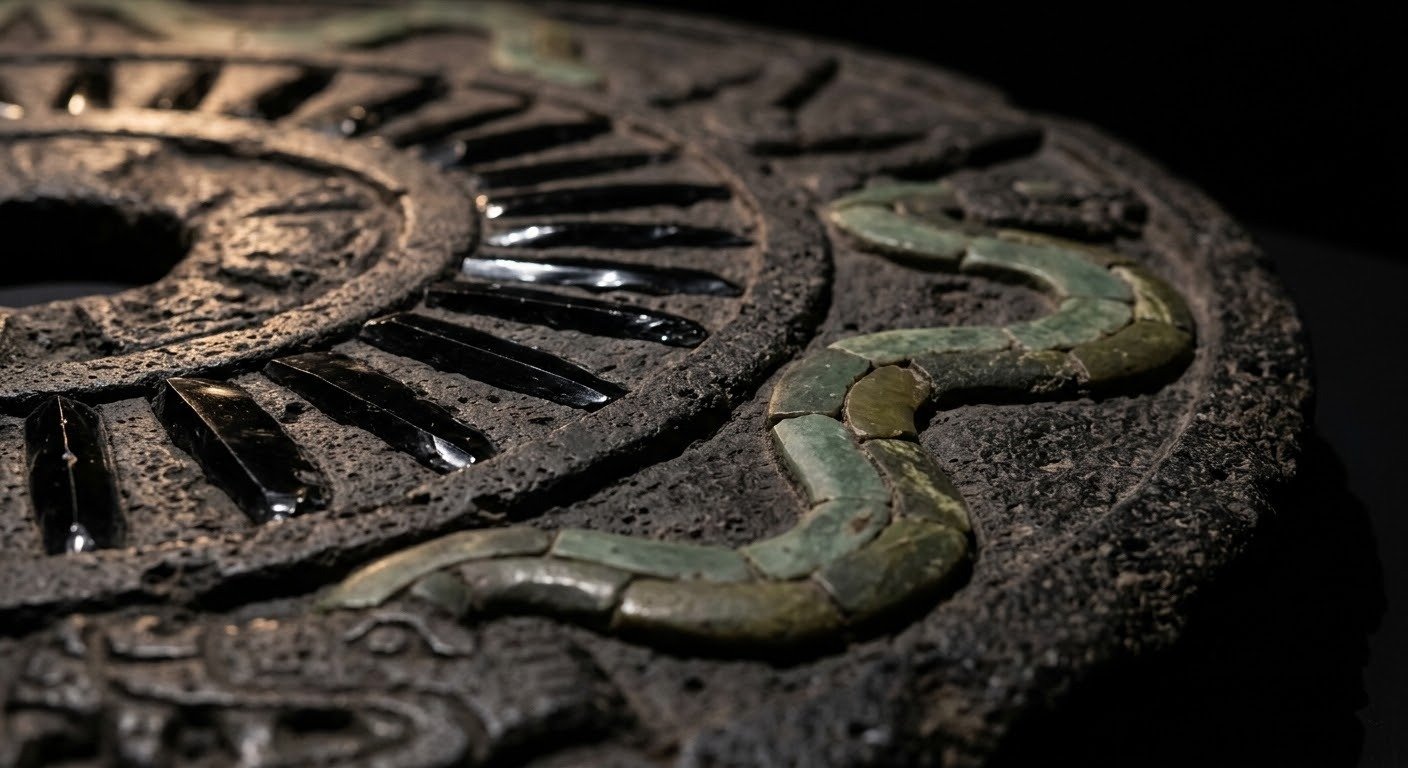
Now for the part most name lists skip. Nahuatl, the language of the Aztecs, is still spoken by millions of people in Mexico and across the diaspora, and it supplies names with an unmistakable local sound. These are cultural names, not current favorites, and choosing one carries an expectation that you know where it comes from.
- Cuauhtémoc. Means descending eagle in Nahuatl, from cuāuhtli, eagle, and temo, descend. The last Aztec emperor, captured and executed by Hernán Cortés in 1525.
- Itzcoatl. Means obsidian snake, from itztli, obsidian, and cōātl, snake. Fourth king of Tenochtitlan and first emperor of the Aztec Empire.
- Motecuhzoma. Means he becomes angry like a lord. Two Aztec emperors bore it.
- Quetzalcoatl. Means feathered snake, from the quetzal bird’s feather plus snake, a deity of the Aztec and other Mesoamerican traditions.
- Tonatiuh. Means sun, and was the name of the Aztec sun god.
- Metztli. Means moon, the name of the Aztec moon god. Usable for a boy or a girl.
- Ehecatl. Means wind, the Aztec wind god.
- Tlaloc. The Aztec god of rain and fertility.
- Tonalli. Means day, the warmth of the sun.
- Yolotl. Means heart or spirit.
- Xolotl. A dog-headed god who guided the dead, and a name still in use.
The individual name entries trace each meaning back to the Nahuatl Dictionary maintained at the University of Oregon. Read one before you pick it. A Nahuatl name taken on because it sounded exotic is a small failure of respect.
Two-part names and how they are used
Mexican boys are often given two given names, and this is where a list turns into a real decision.
Combinations turn up in the official top twenty, including Miguel Ángel, Luis Ángel, and José Ángel, and BabyCenter’s 2025 survey found a few among boys, including Gael Alejandro, Liam Santiago, and Luis Ángel. Pairing a name is not a quirky choice in Mexico. It is how the tradition works.
One surprise is María. It is almost reserved for girls, but a boy’s formal name can include it, as in José María. A name like María José runs the other way, being a girl’s name holding a boy’s. Both are normal, and the customs are documented in detail if you want the detail.
Diminutives matter too, since a formal name gets shortened in daily use. Pick one you can shorten without landing somewhere awkward. Chema comes from José María, Goyo from Gregorio, and Kike from Enrique. Hear the nickname version before you commit.
How to choose a name that fits your family
Run any candidate through these five checks.
Say it out loud in Spanish. If you are not a Spanish speaker, ask one to say it. Cuauhtémoc, Joaquín, and Itzcoatl get mangled in English, and the last two change meaning depending on the spelling a listener assumes.
Test it in a full name. Add two surnames the Mexican way, as in Mateo Emiliano Ruiz Delgado. Some names that feel heavy alone turn out fine in four parts, and some that feel charming alone turn clunky.
Pick a meaning you can actually defend. Every name here carries one, and the Spanish-language reference entries show where each one starts. Choose a meaning you would be glad to explain at a family gathering.
Check for collision at home. Mateo, Santiago, Diego, and Leonardo are top-tier names in the US too. If you want your son’s name to read as Mexican in Los Angeles, none of them will. Adrián, Silverio, and Mauricio do more work.
Decide how Mexican you want it to sound. A Biblical Spanish name like Salvador reads Mexican. A Nahuatl name like Cuauhtémoc reads Mexican and Indigenous, which is a stronger statement. Both are legitimate, but they are different statements, and better to pick on purpose than by accident.
Frequently asked questions
What is the most popular Mexican boy name?
Santiago, by a wide margin. Mexico’s national statistics agency reported 46,943 people registered under it from 2017 to 2020, ahead of Mateo at 35,482. A separate 2025 parent survey also placed Santiago first.
What is a unique Mexican boy name that is not overused?
Silverio, Macario, and Mauricio are traditional in Mexico and rare in the US, which is the sweet spot. If you want more distinctiveness, Tlaloc, the Aztec god of rain, works, but it reads as cultural rather than everyday.
Are Nahuatl names common in Mexico?
Not as given names. Nahuatl is spoken widely and the names carry real cultural weight, but Spanish Biblical and saint names dominate current birth records. Expect to explain the name every time, and be ready for that.
Why do so many Mexican boys have two first names?
It comes from Catholic baptism practice. Children were traditionally given a name tied to a saint, and families often added a second. The child was usually called by one of them day to day, so the pair is tradition rather than bureaucracy.
Do Mexican boys use a mother’s surname?
Yes. A Mexican name normally carries two surnames, the father’s first and then the mother’s. Until December 2025 that order was fixed, and a Supreme Court decision that month now lets parents choose it by mutual consent.
What Mexican name means something about strength?
Leonardo, from Germanic elements meaning brave lion, is the clearest. Tadeo carries the idea of a brave heart, and Nicanor comes from the Greek word for victory. If you want a straight translation of brave, Leonardo is the one.
Is Salvador a common Mexican name?
Yes, and it is one of the more distinctly Mexican names here, since it is far less common in English-speaking countries. It comes from the Latin word for savior and carries religious weight many Mexican families choose deliberately.
Which Mexican boy names are hard to pronounce in English?
Cuauhtémoc, Joaquín, and Itzcoatl all get mangled, and the last two shift meaning depending on the spelling a listener assumes. Pick a name whose correct pronunciation you can enforce, or one that survives a wrong guess.
Final thoughts
The honest truth is that most famous Mexican boy names are also famous American boy names. That is not really a problem, because a Mexican name lives in the whole structure rather than in one word. Get the full four-part name right, choose a first name whose meaning you can defend, and borrow from Nahuatl only when you can explain where it came from. Get one of those three right and you are not borrowing a stereotype.