

If someone told you the Coast Guard limits a boat name to 33 characters, that advice is wrong, and it has been wrong for years. Plenty of people search for a “ship name generator for 3” because they need a name that fits a space they do not control: a three-letter mark on a transom, a three-word name to match a hull, or initials that have to work as a real word on a radio call.
Those are three different problems, and only one of them is about a generator. This guide covers the Coast Guard naming rules as they stand today, three-word names worth stealing, short three-letter names that sound like ships rather than abbreviations, how to check whether a name is free, and the phonetic traps that get names rejected.
In this guide
- What three means in a ship name
- The Coast Guard rules you have to clear
- Three-word ship names
- Short three-letter ship names
- Names built from three initials
- How to check if a name is available
- How to make a name survive the VHF radio
- Frequently asked questions
- Wrapping up
What three means in a ship name

The phrase you searched is doing too much work. It reads like a tool request, but the people typing it have a constraint, not a tool shortage.
Three letters total. One short word, or a three-letter hull mark. This is the tightest constraint and the hardest one to make sound good. Most three-letter strings that pass as codes do not pass as names.
Three words. Exactly three words in the name. This is the most forgiving constraint, and the easiest to satisfy well, because a boat can carry a name with room to spare.
One correction first, since it wastes a lot of people time. If you want a three-letter code for a ship, the aviation systems are not the place to look. ICAO codes are assigned to aircraft types, airlines, and airports. IATA codes are airline and airport designators. Neither issues ship identifiers. What ships get is an IMO number, the letters “IMO” followed by seven digits, and it stays with the ship for life even after a rename, according to the IMO’s ship identification number scheme. A ship’s name is never required to be three letters. Any site offering a three-letter ship code is mixing up aviation with shipping.
The Coast Guard rules you have to clear
A documented vessel needs a name, and the Coast Guard sets the terms. The governing rule is short enough to read in a minute, and it lives in 46 CFR 67.117, the section on vessel name designation.
The owner designates the name on the Application for Initial Issue, Exchange, or Replacement of Certificate of Documentation, or Redocumentation, which is form CG-1258, submitted to the National Vessel Documentation Center. Once documented, the name cannot change without prior approval from the Director of that center.
The name must meet three conditions:
- It must be composed of letters of the Latin alphabet or Arabic or Roman numerals.
- It may not be identical, actually or phonetically, to any word or words used to solicit assistance at sea.
- It may not contain, or be phonetically identical to, obscene, indecent, or profane language, or to racial or ethnic epithets.
The second rule trips people up, and it is narrower than it sounds. The words used to solicit assistance at sea are the standard maritime distress calls, so a name that sounds like one is out. Read it as a safety rule rather than a censorship rule.
The third rule is broader than it looks because of the phrase phonetically identical. The regulation does not say a name may not contain a word. It says the name may not be phonetically identical to those categories. A name that alludes to something crude is a judgment call the Coast Guard makes. A name that literally sounds like a slur, however mild the spelling, is the case the rule was written for. Assume the check gets done out loud, over a phone line, by someone who has never heard your inside joke.
Names validly documented before January 1, 1994 get a pass on the content rules until the owner elects a change. That is why you see older boats with names nobody would pick today.
Then there is the part that shapes your choices more than the rule text does: marking. Under 46 CFR 67.123, the name must be marked on a clearly visible exterior part of the port bow, the starboard bow, and the stern, with the hailing port on the stern. A square-bow vessel marks the name on the bow in a way that avoids obliteration, with the name and hailing port together on the stern. A boat documented exclusively for recreation marks both together on one clearly visible exterior part of the hull. All of it in durable, clearly legible Latin letters or Arabic or Roman numerals, no less than four inches high.
Four inches is not decorative. A three-letter name painted small looks like a scuff from the dock. If you go short, make the lettering bigger.
Three-word ship names

Three words give you the most to work with. Each word should carry its own weight, since a weak middle word makes the whole name sag. Read these out loud before you commit.
Weather and water:
- Morning Star Chaser
- Salt Wind Keeper
- Storm Light Runner
- Blue Current Dancer
- Gale Watch Morning
- Harbor Rain Singer
- Tidewater Compass Rose
- North Sea Lantern
- Squall Line Poet
Hard-won places:
- Cape Hatteras Memory
- Dry Dock Aristocrat
- Rocky Point Ferry
- Salt Marsh Passage
- Lighthouse Keeper Rest
- Grand Banks Morning
- Frozen Atlantic Blue
- Bodega Bay Voyager
Work and tools:
- Copper Line Sounder
- Iron Hull Covenant
- Oakum and Rope
- Diesel and Saltwater
- Canvas and Compass
- Anchor Chain Singer
- Brass Fitting Wake
- Rope Walk Artisan
- Keel and Diesel
Family, told straight:
- Grandma’s Channel Marker
- Uncle Ray’s Fishing
- Father’s Lathe Bench
- Mother’s Garden Route
- Sibling Rivalry Sport
- Daughter’s First Sail
- Grandpa’s Wood Stove
- Family Ledger Homeward
- Cousins Chart Room
Stubbornness and humor:
- Absolutely Not Afraid
- Just One More Harbor
- Reel In The Net
- Bail Out At Noon
- Holding On To Helm
- Motor Has No Opinion
- Bilge Of My Own
- Anchor Aweigh Anyway
- All Hands Overtime
These are three words by count, not by hyphenation. “Iron Hull Covenant” is three words. If you want something closer to a phrase, pick words that each mean something and let the meaning do the connecting.
Short three-letter ship names
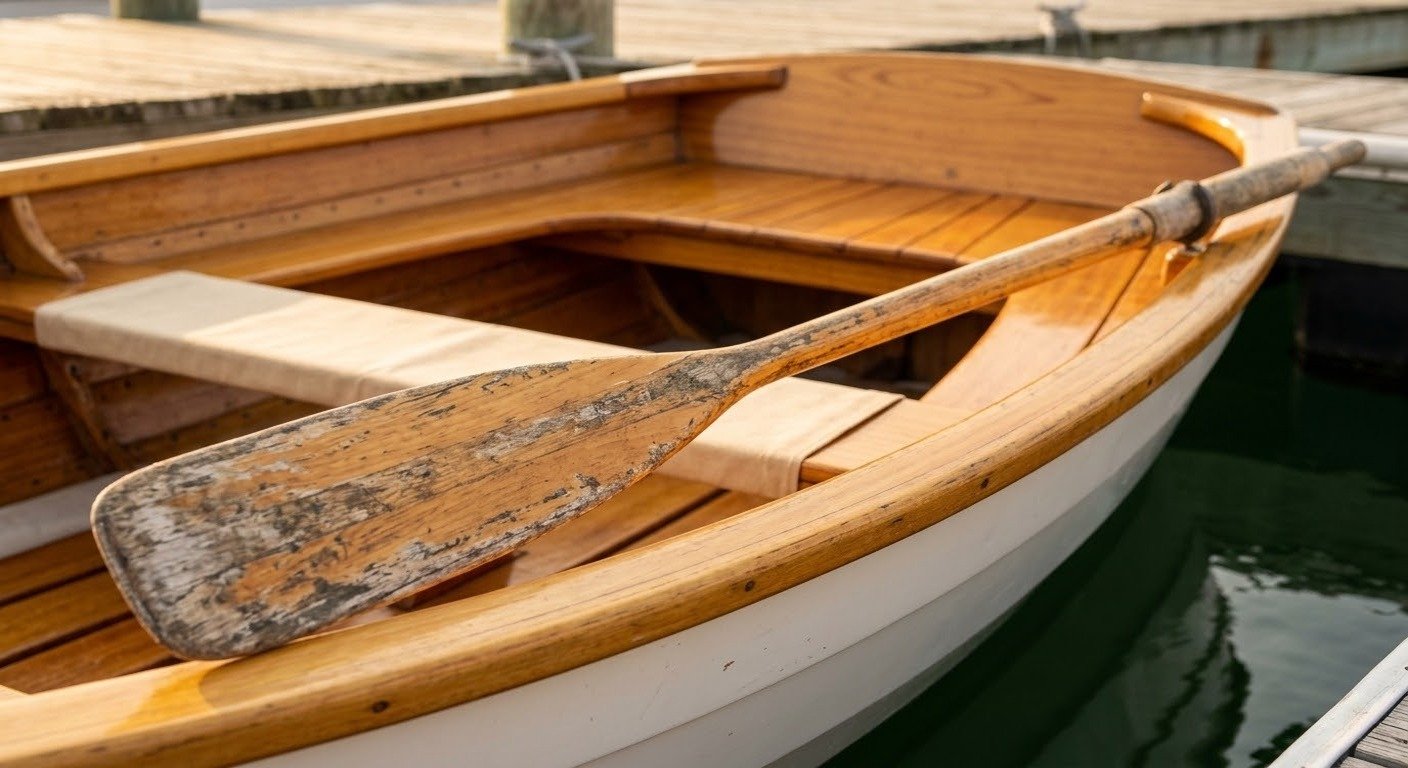
Three letters is brutal. Three-letter strings that pass as codes mostly do not pass as names. What works is a short word that means something on the water, sounds hard when said, and is still a word you can spell from a dock with the wind blowing across it.
- Sol. The sun, and the international radiotelephony spelling for the letter S.
- Bay. Sheltered water, easy to say, easy to spell.
- Tide. The thing that moves the boat.
- Zen. Short, calm, memorable over radio.
- Ivy. Grows on the rigging, sounds fine.
- Oar. Working gear, one syllable.
- Kip. Old sailor’s slang for a small vessel.
- Reef. Shallow water, and a hazard, so pick it only if you want the joke.
- Elm. A tree, one syllable, strong consonants.
- Ash. A tree, same deal.
- Ryu. Short and hard to mishear, if a non-English word is acceptable to you.
- Koa. Hawaiian for the tree used in traditional canoe outriggers.
Every candidate needs the phonetic screen before you buy decals. Say “Sol” and someone on channel 16 hears “sal” and writes it down wrong. The three-letter names that survive best tend to have a doubled consonant or two clear syllables, so there is no ambiguity about where the word starts and stops. That is why plenty of working boats end up with four or five letters. If you are set on three, test the name against someone who has never heard it.
One tradition is worth knowing. English boat names have leaned feminine for a long time. The usual explanation is an old superstition about women aboard ship, followed a generation later by owners naming boats for their wives or daughters. That is where the “-a” ending comes from, and why some skippers avoid it. Nothing requires it.
Names built from three initials
Three initials produce a specific kind of name. It either becomes an acronym the crew mutters, or it becomes a word. Both outcomes work. Acronyms like MRV sound like tug and barge names, which is the right register if you run commercial work.
Acronyms that sound like working vessels:
- LGR. Langley River
- MNR. Mariner
- CST. Coast
- BRK. Breaker
- HBR. Harbor
- TWD. Tidewater
- ARV. Arrive
- PLK. Plank
- TRK. Track
- FLT. Fleet
Initial sets that happen to spell a real word:
- RIO. A river, one syllable, instantly recognizable
- ART. A real word, reads fine on a hull
- ELM. A tree
- OAK. A tree
- ASH. A tree
- IVY. A plant
Family initials with a keeper word:
- EJR. Echo Jean Russell
- MSN. Morgan Sue Nolan
- KLW. Kara Lee Walsh
- TBH. Tom and Beth Hansen
- RLM. Robert Lee Miller
Leave out any set that collides with the IMO prefix or with a distress call. An acronym only earns its place if people can say it out loud without wincing. If your initials produce something unpronounceable, add a short third word and let the initials carry the identity instead.
How to check if a name is available
Most advice on this topic goes wrong here. There is no public database of every boat name in the United States that you can search from your couch. Anyone offering one is showing you documented vessels only, or selling a lead list. What you have is a process.
For a US documented vessel, the name is designated on form CG-1258 when you apply to the National Vessel Documentation Center, and a change requires that office’s prior approval. The Coast Guard’s documentation rules live in 46 CFR part 67. Treat the name as available until the application goes in and the office accepts it. An unregistered name is not reserved.
What you can do first:
- Say it aloud to two or three people who have never heard it. If they spell it wrong, change it.
- Search the public registry for your own reference. Registry lookups confirm a name is in use by an existing vessel. They do not reserve anything.
- Check your own history. Coast Guard records can be searched by vessel name as well as official number and hull identification number, so an old boat of yours may surface.
- Ask before flagging out. Each flag state sets its own rules and process. Some charge a name reservation fee. Some have no public lookup at all. US rules do not travel with you.
For documentation, the Coast Guard accepts or rejects the name on your application. For identity, someone else already has that name on a boat, and you may share a ramp with them for the next twenty years.
How to make a name survive the VHF radio
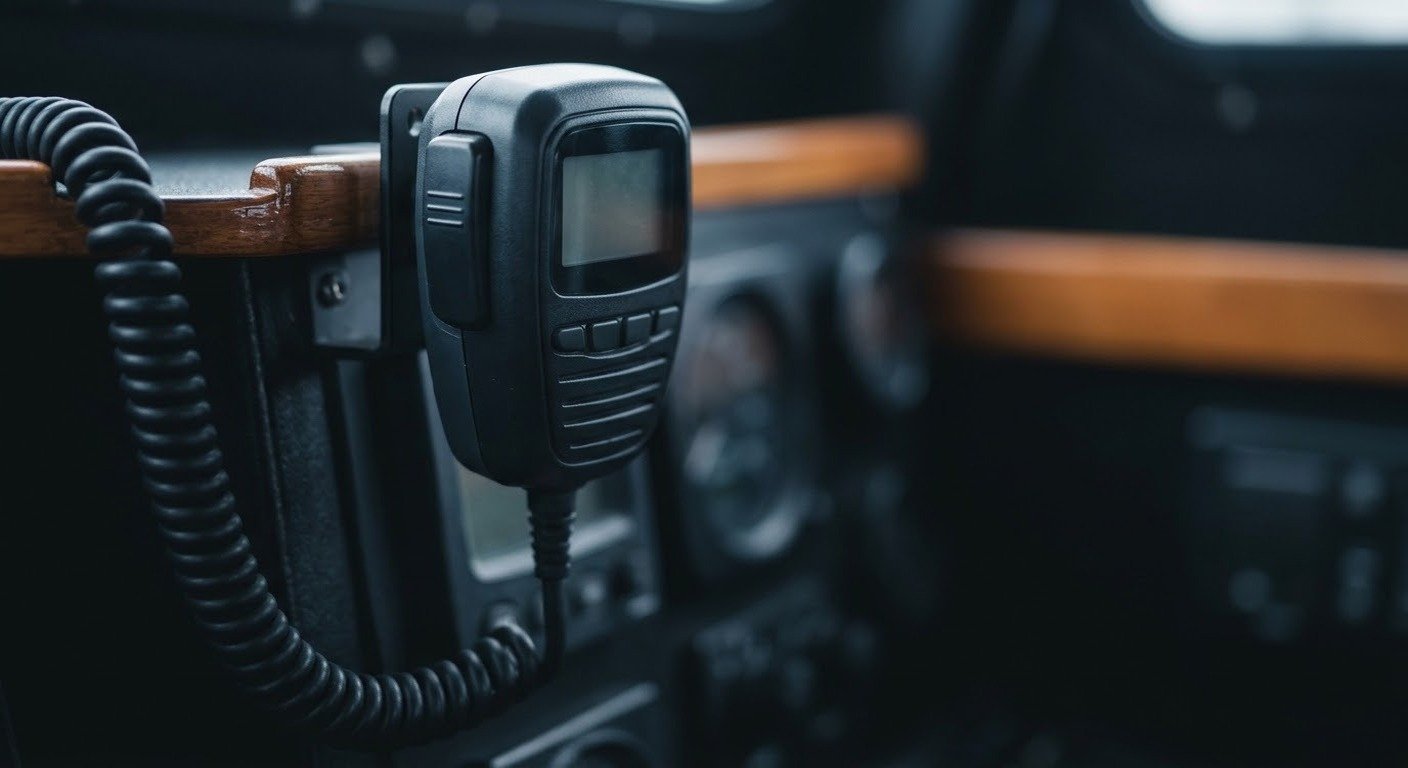
The most common reason a good boat name fails is bad radio discipline. Coast Guard, commercial traffic, and every nearby skipper have to log your name correctly after a single transmission.
- Two syllables beat one. “Sea Wren” logs cleanly. “SWN” does not.
- Watch for letter and word collisions. “Ray” can become “A” or “Rei”. Test the name against the alphabet, not just against English.
- Keep the ending consonant clear. Names ending in k, t, or r split more easily than names ending in a soft vowel.
- Test it in a real transmission. Say it once as if you were calling the Coast Guard. If you hesitate, the crew will hesitate.
- Match the hull to the radio. If the hull says “Sea Wren” and you say “See Wren”, you have created a permanent clerical problem.
Pronounceability is not something the Coast Guard writes down. It is a practical discipline that saves real money in misdirected search and rescue calls.
Frequently asked questions
How many words can a ship name have?
As many as you like, within what the marking can show. The Coast Guard sets content rules and an alphabet-and-numerals requirement, not a word count. Longer names need larger lettering, since the four-inch minimum applies to the whole name.
Can a ship name be three letters?
Yes, if the letters form a real, sayable word. “Sol”, “Bay”, and “Elm” all work. “KQZ” works only as a hull mark or call sign, not as a name people use on the radio.
Is there a character limit on ship names?
The current regulation does not set one for the vessel name. It specifies the alphabet and the content prohibitions. If a source tells you the Coast Guard limits you to 33 characters, check the regulation text linked earlier in this guide.
Do I need to name my boat before I document it?
Yes. The name is designated on form CG-1258 at the time you apply. You cannot document a vessel and add a name later without going through a name change, which requires the Director’s prior approval.
Can I name my boat after a person?
Nothing in the naming rule prohibits it. You must avoid names phonetically identical to obscene or profane language or to racial and ethnic epithets. Personal names, place names, and event names all appear on documented vessels.
What if my name is already in use somewhere?
If a boat with that name exists in another registry, you can still use it unless your flag state objects. If you are documenting in the US, the Coast Guard decides on your application. If a duplicate bothers you, pick another, because you may share a ramp with the other boat for years.
Is the IMO number the same as the ship name?
No. The IMO number is a permanent identifier made of the letters “IMO” and seven digits, and it does not change when the name does. Your name and your number are separate things.
Wrapping up
The name you want is probably fine. Most people worry about a limit that is not in the regulation and miss the two rules that are real: the phonetic test and the marking size. Choose a name you can say on channel 16 in one breath, spell it the way you say it, size the lettering for the four-inch minimum, and submit it on the CG-1258 where it belongs. Then paint it before you lose the light.