
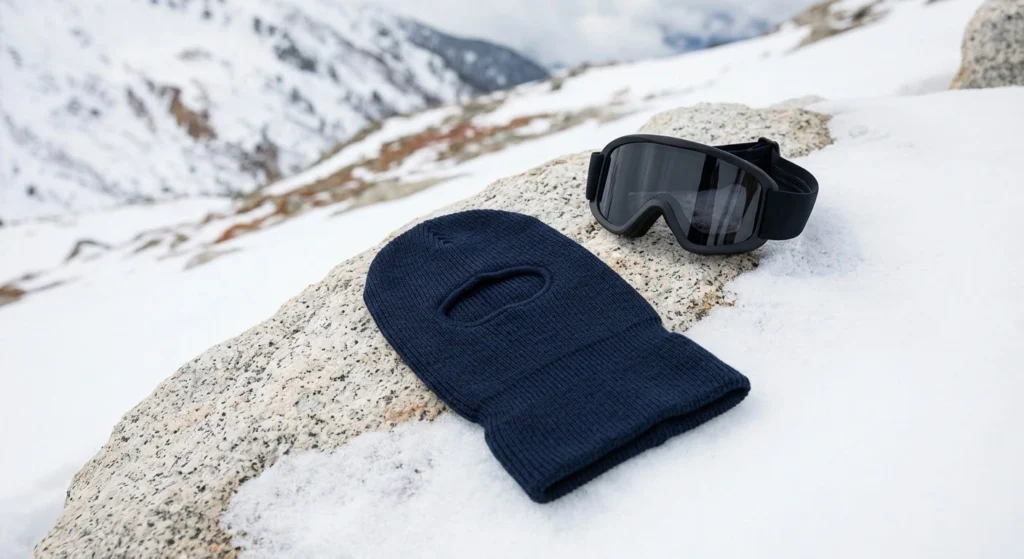
Ski mask is one of those phrases that sounds obvious until you stand in a store trying to find one. Retail shelves use it loosely, skiers say it casually, and nobody is really wrong. But if you are writing a product description, ordering for a group, or just want the word that fits, the right term depends on how much of the head the thing actually covers.
This guide sorts out the naming question. It starts with balaclava, the one term in this family with a dictionary definition, then works through neck gaiter, ski gaiter, and the trade wording you will see online. It also covers why the word balaclava makes some people tense up, and it briefly handles the other version of this question, the one where you want a name printed on the mask rather than a name for it.
In this guide
- Balaclava: the one name with a dictionary definition
- Neck gaiter and ski gaiter: the loop names
- Ski mask: what the word means at retail
- Trade words and brand names
- Why balaclava carries baggage
- If you meant a name printed on the mask
- How to pick the right word for the job
- Frequently asked questions
- Wrapping it up
Balaclava: the one name with a dictionary definition

A balaclava is, in dictionary terms, a knit cap for the head and neck. The same entry notes it is also called a balaclava helmet. That single noun is the most established label in this family. It is also the safest word to reach for when you want precision without an argument.
The word has an unusual pedigree. Merriam-Webster traces it to Balaclava in Crimea, the site of a British encampment during the Crimean War. The garment and the place share a name, and the Wikipedia entry on Balaclava reflects the same split, listing the clothing sense alongside the Crimean place names.
Pronunciation is the only real stumbling block for newcomers. It runs something like bal-uh-KLAH-vuh. Say it once out loud and it stops being hard.
One warning about scope. A dictionary definition tells you what a word means. It does not tell you how a particular company’s product fits or which part of the face any given model covers. Brands use the word loosely. Treat the dictionary as the anchor and the product page as the detail.
Neck gaiter and ski gaiter: the loop names
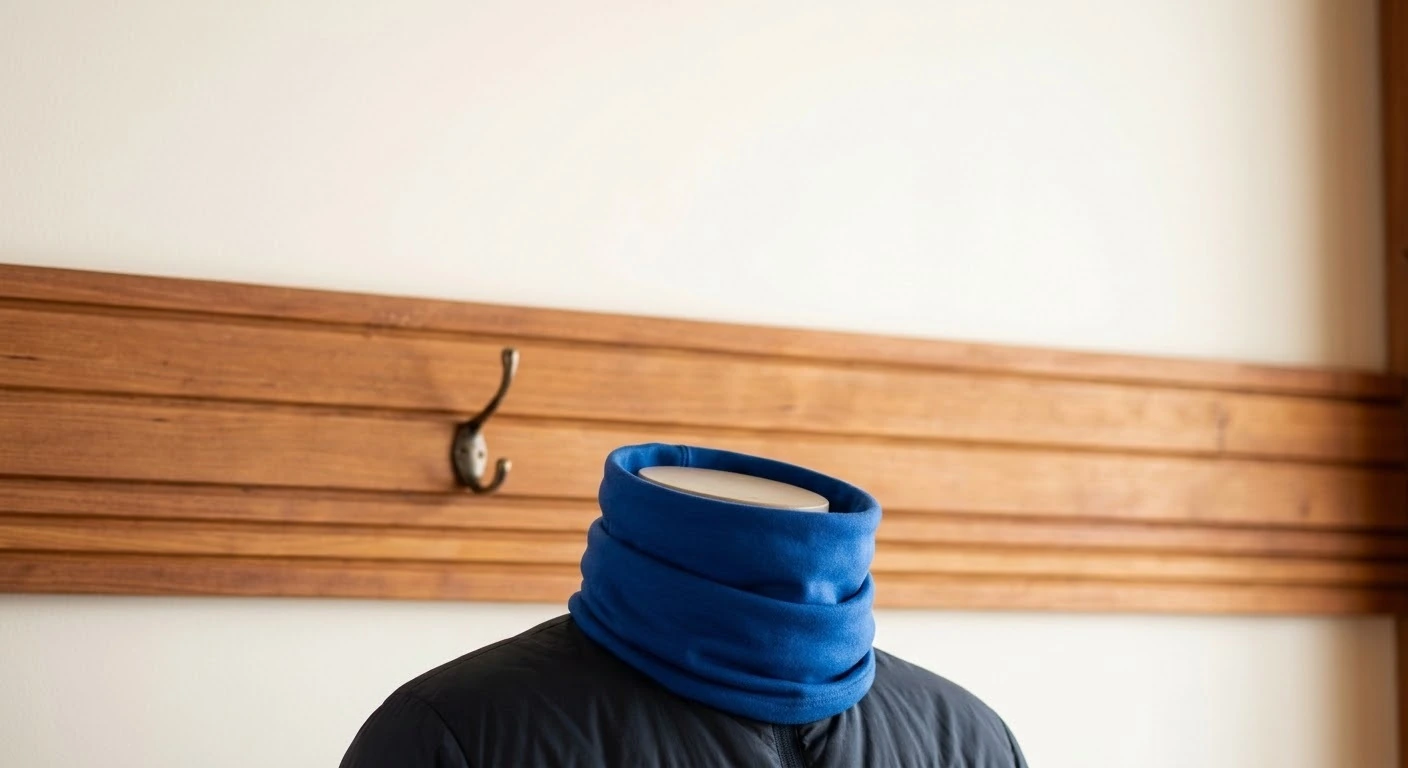
A neck gaiter is a fabric covering shaped like a closed loop, worn around the neck, that can extend to cover the lower part of the face. That is straight from the dictionary, and it is the cleanest description of the tube-shaped garment most people picture.
Ski and snowboarding shops lean on the shorter version. You will hear ski gaiter constantly, and dictionaries reflect that habit. The gaiter entry carries an example describing ski gaiters pulled up past the nose. The word also has older senses covering the ankle and lower leg, which is why the same dictionary page needs some reading before you find the neck definition.
Use neck gaiter when you want the accurate generic term. Use ski gaiter when you are describing the gear for a specific sport, or when you are talking with someone who will picture the neck version immediately.
Before you settle on a word, decide how much of the head the item covers. That single question does most of the sorting. Full coverage including the neck points to balaclava. A tube that sits around the neck and pulls up when needed points to neck gaiter. A retail category label for anything a skier might wear over the head is ski mask.
If the covering stays around your neck and never comes up over your face, neck warmer or neck gaiter is the accurate description. Reach for the face-covering terms only when the garment genuinely goes up.
Once the coverage is settled, describe it in a second sentence. Naming the coverage removes almost every ambiguity, including the tone problem below.
Ski mask: what the word means at retail
Ski mask is the phrase most US skiers and boarders use in conversation, and it is the term that dominates store categories and product listings. In practice it means a soft head covering with an opening for the face. It is often shown covering the whole head and leaving only the front of the face clear.
Here is the honest limit on that word. Ski mask does not have a dictionary headword of its own that we could verify. It is trade and retail language, which means it is perfectly clear to a skier and reliably loose as a category term. Retailers group different things under it.
That looseness is not a problem when you are shopping. It becomes a problem when you are writing a spec sheet or describing gear to someone who has never skied. In those settings, pick the narrower term.
Trade words and brand names
A few more words show up in this corner of the vocabulary.
Face covering is the broadest plain-English term. It is accurate, neutral, and vague. Reach for it when you do not want to commit to a style.
Headband is common, though the products under that name are usually thinner tube styles worn around the forehead rather than full-head coverings. If you mean a full head and face covering, headband undersells it.
Then there are company names. Some brands built a well-known name for a tube of fabric and shoppers now use that word as if it were the generic term. Nothing is wrong with that in conversation. In a catalog, though, a brand name in the category field reads as an endorsement of that brand and nothing else. Use the generic term for the field, and the brand name for the product.
The practical summary is short. Ski mask and balaclava are the two words people reach for first. Only one of them is a dictionary term.
Two more traps are worth knowing about. Some listings use the word for costume and novelty items sold around Halloween, which tells you nothing about warmth or fit. Others use it for motorcycle or paintball gear, where the fit and the intent are completely different from a cold-weather clothing item. Both sit under the same search term. If a result looks like it belongs to one of those categories, it usually is not what you are shopping for.
Why balaclava carries baggage
Worth saying plainly, because it comes up in every search on this topic. The word balaclava is now common news and social media language for a hood worn to conceal identity. Current dictionary usage examples lean heavily toward protest coverage, crime reports, and political action. That is a real part of how the word is heard in 2026.
None of that changes the dictionary sense. Balaclava still means a knit cap for the head and neck, and that sense is older than the modern news usage.
The practical effect is tonal. Ski patrol, families, and racers all use the word without a second thought. If you are writing for a general audience and want zero ambiguity, neck gaiter or a described term will serve you better. If you are writing for a skiing audience, balaclava is exactly the word they use.
If you meant a name printed on the mask
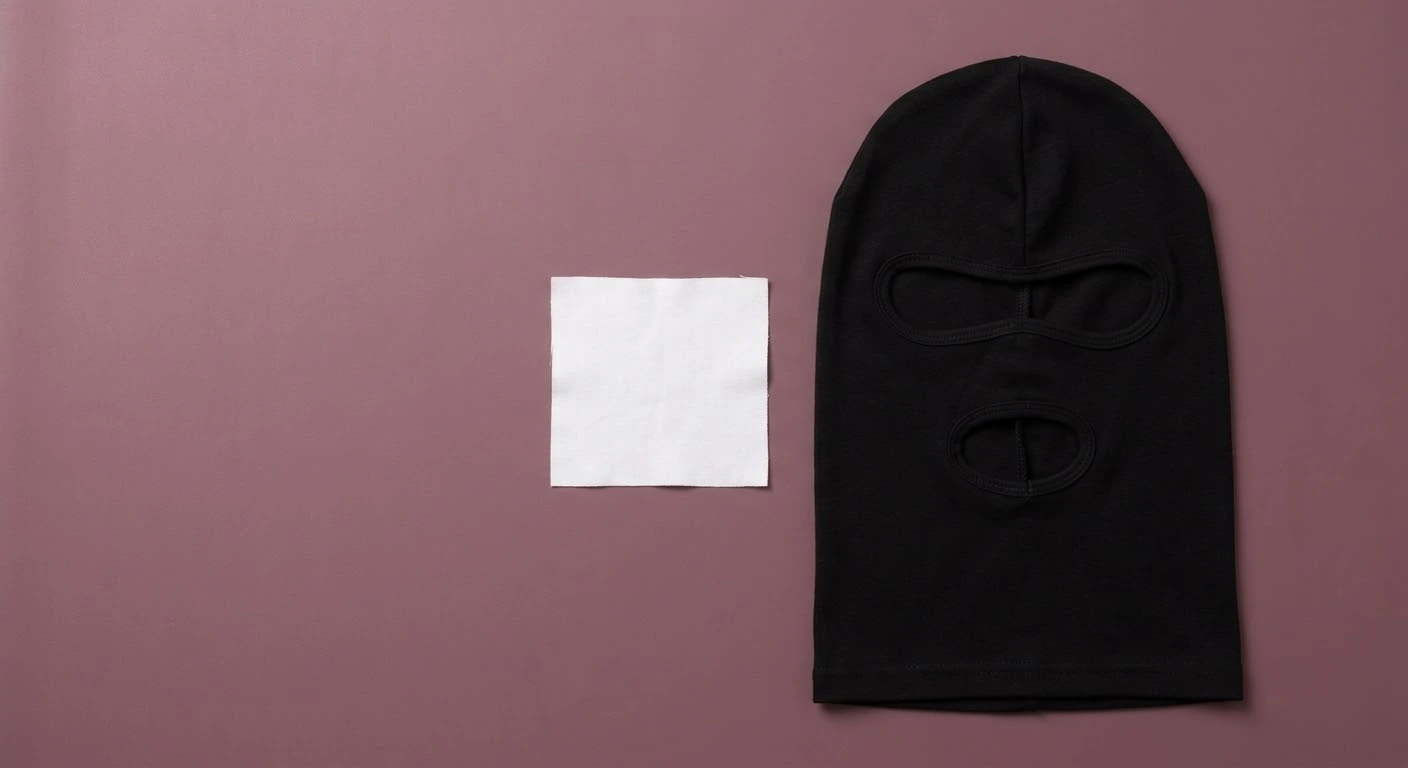
For readers who landed here wanting a name to put on a custom mask, rather than a name for the garment itself, here is the short version.
Pick a name that stays readable at the size a mask allows. Long surnames and full legal names get crowded on a small panel. One first name, a last initial, or a short nickname tends to read better than something long.
Check the sizing rules before ordering. A mask that is generous in width has more usable space than one cut close to the face. If the seller publishes a print-area measurement, use it instead of guessing.
Decide between a name and a word. A name identifies the wearer, which matters for a gift or for a lost-item return at a lodge. A single word reads as a statement rather than a label, and it needs no explanation.
Placement changes how a name reads. Across the forehead it looks like an eyebrow line and stays easy to see. Across the face panel it sits centered and reads more like a costume. Cheek and jaw placements work on some designs and disappear entirely on others. Check what the seller shows on a model of your size rather than guessing from a flat product photo.
Names tied to a team, school, or employer raise a different question entirely. Check what that organization allows before you order, because a custom garment cannot be returned once it is printed.
Test the length by saying it out loud. If it takes more than one breath to say, it will probably crowd the print area too.
That covers the second reading without pulling the rest of the article off topic.
How to pick the right word for the job
Where you are using the term changes which word is right.
In a catalog or product description, use the narrowest accurate word. Neck gaiter for the tube shape, balaclava for the knit cap, and ski mask only when you mean the retail category.
In conversation with skiers, ski mask and balaclava both work and nobody will correct you.
In school or workplace writing, or anywhere you want to sidestep the news association, describe the coverage instead of leaning on one word. Saying it covers the head and leaves the front of the face open is harder to misread.
On a label or sign, match the word to the coverage rather than the marketing tone.
In your own notes or a packing list, use whatever you will actually remember. A useless precise term helps nobody at 6 a.m.
Frequently asked questions
Is a ski mask the same thing as a balaclava?
Not exactly. A balaclava has a dictionary definition, a knit cap for the head and neck. Ski mask is retail language for a soft head covering with a face opening. The categories overlap heavily in practice, which is why both words get used for similar products.
What do I call it if it only covers my neck?
Neck gaiter or neck warmer. Both describe a covering worn around the neck. If it never extends up over the lower face, the face-covering words are the wrong choice.
Can I call a ski mask a face mask?
Only in the plain sense of something worn on the face. A ski mask is a clothing item for cold weather and is not a respirator and not protective equipment. Do not describe it as one, and do not treat one as a substitute for one. If you need respiratory protection for dust, fumes, or an infection risk, that is a separate category of product with its own standards and its own fitting process.
Which term do ski brands use?
Ski mask is the most common in store categories and product listings, with balaclava and neck gaiter both in regular use. A face gaiter or neck gaiter shows up too. There is no single official vocabulary, and brands use the terms loosely.
What about the word buff?
That is a brand name that shoppers use as if it were a generic word for a tube of fabric. Fine in conversation. In a catalog, use the generic term for the category and the brand name for the product.
Is one name more correct than the others?
Balaclava and neck gaiter both have dictionary definitions, so they are the most defensible choices. Ski mask is the most common everyday term and the least precise. If accuracy matters to you, pick a defined word and describe the coverage in a second sentence.
How do I search for the right product?
Search the defined terms. Neck gaiter and balaclava surface narrower, better-organized results than ski mask, which mixes retail categories, costume listings, and protective gear references into one noisy set.
Wrapping it up
There is no wrong answer here, but there is a better one. Balaclava and neck gaiter are the two terms with dictionary definitions, so they hold up in writing. Ski mask is the word everyone actually uses on the mountain and in stores, and it stays loose as a category. Pick the narrowest word that fits what you are describing, and add a second sentence about coverage when precision matters. And if you were after a name to print rather than a name for the garment, the sizing rules above will save you from a crowded panel.