
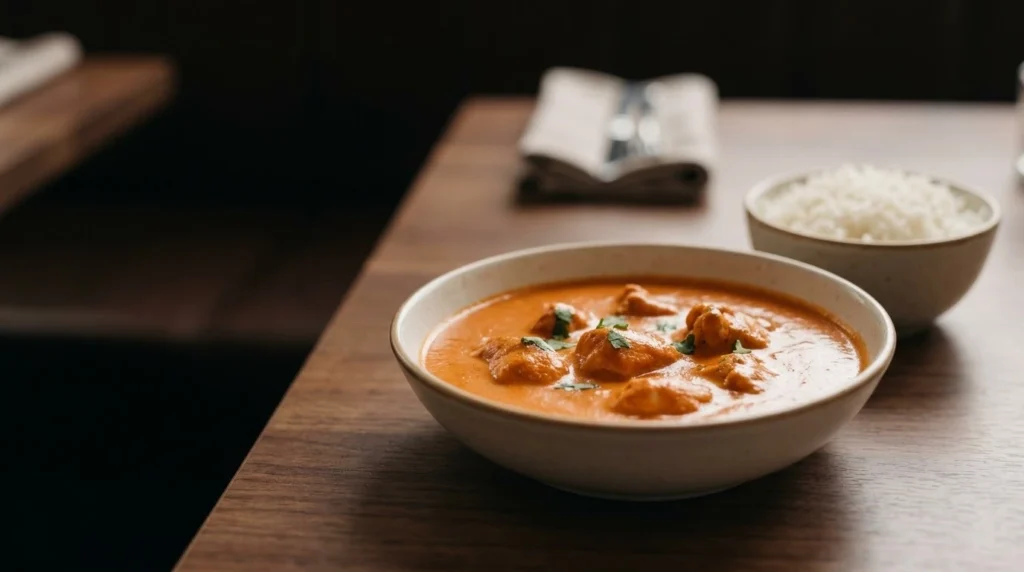
Ask for butter chicken at a restaurant and you will often get a nod from the server, or a question. Menu writers mean the same dish, but the words on the page do not always match. The creamy orange curry known widely as butter chicken also travels under a handful of other names, and the most familiar of them, chicken tikka masala, is a separate dish that happens to sit next to it on most menus.
The Indian names come first. Murgh makhani is the standard Hindi and Punjabi name, and chicken makhani is a common English-side variant. Makhani by itself refers to the sauce style rather than the dish. This guide covers each name, where it comes from, and how to tell the two curries apart so you can order without hesitating.
In this guide
- The short answer
- Murgh makhani, the standard Indian name
- Chicken makhani and makhani on its own
- Is chicken tikka masala another name for butter chicken?
- Why the names get mixed up
- Who invented butter chicken: a courtroom story
- How to order the dish without guessing
- Frequently asked questions
- The takeaway
The short answer
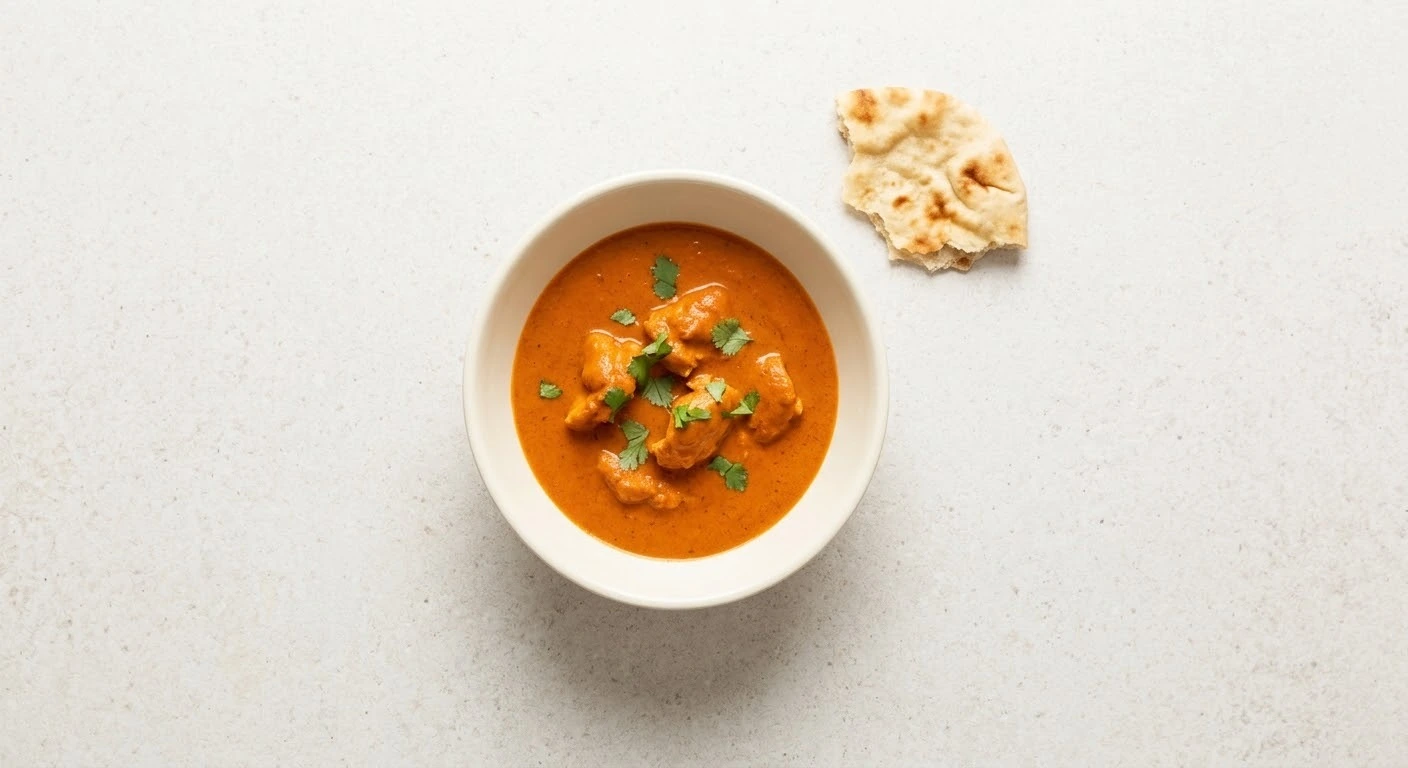
Butter chicken is also called murgh makhani, and you will see chicken makhani on some menus. Both names point to the same curry: tandoori chicken in a smooth tomato sauce enriched with butter and cream.
The Cambridge Dictionary defines the dish as a South Asian dish of chicken cooked with tomatoes, yogurt, butter, and spices, and notes that it is traditionally known as murgh makhani and originated in Delhi. The name butter chicken is an English translation that came later. Chicken tikka masala is a different dish that is frequently mistaken for this one.
Murgh makhani, the standard Indian name
Murgh makhani is the name to use if you want the dish people actually name when they talk about it at home or in an Indian kitchen. The two words are transparent once you know them. Murgh means chicken. Makhani means buttery, and it describes a rich cooking style built on butter, tomatoes, and cream.
The word makhani comes from Punjabi ਮੱਖਣੀ or Hindi मखनी, according to Wiktionary, and the same entry describes it as a Punjabi-style dish cooked in a sauce containing butter, tomatoes, and cream. The word murgh has its own entry, borrowed from Persian through the wider Hindi and Urdu vocabulary. Both are ordinary words in South Asian cooking, not formal titles.
The name describes the sauce rather than the chicken. The curry is tandoori chicken, marinated in yogurt with ginger, garlic, and Kashmiri chili, then cooked in a clay oven or under a high grill. It is finished in a tomato sauce built with butter and cream, often smoothed with cashew paste, and crushed dried fenugreek leaves are added near the end for their grassy aroma. A description of the dish on Wikipedia notes the sauce is commonly sieved for a velvety texture. Fenugreek, cashew, and the butter are what make a sauce makhani rather than merely spiced.
British and American dictionaries accept the spelling. Collins lists makhani or makhni and gives the collocation chicken makhani, with the word origin given as Hindi from makkhan, butter. Wiktionary also records the spellings makhni and makhonee, so if you see one of those on a menu it is the same idea spelled differently.
Murgh is also a general cooking term, not only part of this dish. Menu writers use it for other chicken preparations too, which is one small reason names drift around on menus.
Chicken makhani and makhani on its own
Chicken makhani is the same curry with the English word chicken in front. It shows up frequently enough that Wikipedia’s butter chicken entry lists it alongside murgh makhani as an alternate name. Its companion page on makhani dishes lists butter chicken under both names, alongside dal makhani and paneer makhani, which are the lentil and cheese versions of the same buttery sauce idea.
Makhani on its own is a description of the sauce, not a dish name. Reach for it when you want the gravy without the protein, or when the menu serves it over vegetables.
You will also see butter chicken masala on recipe sites, usually as a way of combining the English name with masala. Treat that as a description rather than an established name. It is not one of the recognized alternate titles.
Is chicken tikka masala another name for butter chicken?
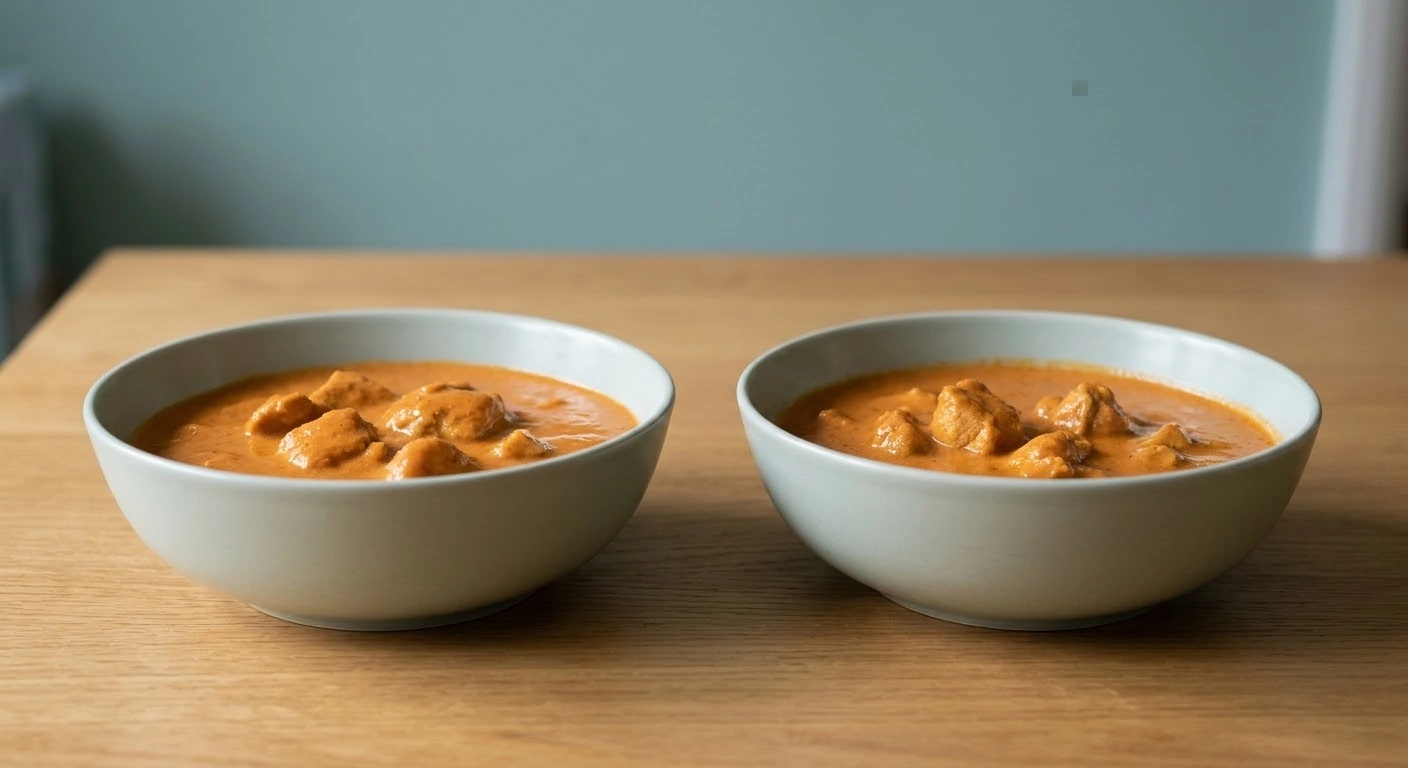
No. This is the single most common mix-up, and it is worth getting right because the two dishes come from different places.
Both start with marinated chicken cooked in a tandoor or under a high grill. After that they part ways. Butter chicken uses a sauce built on tomato, butter, and cream, kept smooth and mild. Chicken tikka masala uses a heavier masala sauce with more spice, and recipes often include onion.
Where each dish came from is also a matter of record rather than opinion. Butter chicken traces to Delhi. Chicken tikka masala is generally credited to Britain, and Wikipedia’s entry on it says it is thought to have been created in Britain, possibly by Ali Ahmed Aslam in Glasgow. Butter chicken is not a British dish that happens to resemble an Indian one. It is an Indian dish that happens to travel well, and its popularity outside India has led people to assume otherwise.
The honest wrinkle is that the dishes overlap. Wikipedia’s chicken tikka masala page notes that some forms of it are similar to butter chicken in both method and appearance. Chefs and menu writers disagree about where the line sits, and in practice some kitchens serve a single dish under either name. If a menu lists both, they are intended to be different. If a menu lists only one, ask.
Why the names get mixed up
Two naming traditions collided. The dish is a North Indian Punjabi preparation, and the names people use in India are Punjabi and Hindi. English-language menus translated the sauce description instead, producing butter chicken. That translation traveled far and hard. According to Wikipedia’s butter chicken article, the English phrase first appeared in print in 1975, at the Gaylord Indian restaurant in Manhattan.
The British curry house then added its own layer. Restaurant cooking in Britain settled on a vocabulary built around masala dishes, and a curry house that wanted a mild, familiar, sauced chicken dish could serve makhani under the heading tikka masala. Over decades, two names for two related curries drifted together until readers treated them as synonyms.
There is also a practical reason to keep them apart. If you ask for tikka masala expecting butter chicken, you will probably get something more heavily spiced, and the reverse is also true. Knowing that butter chicken is murgh makhani tells you what to order. Knowing it is not tikka masala tells you what to expect.
Who invented butter chicken: a courtroom story
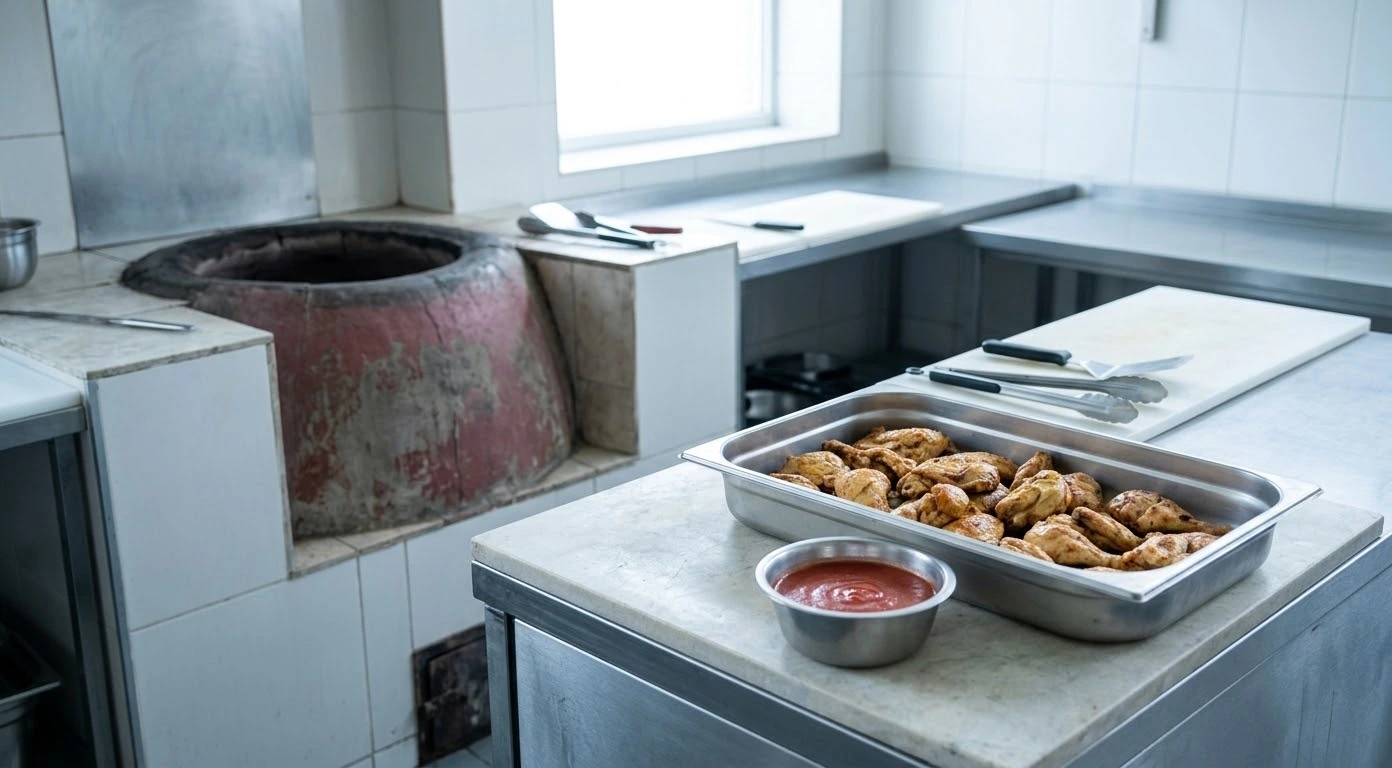
Two founding names are attached to the dish, and both families are still arguing about the credit.
Butter chicken is associated with the Moti Mahal restaurant in Daryaganj, Delhi. The restaurant grew out of a partnership between two cooks from Peshawar, Kundan Lal Gujral and Kundan Lal Jaggi, who moved to Delhi around the time of the 1947 partition and opened there. NPR describes Moti Mahal as the restaurant where butter chicken was likely first served in India. Both men cooked, and both are named in most accounts.
The dispute itself is straightforward. According to Reuters reporting carried by DD News, Moti Mahal says founder Kundan Lal Gujral created the dish in the 1930s at an eatery in Peshawar, before the move to Delhi, and it wants Daryaganj, a rival chain, to stop claiming the invention and pay damages. Daryaganj, run by Jaggi’s descendants, disagrees. Its counter-filing says Kundan Lal Jaggi created the dish while running the kitchen at the Delhi restaurant, with Gujral handling the business side.
Both sides put documents in front of the judge. Reuters reported that Daryaganj’s filing included a photograph of the two men in Peshawar from the 1930s, a 1949 partnership agreement, Jaggi’s business card after the move, and a 2017 video of Jaggi discussing the dish. Daryaganj’s own lawyers concluded that both parties can reasonably claim their own ancestor created the dish, and called it a business rivalry.
Nobody has won. The case went to the Delhi High Court in January 2024 in front of Judge Sanjeev Narula, and The Guardian noted that Indian courts move slowly enough that the question could stay open for months or years. A lawyer quoted by Reuters put the difficulty plainly: you do not know who created the first dish of butter chicken, and the court will have to rely on circumstantial evidence. Reuters’ reporting on the case that this guide draws on stops at the 2024 hearings, and no ruling was found in the sources reviewed here.
There is a reason the claim moved at all. Monish Gujral, who runs Moti Mahal, dated the dish to Delhi in the 1950s in a 2013 cookbook, then shifted the story to Peshawar in the 1920s or 1930s once the lawsuit was filed, as Wikipedia’s account of the history notes. That history is a reminder that restaurant origin stories are marketing as much as memory. Both chains have a financial stake in the answer, and Reuters quoted a brand expert saying the title of inventor carries real commercial value.
The practical takeaway is small. Whether Gujral or Jaggi stirred the first pot, the dish that came out of that kitchen in Daryaganj is the one that spread. Every restaurant named butter chicken today is downstream of it, and none of them can claim the credit with certainty.
How to order the dish without guessing
Use the names as signposts rather than as a strict code. Butter chicken and murgh makhani are the same dish in almost every context, so choose whichever name sounds comfortable or whichever matches what you have read about.
Ask for murgh makhani when you want to be specific or you are ordering from an Indian menu that uses it. Ask for butter chicken when you are ordering from a typical American menu and want a mild, creamy version. Treat chicken makhani as a match for either.
If a menu offers both butter chicken and chicken tikka masala, expect a difference rather than a synonym. If a menu uses makhani alone, you are ordering the sauce style.
The one thing worth avoiding is deciding in advance that the two curries are interchangeable. Plenty of American menus blur them, and plenty of diners have been served a spicier, onion-forward dish when they were expecting the mild original. Saying the name you want out loud settles it faster than studying the menu.
Frequently asked questions
What is the other name for butter chicken?
Murgh makhani. Chicken makhani is a common variant, and makhani on its own names the buttery sauce style.
Is butter chicken called chicken tikka masala in India?
No. Butter chicken is an Indian dish from Delhi. Chicken tikka masala is generally credited to Britain. Many menus treat them as separate items, though some kitchens serve one dish under either name.
Is murgh makhani the same as butter chicken?
Yes. They are two names for the same curry, tandoori chicken in a tomato, butter, and cream sauce. Murgh makhani is the Indian name and butter chicken is the English translation.
Does makhani mean butter?
Not exactly. It means buttery, and it describes a cooking style with plenty of butter and cream. Collins traces it to the Hindi word for butter, makkhan.
What are dal makhani and paneer makhani?
They are the same buttery sauce in other forms. Dal makhani uses lentils and paneer makhani uses cheese. Wikipedia’s page on makhani dishes lists all three together, which is a quick way to see that makhani describes the sauce, not one specific curry.
Who actually invented butter chicken?
Two Delhi restaurant families claim their founder, Kundan Lal Gujral or Kundan Lal Jaggi, created it. The Delhi High Court has heard the case since January 2024, and no ruling appeared in the sources reviewed for this guide.
Is butter chicken spicy?
It is mild, and the heat in the dish comes from spices rather than chili. Chicken tikka masala is usually noticeably spicier, which is the other reason not to treat the two as the same order.
Where does the name murgh makhani come from?
Murgh means chicken, and makhani means buttery. The words come from Persian and Hindi or Urdu usage that spread across South Asian cooking long before the dish existed.
The takeaway
Butter chicken is also called murgh makhani, with chicken makhani as a familiar variant and makhani naming the sauce style. Chicken tikka masala is a separate dish, not an alternate name, even though the two sit side by side on most American menus. And the question of who invented butter chicken is genuinely unsettled, with two Delhi families still in court over the credit. When in doubt, ask for murgh makhani, and say it out loud.