

If a recipe or a butcher label used a word other than “brisket,” you probably were not reading a different cut of meat. You were reading the same tough, well-muscled piece of beef under a different name.
Quick answer: the most common alternate names are first cut and flat for the lean half, and point, second cut, deckle, or fat end for the fatter half. Packer brisket means both halves attached. Then there is the dish layer, where brisket turns up as corned beef, pastrami, Montreal smoked meat, burnt ends, and boiled beef.
This guide covers where the word brisket came from, what every name on a meat counter points to, and how to order the piece you actually want.
In this guide
- Short answer
- Where the name comes from
- Names on a butcher label
- The two halves and their nicknames
- Dish names that mean brisket
- Brisket names outside the United States
- How to ask for it at the counter
- Brisket questions, answered
- The takeaway
Short answer
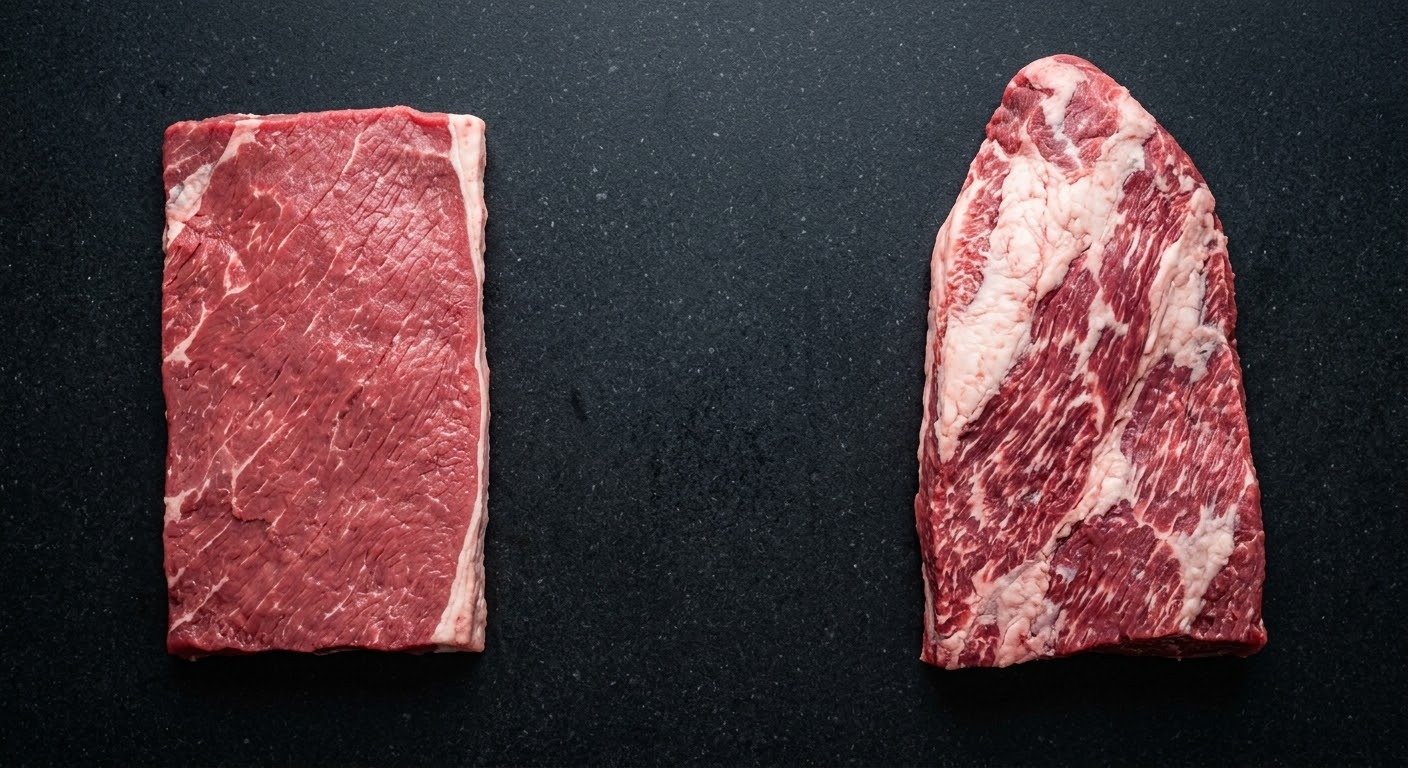
Here is the whole naming picture in one place.
- First cut or flat: the leaner half, the one most often used for thin slices and braises.
- Second cut, point, deckle, fat end, or triangular cut: the fatter, well marbled half.
- Packer brisket or whole brisket: both halves still attached, fat cap on.
- Deckle-on or deckle-off: whether the hard fat and inner meat were trimmed away. Not the same as choosing flat or point.
- Breast of beef: the British name for brisket.
- Salt beef: the Commonwealth name for corned brisket.
- Corned beef, pastrami, Montreal smoked meat, burnt ends, and boiled beef: dishes made from brisket rather than names for the raw cut.
Almost every confusing brisket label comes down to one question: which half am I looking at, and has anything been trimmed off?
Where the name comes from
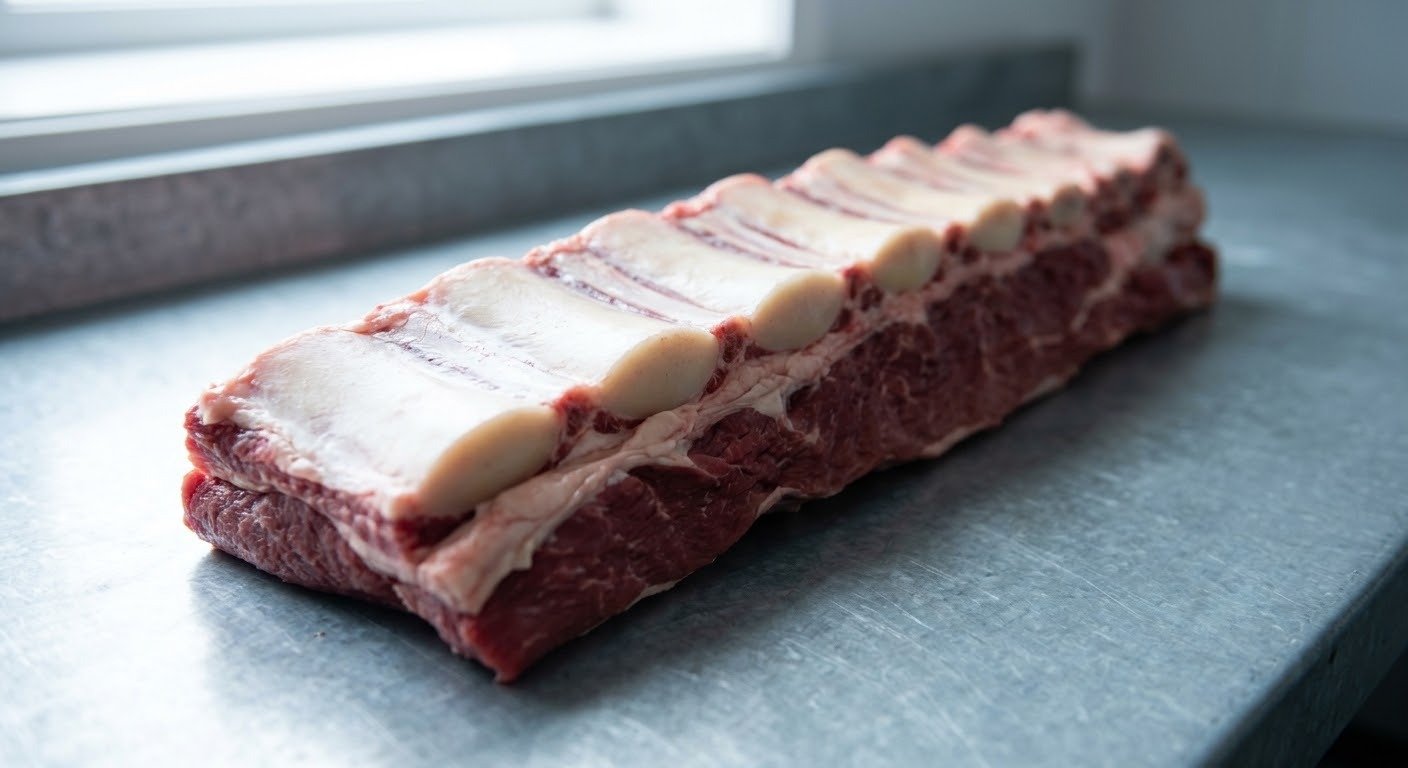
The word is borrowed, not invented for Texas. Brisket comes from Middle English brusket, which traces back to Old Norse brjósk, meaning cartilage. That fits the cut better than most origin stories do. The brisket sits over the sternum, ribs, and the cartilages that join the ribs, so cartilage is literally part of what you are buying.
The Wikipedia article on brisket explains why this muscle is so tough in the first place. Cattle have no collar bones, so the pectoral muscles on the lower chest do the work of holding up a standing or moving animal. Those muscles carry roughly 60 percent of its body weight, which means they are packed with connective tissue. That tissue is why brisket starts tough and why it rewards a long cook. Slow heat converts the collagen into gelatin, and the meat softens.
So when a butcher calls a piece of brisket a “hard working” cut, they are being literal. The muscle spent the animal’s life doing pushups.
Names on a butcher label
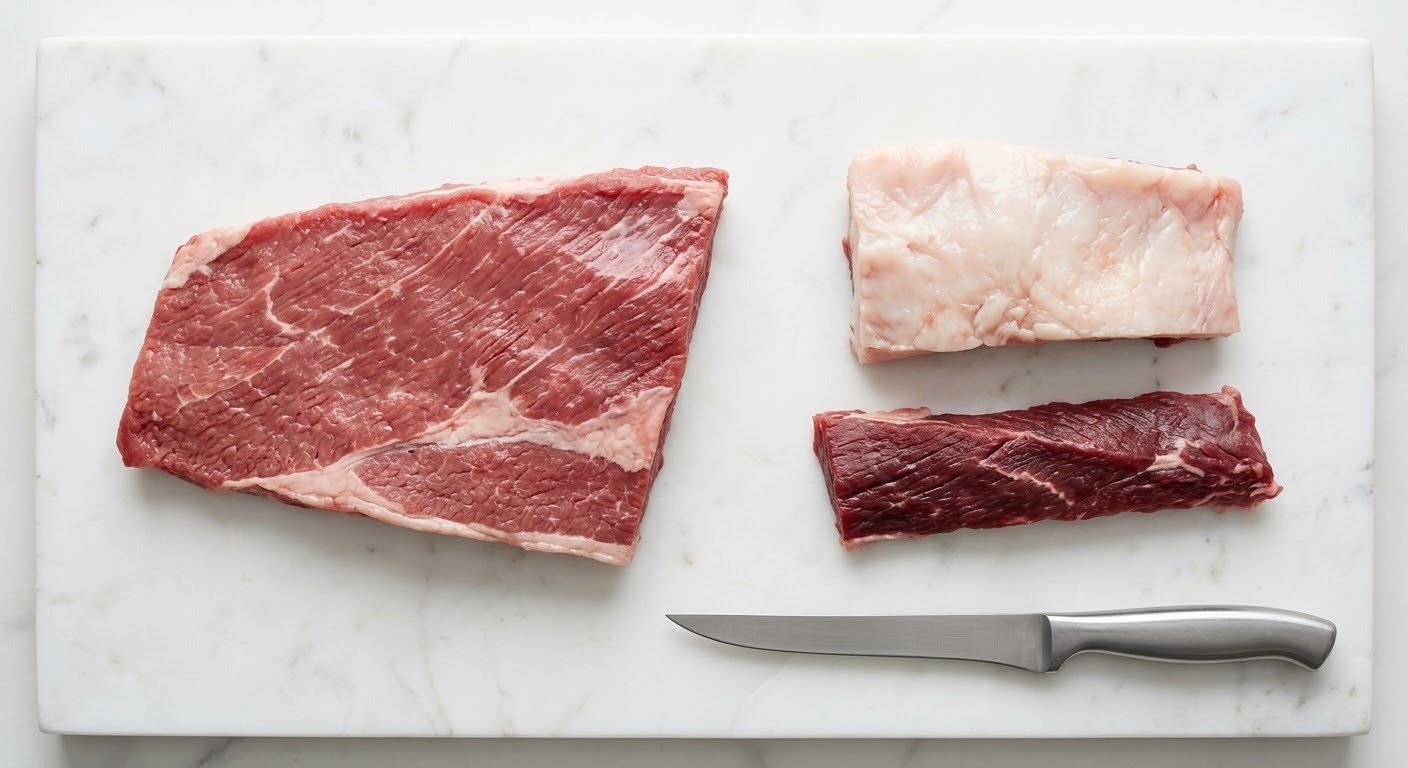
Meat counters use a small pile of words, and several of them get used loosely. This table is the clean version.
| Term | What it means | Why you would care |
|---|---|---|
| Whole brisket | Both halves attached | You get the lean flat and the fatty point in one piece |
| Packer brisket | The same whole brisket, barbecue word | Named for wholesale packers, and the piece most pit cooks mean |
| Flat, first cut | The leaner half, a wide rectangle of even thickness | Slices cleanly, braises well, standard for sliced brisket |
| Point, second cut | The fatter half, thicker and uneven | Richer flavor, the classic choice for burnt ends |
| Fat end, triangular cut | Older or plainer names for the point | Same meat, different label |
| Deckle | Sometimes used for the point, but formally the fat and inner muscle trimmed from inside a brisket | The one term worth asking about |
| Deckle-on | Brisket with that hard fat left in place | More fat to trim off yourself, more moisture during a long cook |
| Deckle-off | Already trimmed | Cleaner to handle, slightly less fat |
| Breast of beef | British and Australian name for brisket | What you will see on UK and Commonwealth butcher lists |
A good working definition of deckle, and the reason to treat it carefully: in formal meat-cut usage, the deckle is not the point muscle at all. It is the hard fat and internal rib muscle that gets removed from the inside of a brisket during trimming. Cooks say “deckle” when they mean the point all the time, and this brisket glossary makes the case that the two are not really interchangeable. If a label or a recipe uses the word, ask which piece they mean.
The two halves and their nicknames
Brisket is really two muscles that sit next to each other, separated by fat. Knowing which one you are holding answers most of the naming confusion.
The flat, a.k.a. the first cut. This is the wider, leaner muscle. It is close to a rectangle and close to even in thickness, which is why it takes a clean straight slice. It is the default choice for brisket that gets braised and then carved, such as a holiday pot roast. It also holds up well to a rub and a smoke without turning fatty on you. Most of what a supermarket simply calls “brisket” is this piece, which is why many home cooks never meet the other half at all.
The point, a.k.a. the second cut or deckle. This one is thicker, fattier, and more heavily marbled, and it does not lie flat. It comes to a rounded point at one end, which is where the name comes from. It is also thicker at one end than the other. That fat is a feature. It bastes the meat during a long cook, which is why many barbecue people consider point slices to be the best bite on the brisket. The point is also the usual source of burnt ends.
The two are sold together as a whole brisket or separated into two pieces. Buy the point on its own if you want smoke flavor and fatty richness. Buy the flat if you want clean slices or a braise. Either one cooks well enough that using the wrong one is a small mistake.
Dish names that mean brisket

The other place brisket hides is the menu. These are not raw cuts, they are what happens to brisket in a pot, a smoker, or a can.
- Corned beef. Brisket packed in salt and cured. The name comes from the curing salt, which comes in large grains called the corns of salt. The word “corn” is Old English for any small hard particle. If you see “corn” on a meat label, that is almost always salt. In Commonwealth countries the same dish is salt beef, and canned corned beef is bully beef.
- Pastrami. Corned beef that gets seasoned with pepper and spices, then hot smoked.
- Montreal smoked meat. Montreal’s version of pastrami, made from brisket, and more strongly seasoned with black pepper and garlic.
- Burnt ends. Cubes of the fatty point cut, sauced and cooked down until the edges caramelize. Kansas City barbecue made them famous, and they are now on menus everywhere.
- Texas-style brisket. The whole packer seasoned with a dry rub and smoked low and slow until the connective tissue gives up.
- New England boiled dinner. Boiled brisket served with root vegetables, traditionally with a meal in one pot.
- Boiled beef and carrots. The British version, a slow-cooked brisket with gravy, old enough that it turned up in a popular song of the same name.
- Bollito misto. The mixed boiled beef of northern Italy, brisket among the cuts.
- Pho. The Vietnamese beef noodle soup, where brisket is one of the beefs served in the bowl.
- Nihari. The slow-cooked beef shank curry of the Indian subcontinent. Named for a different cut, but a listed beef cook worth knowing.
- Jang-jorim and yukgaejang. Korean dishes built on brisket, one pressed and marinated in soy, the other a spicy soup.
One detail worth flagging, because sources genuinely disagree: whether corned beef is traditionally made from the point or the flat. Some recipe writers say the point, others say the flat is more common. Both halves get used. Ask the person curing it if you care, and treat any confident single answer with a raised eyebrow.
Brisket names outside the United States
In the United Kingdom and Australia, brisket is generally called breast of beef. If you are reading a British or Australian recipe and it says breast of beef, that is the same cut. Usually it is the flatter braising end.
Salt-cured brisket is called salt beef across the Commonwealth, and in Ireland and Britain the boiled version still shows up as plain boiled beef. German cooking braises brisket dark in beer with celery, carrots, onion, bay, and thyme. That produces something closer to a rich pot roast than anything barbecue-shaped. Call it brisket, or call it what the recipe calls it. The cut is the same.
How to ask for it at the counter
Most brisket problems at a meat counter are naming problems, not preference problems. Four questions settle nearly all of them.
Ask which half it is. Point or flat, or both attached. That one question resolves most of what follows.
Ask whether it is deckle-on or deckle-off. Deckle-on means the hard internal fat is still in there. It adds moisture over a long cook and gives you a trimming job before you start. Deckle-off means a butcher already took it out. This is not the same as asking for the flat.
Ask whether it is trimmed or untrimmed. An untrimmed brisket still carries its fat cap. Most pit cooks leave that cap on through the cook and trim it at the end, because it shields the meat from drying out.
Say what you are cooking. Tell the butcher you are braising and slicing, smoking and serving with sauce, or curing for corned beef. A good butcher will hand you the half that fits. And if you want the point for burnt ends, say so out loud, because a packer brisket is mostly the wrong piece for that job.
Once it is home, trim it cold, look for the direction of the grain, and slice across it. Cutting the right way matters more on brisket than on most beef, because the muscle ran hard for the animal’s whole life.
Brisket questions, answered
Is first cut the same as flat?
Yes. “First cut” is the trade name and “flat” is the plain name for the same leaner muscle. The numbering is historical, and it does not mean the flat is a better piece. It just means the point arrived second.
Is second cut the same as point?
Yes. The point muscle is called the second cut, and you will also see fat end, deckle, or triangular cut used for it.
Is deckle the same as point?
Not formally. Cooks often use the words interchangeably, but in meat-cut specification the deckle is the hard fat and inner muscle trimmed from the brisket. Ask which piece a label means.
What is a packer brisket?
The whole boneless brisket with the flat and point still attached. Packers are wholesale meat companies, and the name stuck for the full piece, fat cap included.
Does brisket have another name in the UK?
Yes, breast of beef. Salt-cured brisket is salt beef. Both refer to the same cut from the lower chest.
Can I use the point for pastrami and the flat for corned beef?
You can use either for either. The point gives you fattier, richer cured meat, and the flat gives you a leaner slice. Plenty of Jewish and deli tradition favors the point for pastrami, and plenty of home corned beef recipes use the flat.
Why does brisket need so long to cook?
Because those muscles carried most of the animal’s weight. They are full of collagen, and collagen only becomes gelatin with sustained heat and enough time. Rushing it leaves you with a tough piece of beef no matter how good your sauce is.
Does the fat cap matter?
It does. The cap acts as a shield, and it is the main reason a brisket can sit over low heat for hours without drying out. Leave it on during the cook and trim it after if you want a cleaner slice.
The takeaway
There is no secret synonym here. Brisket is brisket. Every other word you run into points at one of two things: which half of the animal you are holding, or what somebody did to it afterward.
Flat or first cut for lean slices and braises. Point or second cut for rich smoke and burnt ends. Packer for the whole thing. Deckle describes trimming, not a choice of half. And corned beef, pastrami, smoked meat, and boiled beef are dishes, not different cuts.
Next time a word on a package stops you, ask the four questions above. It takes ten seconds and it ends the guessing.