

Fire is one of those words that looks simple until you try to swap it out. There is a blaze, a conflagration, an inferno, a bonfire, a hearth, a pyre. Firefighters use terms like flashover and backdraft that mean something very specific. And if you are naming something, there is a set of names that literally mean fire in other languages.
Which word you reach for depends on what you are describing. A warehouse fire and a backyard fire pit do not need the same word. The guide below sorts the options into groups and flags the words that oversell what is really happening.
In this guide
- Words for a fire as an event
- Words for fire as light and heat
- Words for the place, not the flame
- What fire science calls it
- Names for the dangerous stages of a fire
- Fire classes and the fire service vocabulary
- Wildfire and camp words
- Words that mean something different on each side of the Atlantic
- Names that mean fire
- How to pick the right word
- Questions readers ask about other names for fire
- The bottom line
Words for a fire as an event

These are the everyday swaps. Each describes a fire as something that happened.
- Blaze. A bright, burning fire, and by extension something brilliant or intense. Merriam-Webster’s first sense is “an intensely burning fire.”
- Conflagration. A large disastrous fire, in the wording of Merriam-Webster. The same word also means a conflict or war. It sounds formal and is common in news and insurance writing.
- Inferno. Merriam-Webster leads with the image of hell, then gives an intense fire as the second sense. It is literary rather than technical.
- Bonfire. A large fire built in the open air, for warmth, entertainment, or celebration, or to burn leaves and rubbish. It is current in US English. Merriam-Webster traces it to a Middle English bonefire, first known in the 15th century.
- Campfire. A fire built outdoors, as at a camp or a picnic, usually for warmth or cooking. One word in American use.
- Pyre. A combustible heap, most often for burning a dead body as a funeral rite. Merriam-Webster gives a broader sense too, a pile of material to be burned.
Words for fire as light and heat

These describe the sight of fire, not the event.
- Flame. The glowing gaseous part of a fire. It is the part you actually see.
- Flare. A fire or blaze of light used especially to signal, illuminate, or attract attention. A road flare and a signal flare are both flares.
- Beacon. A signal fire, commonly on a hill, tower, or pole. Merriam-Webster also lists a lighthouse sense, which is where most Americans meet it.
- Glow. The state of glowing with heat and light. Merriam-Webster also ties it to light given off by a solid body heated to luminosity, which is the ember end of a fire.
Words for the place, not the flame

Sometimes the question is not about the fire at all. It is about the fireplace, or the feeling of home that comes with one.
- Hearth. A brick, stone, or concrete area in front of a fireplace, or the floor of one. By extension it means home and family, which is why “hearth and home” works so well. Dictionary.com explains the association: the hearth was historically where cooking and warming happened, so the family gathered there. That is how it became a symbol of home.
- Fireplace. A framed opening made in a chimney to hold an open fire. Merriam-Webster also lists an outdoor structure of brick, stone, or metal for an open fire.
- Inglenook. A corner by a fireplace, sometimes with a built-in wooden seat. Dictionary.com’s American and Collins entries read almost the same, which is a fair sign of how settled the word is. Merriam-Webster dates its first known use to 1772.
- Fireside. The space about a fire or hearth, and by extension the home or family life. Dictionary.com carries both an American entry and a Collins entry for it, so it is not a purely British word.
What fire science calls it
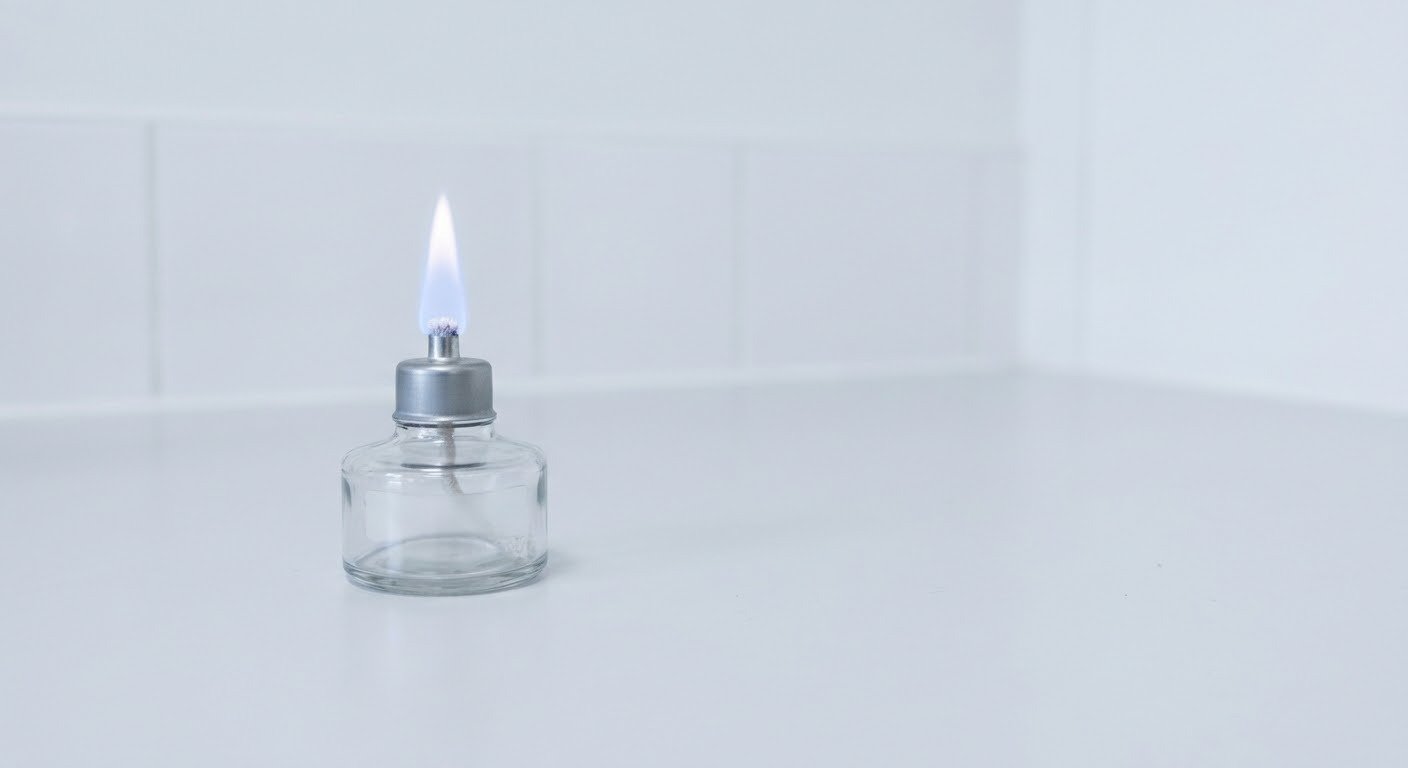
Fire scientists do not treat fire as a thing. The National Fire Protection Association explains that the process is oxidation. What separates a fire from a rotting apple is speed. Fire is oxidation running fast enough to release light, heat, and sound.
The vocabulary that follows:
- Combustion. A chemical process of oxidation running fast enough to produce heat and usually light, as a glow or a flame. The wording comes from NIST’s lexicon.
- Fire triangle. The three components a fire needs: fuel, heat, and air.
- Fire tetrahedron. The triangle plus a fourth element, the uninhibited chemical chain reaction. NIST lists the four as fuel, an oxidizing agent, heat, and an uninhibited chemical reaction. That fourth element explains why clean-agent extinguishers work by breaking the reaction itself.
- Ignition source. The heat or spark that starts combustion.
- Flash point. The lowest temperature at which a liquid gives off vapors at a rate high enough to support a momentary flame. NIST’s lexicon fixes the figure by laboratory test. This is why a gasoline fire and a wood fire behave so differently.
- Autoignition temperature. The lowest temperature at which a combustible material ignites in air without a spark or flame, per NIST’s lexicon.
One caution. Autoignition temperature belongs to a specific material, not to a universal number. Popular lists of ignition temperatures are often copied around without saying where they came from.
Names for the dangerous stages of a fire
These terms get used loosely in news coverage and precisely in the fire service. The precise meanings are worth learning, because they differ from each other.
- Flashover. A transition phase in the development of a compartment fire in which exposed surfaces reach ignition temperature more or less simultaneously. Given enough oxygen, fire then spreads rapidly through the space. NFPA’s reporter guide adds that temperatures can soar to about 1,000 degrees Fahrenheit in a few seconds.
- Rollover. Hot gases and smoke collect at the ceiling, spread out, and ignite. Fire Engineering’s glossary notes that rollover is also called flameover.
- Backdraft. A deflagration caused by the sudden introduction of air into a confined space holding oxygen-deficient products of incomplete combustion. A fire in a closed room burns up the oxygen, flames vanish, and hot gases build up. Open a door and those gases can erupt. The wording follows NIST’s lexicon.
- Oxygen deficiency. Insufficiency of oxygen to support combustion, in the wording of NIST’s lexicon. This is the condition that sets a backdraft up.
Flashover and backdraft are not the same event and are not interchangeable. One is driven by heat, the other by the arrival of air.
Fire classes and the fire service vocabulary
Firefighters sort fires by what is burning. NFPA lays out the classes:
- Class A. Ordinary combustibles such as wood, cloth, paper, rubber, and many plastics.
- Class B. Flammable liquids, combustible liquids, greases, oils, solvents, lacquers, alcohols, and flammable gases.
- Class C. Fires involving energized electrical equipment.
- Class D. Combustible metals such as magnesium, titanium, zirconium, sodium, and lithium.
- Class K. Cooking fires involving vegetable or animal oils and fats.
The fire service has its own operational language too:
- Size-up. A systematic process of gathering pre-incident information and current conditions. It covers what shapes strategy and tactics, and what affects firefighter safety. The definition comes from the same Fire Engineering glossary cited above.
- Room of origin. The area of a building where a fire can be expected to start, usually bounded by walls, floor, and ceiling. Federal regulation defines it this way, with a 2,000 square foot cap because open plans blur the line.
- Extension. Fire moving beyond the area where it started. Firefighters treat this as a threshold, because it changes how an incident is reported and resourced.
- Exposure. A building or adjoining space, inside or outside, threatened by heat from a fire.
One caution about the acronyms. The fire service uses many size-up mnemonics, and the expansions differ from place to place. Firehouse says so outright. Some departments set their own, and COAL WAS WEALTH is also heard as COAL TWAS WEALTH or even WALLACE WAS HOT.
RECEO-VS is another one you will meet. It covers rescue, exposures, confining the fire, extinguish, overhaul, ventilate, and salvage. Use these as checklists, not as vocabulary.
Wildfire and camp words
A separate vocabulary covers vegetation fires. Most of these definitions come from the federal wildland glossary, reproduced by PBS NOVA.
- Wildland fire. Any nonstructure fire, other than a prescribed fire, that occurs in the wildland.
- Creeping fire. A fire burning with a low flame and spreading slowly. The NWCG glossary defines it in those words.
- Running fire. A rapidly spreading surface fire with a well-defined head. The glossary files this term under the single word running.
- Flare-up. A sudden acceleration of fire spread or intensification. Unlike a blow-up, it lasts a relatively short time and does not radically change control plans.
- Blow-up. A sudden increase in fire intensity or rate of spread strong enough to prevent direct control or to upset control plans.
- Firestorm. Violent convection caused by a large, continuous area of intense fire, often with destructive surface indrafts and sometimes with tornado-like fire whirls.
- Fire whirl. A spinning vortex column of hot air and gases, carrying smoke, debris, and flame aloft.
- Firebrand. The NWCG glossary gives the term a broader meaning than most people expect. It means any source of heat, natural or human made, that can ignite wildland fuels. It also covers flaming or glowing particles carried by wind, convection, or gravity.
One caution. Creep has two fire meanings with nothing to do with each other. In fire investigation, the NIST lexicon defines creep as the tendency of a material to move or deform permanently to relieve stresses. That is how engineers describe steel giving way under heat. In wildland fire, a creeping fire spreads slowly with a low flame. Say which one you mean.
Words that mean something different on each side of the Atlantic
A few fire words carry a British flavor in US English. One of them changes meaning entirely.
- Bonfire Night. The British name for Guy Fawkes Night on 5 November, when many people light bonfires. Cambridge’s dictionary marks the term as UK. In the US, bonfire simply means an outdoor fire, with no holiday attached.
- Inglenook. Dictionary.com gives the word an American entry and a Collins entry side by side, both meaning a corner by a fireplace. The flavor is British even where the usage is not.
- Fireside. Common in US English, though it leans literary. Dictionary.com’s Collins entry makes it simply the hearth and family life.
Names that mean fire
If you are naming a person, a pet, a business, or a fire pit, you have more room than a synonym allows.
Personal names that carry the literal meaning, drawn from Behind the Name’s entries on names meaning fire:
- Agni. Sanskrit for fire, and the name of the Vedic Hindu fire god.
- Aodh. From the Old Irish Áed, meaning fire. It is traditionally Anglicized as Hugh.
- Keahi. Hawaiian, from ke, a definite article, and ahi, fire. It means the fire.
- Ugnė. Derived from the Lithuanian word ugnis, meaning fire.
- Fiamma. Italian for flame.
- Blaze. A modern English name, a variant of Blaise shaped by the ordinary word blaze.
- Ember. Taken straight from the English word, which comes from Old English.
For a campfire or fire pit, name the place rather than the fire, since the fire itself changes every time. A few directions that work:
- Named for the light. Glow, Beacon, Lantern, Daybreak, First Light.
- Named for the wood. Oak, Hickory, Cedar, Ash, Juniper, Split Rail.
- Named for the place. The Ridge, the Marsh, the Hollow, the Point, the Field.
- Named for the season. Frost, Harvest, Solstice, Equinox, Long Night.
Pick something you can say out loud twice without wincing. Short names survive being called across a yard.
How to pick the right word
A simple rule set works for most cases.
- Match the word to the scale. Blaze and conflagration suit a serious fire. Campfire and bonfire suit an outdoor one. Using inferno for a pan of burning butter undercuts you.
- Keep technical terms technical. Flashover, backdraft, and rollover have specific meanings. If you do not need that precision, blaze is clearer.
- Watch register. Conflagration and pyre read as formal or solemn. Both are accurate. Choose them when that tone suits the piece.
- Prefer the plain word in plain writing. Firefighters and reporters both reach for fire when nothing more specific is meant.
- For naming, name the feeling or the place. Almost nobody names a fire pit after its heat output.
Questions readers ask about other names for fire
What is another name for a big fire?
Conflagration is the plain answer for a large disastrous fire, in the wording of Merriam-Webster. Blaze also works and is far more common in everyday speech. A blaze is bright and intense, while a conflagration always implies damage on a big scale.
What do you call a fire inside a house?
A structure fire, which is any fire originating in and burning part of a building or shelter. A small fire that stays inside a pot or a fireplace counts as a confined structure fire, per the US Fire Administration. Crews track whether it moved beyond the area where it started.
Is bonfire an American word?
Yes. Dictionary.com defines it as a large fire built in the open air, for warmth, celebration, or to burn rubbish. The British holiday sense, as in Bonfire Night, is the part that does not travel.
What does backdraft mean exactly?
A fast burning explosion that happens when air suddenly enters a space where a fire has used up the oxygen. The visible flames die down, and the room fills with hot flammable gas. Open an entry and those gases can erupt through it.
What does oxygen deficiency mean in a fire?
It means there is not enough oxygen left to support combustion. That is why a fire in a sealed room can burn down to glowing embers while the room itself becomes dangerous.
Is pyre a normal word to use?
It is a real word, but its first sense is a heap for burning a dead body. Merriam-Webster gives the broader sense too, a pile of material to be burned. Use it when the pile is the point, and think twice otherwise.
The bottom line
Fire has more names than most people realize, and the best one depends on what you are pointing at. Blaze, conflagration, and inferno describe an event. Hearth and inglenook describe a place. Combustion, flashover, and backdraft describe what specialists are measuring. Names like Agni, Aodh, and Fiamma carry the meaning of fire into another language.
Start with plain fire when plain is accurate. Reach for something more specific only when the specific part is the point.