

People ask this for all sorts of reasons. A crossword clue needs a shorter word. A story keeps repeating “pig” and the paragraph goes flat. A pot-bellied piglet just moved into the house and needs a name that is not Ham.
There is no single substitute word. Farmers, dictionaries, and butchers use a handful of terms, and each one points to a different age, sex, or purpose. Swap them carelessly and a sentence about pork stops making sense.
This guide sorts out the vocabulary first, including why “hog” means different things on either side of the Atlantic. Then it covers pigs with famous names, real pigs named on the internet, and how to pick a name for a pig of your own. Jump to whichever part answers your question.
In this guide
- Other names for a pig
- Pig terms by age
- Female pigs, gilt and sow
- Male pigs, boar and barrow
- What hog means in US and UK English
- Group names and useful pig vocabulary
- Famous pigs with real names
- Names people give their pet pigs
- How to pick a name your pig will use
- Questions people ask
- The short version
Other names for a pig

Start with swine when you want a precise, neutral word. Purdue University Extension puts it directly: “swine” is synonymous with hogs or pigs. Feed labels and veterinary references lean on it because it never signals age or sex.
Hog is the most common everyday alternative in the United States. The National Pork Board’s Pig-tionary draws the age line: “pigs” usually refers to young, immature swine while “hogs” typically applies to older pigs nearing market weight of about 280 pounds.
One common word does not belong. Pork is the flesh, not the animal. If you want the food, say pork chop. If you want the creature in the yard, say hog.
The remaining words are narrower and more useful. A boar is an uncastrated adult male. A gilt is a young female that has not had piglets. A barrow is a castrated male. Each gets its own section below.
| Term | What it actually points to | Quick example |
|---|---|---|
| Pig | Any domestic swine, any age or sex | “That pig is under the shed.” |
| Swine | Formal, neutral term for the species | “Swine flu was a 2009 outbreak.” |
| Hog | A pig raised for meat | “We raised hogs on a small feeder setup.” |
| Piglet | A baby pig up to weaning | “The litter of piglets is nursing.” |
| Shoat | A young weaned pig | “The shoat stopped following the sow.” |
| Gilt | A young female that has not had piglets | “She is a gilt headed to market.” |
| Sow | An adult female that has farrowed | “The sow has ten teats busy.” |
| Boar | An uncastrated adult male | “The boar stays in his own pen.” |
| Barrow | A castrated male | “We prefer barrows for the meat.” |
Pig terms by age
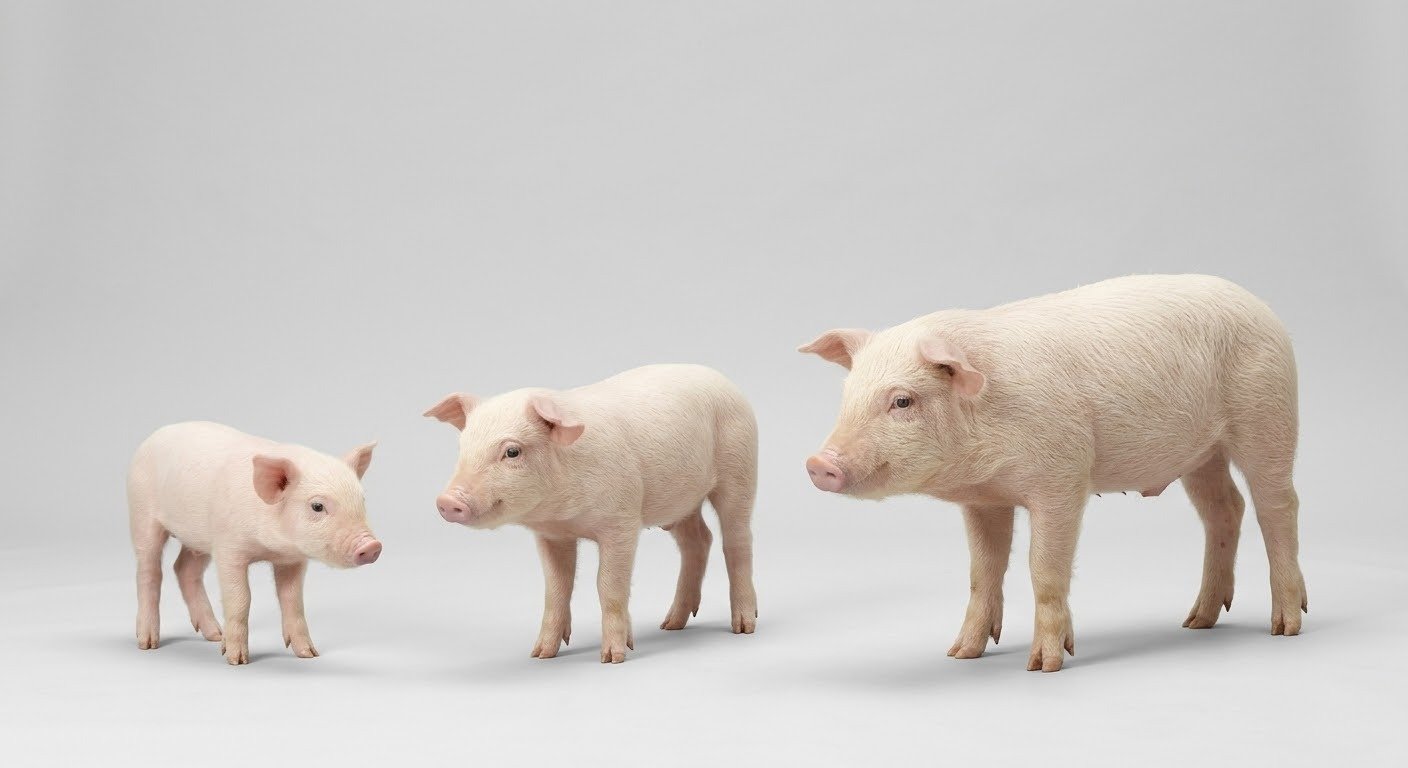
Age gives you three words before sex comes into it.
A piglet is a baby pig up to weaning age. The Pork Board puts weaning at roughly three weeks. Purdue adds that a piglet weighs about 3.5 pounds at birth and doubles that in seven days. A piglet looks like a different animal almost weekly.
A sucker is an unweaned pig still nursing from its mother. Farm glossaries use the word, and it turns up more in old barn records than in everyday speech.
A shoat is a young pig just after weaning. American Heritage defines it that way, and Collins calls it a recently weaned piglet. Some regions say “shote,” and you will hear both spellings in the field.
So the sequence runs piglet, then sucker while nursing overlaps, then shoat once the pig is on its own feed. After that, the terms split by sex.
Female pigs, gilt and sow
The female side turns on one fact: has she farrowed?
A gilt is a young female pig that has not had piglets. The Pork Board defines her that way, and Cornell’s pig enterprise handout phrases it as a female not yet mated. Purdue defines it more loosely as a female who has not had a litter. Both phrasings circulate in real farm writing, and the practical difference comes down to whether she has been bred.
A sow is an adult female that has farrowed. She has produced at least one litter and is the breeding female on the farm.
Two words help if you are reading a barn record. Farrowing means a sow giving birth and rearing to weaning. A litter is the piglets born to one sow at one time. Purdue puts gestation at 3 months, 3 weeks, and 3 days, the memorable old line for how long a sow is pregnant.
Most of the pork in the United States comes from gilts and sows. Purdue notes that hogs raised to market weight are generally gilts and barrows.
Male pigs, boar and barrow
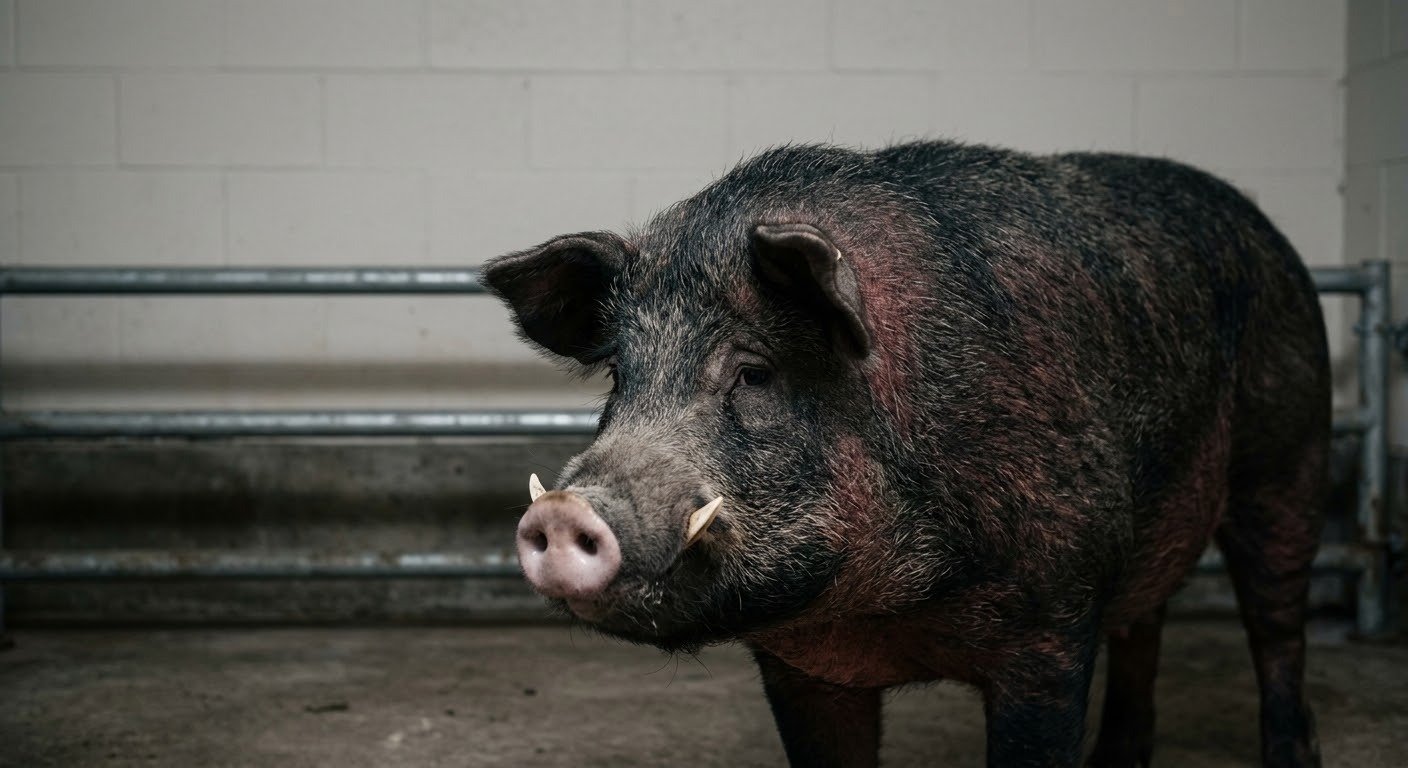
The male side is about one thing: whether the pig can breed.
A boar is an uncastrated adult male kept for breeding. Purdue calls it an adult breeding male, and the Pork Board says boars are male pigs used for breeding. Producers keep him separate.
A barrow is a castrated male. The Pork Board adds the practical part, that barrows are neutered male pigs that cannot breed. This is the pig most people eat in the United States.
A stag is a male castrated after reaching maturity rather than as a young pig. Cornell notes that if you leave a male intact and butcher him later, the meat can carry boar taint, an off flavor and odor. That is why castrating a pig meant for meat is standard practice rather than a preference.
The clean distinction is boar for breeding, barrow for meat, stag for a late castration.
What hog means in US and UK English
This is where most confusion lives, and the difference is real.
In American usage, hog is a word about purpose. The Cambridge Dictionary defines it in its American Dictionary section as a pig, “esp. one allowed to grow large so that it can be used as food.” Nothing in that definition depends on sex or castration. Purdue and the Pork Board both add an age lean. But in practice a US hog can be a gilt or a barrow, and the word simply tells you the pig is grown to eat.
In British usage the word narrows sharply, where a hog is a castrated male and a boar is an intact one.
For a US audience, hog is safe and natural for any meat pig. For a British audience, hog for a female pig will sound wrong, and gilt or sow will be the words you want. If your audience is mixed, use the sex terms, because gilt, sow, boar, and barrow mean the same thing nearly everywhere.
One more wrinkle. Hog carries a second, insulting sense in everyday English, meaning a person who takes more than their share. That sense is now more common than the animal in casual speech, which is part of why hog stopped feeling like a plain substitute for pig.
Group names and useful pig vocabulary

A herd is the ordinary word for a group of pigs, and Purdue uses it that way too. Cornell’s handout lists more literary or regional choices, including drift, drove, parcel, and passel. These are old barn language rather than words you would use at dinner.
A few more single words from the same barn vocabulary:
- Farrow means to give birth to piglets. A sow that farrows is farrowing.
- Gestation is the pregnancy itself.
- Weaned means a pig has stopped relying on its mother’s milk.
- Dressed weight is carcass weight after partial butchering.
- Feeder pig is a weaned young pig sold to someone who will finish it for market.
- Market hog is the finished pig ready for slaughter.
Baconer and porker appear in older and British pig trade contexts. They sit far from how most US readers talk, so you will rarely need them.
Famous pigs with real names
Some pig names come with a story attached, and Wikipedia keeps a running list of individual pigs if you want to go deeper.
Wilbur is the freshest example. In August 2026, a black-and-white piglet evaded pursuers in West Hollywood and went viral on TikTok. Residents named him, and a silent auction at the West Los Angeles animal shelter picked his adopter. The Los Angeles Times reported that the winner was the Diane Warren Foundation, which moved him to a sanctuary in Malibu. He was about 11 weeks old and weighed 17 pounds.
Max was the Vietnamese pot-bellied pig who shared George Clooney’s Hollywood Hills home, appeared with him in interviews, and died in 2006.
Then there are the fictional pigs people name pets after, and Wikipedia’s list of fictional pigs covers the range. The most recognizable names are Arnold Ziffel from Green Acres, Wilbur from Charlotte’s Web, Snowball and Napoleon from Animal Farm, Miss Piggy from the Muppets, Porky Pig from Looney Tunes, Babe from the film of the same name, Pumbaa from The Lion King, and Peppa Pig.
Names people give their pet pigs
Pot-bellied and other small pigs are common house pets, and owners get surprisingly serious about the name.
Food and comfort names suit a pig with a big belly. Muffin, Nibbles, Apple, Pudding, Toast, Butternut, Waffle, Gizmo, Noodle, and Peaches all fit an animal that spends its life eating and asking for more.
Squeaky and small names suit a piglet that is still small. Poppy, Pip, Squeaks, Button, Twig, Dot, Mochi, Bean, Pebble, and Wisp work well on a young pig and stay cute as it grows.
Farm and country names suit a pig with an outdoorsy streak. Boone, Hank, Mabel, Rosie, Dolly, Clover, Juniper, Pecan, Biscuit, and Hazel read like a working farm without being jokes.
Food names that double as jokes work best when they are specific. Hamlet, Hogwarts, Sir Hamington, Kevin Bacon, Porky, and Spare Rib are the kind that make people ask about the pig.
And if you want a name that comes with a story, borrow from a famous pig. Arnold, Wilbur, Snowball, Babe, Miss Piggy, Pumbaa, and Peppa all have an explanation ready, which makes them easy to introduce to strangers.
One caution on famous names. They date fast, and a pig that lives fifteen years may outlive the movie that made the name popular.
How to pick a name your pig will use
Most advice about naming pets is about how the name sounds. Useful advice about a pig is also about whether the animal will answer to it.
Say the name out loud twice before you commit. Pigs live in a noisy barn or a noisy yard. A short name with one clear beat carries further than a long one.
Skip the words you already use as commands. If you say “no” or “down” every day, do not also hand those words to a name.
Avoid names your other animals or small kids already answer to. Two animals with the same name makes the name useless for training.
Name the pig you actually have. A pig that is small gets a name that fits small. A large, calm, senior pig deserves a name with some weight to it. Renaming a grown pig is harder for both of you.
Test it against the boring moments. Say the name while you are doing laundry. If it still feels right when nothing exciting is happening, it is the right name.
Check your rules before you commit. A pot-bellied pig is a farm animal that happens to live in a house. In Los Angeles, animal control officials noted that zoning rules restrict keeping pigs in residences, which is worth sorting out before naming one. Ask your landlord, your city, or your homeowners association first.
Questions people ask
Is hog another word for pig?
Yes, in American English, with one qualification. Hog usually points at a pig raised for meat and leans toward a bigger animal near market weight. Cambridge’s American Dictionary defines it as a pig, especially one allowed to grow large to be used as food. In British English, hog narrows to a castrated male, so it is not a general stand-in for pig there.
What do you call a baby pig?
A baby pig up to weaning is a piglet. Until it is weaned, farm glossaries also call it a sucker. Once it is weaned and on its own feed, it becomes a shoat, or shote in some regions.
What is the difference between a gilt and a sow?
It is whether she has produced a litter. A gilt is a young female that has not had piglets, and some sources phrase that as a female not yet mated. A sow is an adult female that has farrowed. Most pork in the United States comes from gilts and sows.
Can a male pig be called a hog?
In American usage, yes. Hog describes a pig raised for meat, and most of those animals are barrows and gilts. A breeding boar is a boar first. In British usage a male hog specifically means a castrated male.
What is a group of pigs called?
A herd is the ordinary word. Older and regional barn language includes drift, drove, parcel, and passel, which you will find in farm glossaries but rarely in conversation.
Are pot-bellied pigs good pets?
They are kept as pets all over the United States, and they are smart enough to learn routines and hold firm opinions. Two things to weigh first. A pot-bellied pig grows into a big animal and can live fifteen years or more, so you are committing for the long run. And it is a farm animal that lives indoors, so local zoning and your landlord may have a say. Sort that out before you buy.
Is there one word I can use instead of pig everywhere?
No, and trying leads to trouble. Swine is the neutral choice when age and sex do not matter. Hog works for meat pigs in US English. Use gilt, sow, boar, or barrow when sex or job is the point of the sentence.
The short version
If you want one safe swap for pig in US English, use swine for anything formal and hog for a pig raised for meat. Beyond that, the vocabulary follows age and sex. A baby is a piglet, a weaned young pig is a shoat, a young female is a gilt, a mature female is a sow, an intact male is a boar, and a castrated male is a barrow.
Those six words will cover nearly any sentence you write. If you are naming a pig rather than describing one, borrow from the famous names above or pick something short that survives a noisy barn. Either way, say it out loud twice before you hand it over.