

Shopping for a baby name bracelet for mom usually starts with a sweet idea and turns into a pile of tabs. You want her name on her wrist, you want it to feel personal rather than generic, and you want the thing to survive daily life next to a newborn. Metal allergies, wrist sizing, engraving depth, and safety rules all matter more than sparkle. Most shoppers get the wrong thing wrong first, so this guide leads with the choices that decide whether she wears it at all. It covers what to look for, how to measure a wrist, which metals suit sensitive skin, how engraving depth affects how long the letters last, and the infant safety rules that apply the day the baby comes home.
In this guide
- What makes a baby name bracelet worth buying
- Getting the metal right for sensitive skin
- How to measure the wrist
- Engraving that lasts
- Style choices that work every day
- Keeping a newborn safe
- Questions people ask
- How to choose the right bracelet
What makes a baby name bracelet worth buying
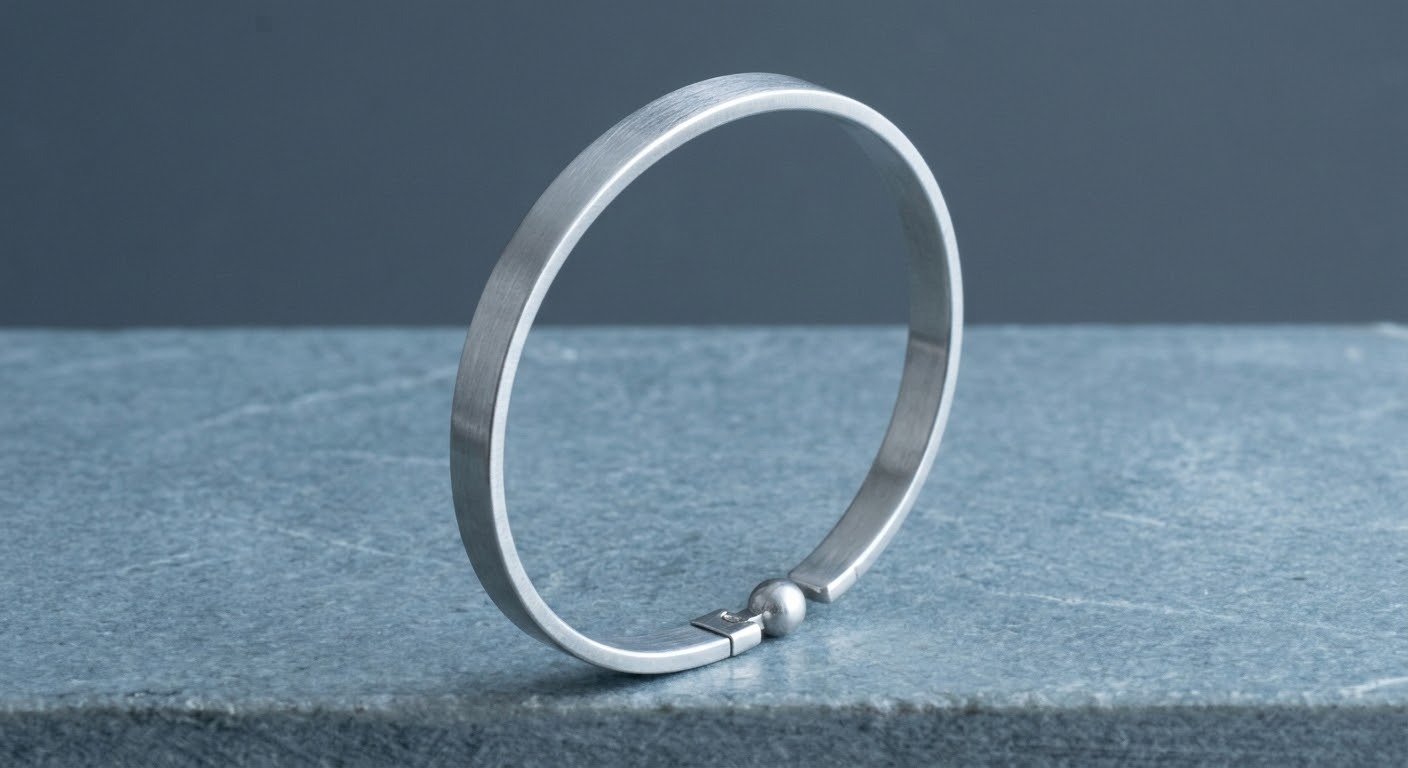
A bracelet engraved with a baby’s name works as a gift for three different people. The mom wears it, the baby gets named, and the giver gets credit forever. That three-way job is why these keep outselling plain engraved jewelry.
Most of the value sits in the personalization. A plain gold bangle says you bought jewelry. A gold bangle with a newborn’s name and a birth date on the inside says you were there. Look for:
- The name plus something specific. A name alone works. A name with a birth date, birth weight, or a short phrase you already say between the two of you is better.
- Engraving on the inside of the band. Text on the inside stays visible to her and invisible to everyone else. It survives trend cycles and never reads as dated.
- A finish that hides daily wear. A brushed or matte surface hides scratches. A high polish shows every scuff from a diaper bag.
- A clasp you can work one-handed. This matters more than buyers expect. New parents open bracelets with a free hand and a fussy baby in the other.
Skip anything with a long dangling charm or a bead that hangs on a chain. Those snag on blankets, crib slats, and sleeves, and they are the parts that break first.
Getting the metal right for sensitive skin

Nickel causes more allergic contact dermatitis than any other metal, and it hides inside jewelry you would not suspect. Plated pieces are the trap. A bracelet described as gold plated often has a base metal underneath that contains nickel, and the plating only covers the surface. The American Academy of Dermatology Association recommends wearing jewelry that is nickel-free or hypoallergenic, or made from surgical-grade stainless steel, 18-, 22-, or 24-karat yellow gold, pure sterling silver, or platinum.
Here is what that means when you read a product page:
| Metal | What to expect |
|---|---|
| Surgical-grade stainless steel | The practical default. Durable, holds engraving well, low nickel release. Often the best metal for a daily bracelet. |
| 14k or 18k yellow gold | Warmer tone, higher value. Check the karat listed, not just the word gold. |
| Sterling silver | 92.5% silver. Affordable and tarnish-prone. Needs regular wiping. |
| Silver-plated or gold-plated base metal | Cheapest and least predictable. The layer wears through and exposes whatever is underneath. |
| Vermeil | A thicker silver or gold layer over a solid base. Better than plating, still layered. |
DermNet’s guide to jewellery allergy makes the plating point clearly. In less expensive jewelry, nickel is often used in the base metal that is then plated with gold or silver. Their standing advice is to assume all metal jewelry contains some nickel unless it is surgical-grade stainless steel, 18- or 24-karat gold, sterling silver, or pure platinum. White gold is usually nickel alloyed, and its rhodium plating wears off over months or years until the nickel underneath reaches skin.
A nickel reaction looks like eczema. The American Academy of Pediatrics describes an itchy rash with redness, swelling, and scaling that appears where metal touches skin, and notes that nickel allergy affects an estimated 1.1 million children in the US. Adults get it too. Contact dermatitis to metal jewelry can show up after years of trouble-free wear, and once it appears it often stays.
If she already reacts to costume jewelry, cheap earrings, or snaps on jeans, skip the bargain bin entirely and go straight to a verified solid metal. If her skin is reactive but untested, buy from a seller that states the exact alloy rather than one that says only hypoallergenic.
How to measure the wrist
Wrist measurement is the step people skip, and it is the reason so many engraved bracelets end up in a drawer. The baby is not the person wearing the bracelet, so measure her wrist, not the newborn’s.
- Take a soft measuring tape, or a strip of paper, or a piece of string.
- Find the wrist bone just below the base of the palm, where a bracelet naturally rests.
- Wrap the tape around that spot. Keep it snug, not tight. You should not see skin bulging over the tape.
- Read the measurement where the ends meet. That is her wrist circumference.
- Add about half an inch for a snug fit, or up to a full inch for a relaxed fit that drapes.
No tape measure in the house? Wrap string around the wrist, mark where the ends overlap with a pen, lay it flat against a ruler, and read the length.
Fit depends on the style. Thin chains and anything meant to sit close to the wrist look better snug. Cuffs and bangles need the extra inch, otherwise they fight your hand. If you are between sizes, err larger for a bracelet with any give, and smaller for a rigid bangle that must pass over the hand. When in doubt, ask the seller which measurement their size chart measures, because some charts list wrist size and others list bracelet length.
Engraving that lasts
Engraving depth matters more than engraving style. Deep engraving cuts away metal, so the letters keep their edges as the surface wears and gets polished. Shallow engraving sits on or barely into the surface, and it fades first on a bracelet that takes daily handling.
Hand engraving takes longer and gives crisp, tapered letterforms. Machine and laser engraving are faster and consistent, which is why most custom jewelry uses them. The tradeoff shows up in the finish inside the letters, so look at a close-up photo before buying.
What holds up best on a bracelet worn every day:
- Deep cut letters rather than a shallow laser etch.
- A plain band with no texture competing with the letters.
- Nothing smaller than a few millimeters of letter height. Hairline detail is the first thing to blur.
- Fewer words. A name and a date engrave cleaner and survive longer than a full phrase on a narrow band.
Check the character limit before you fall in love with a sentence. Custom bracelets cap the number of characters for good reason, because the engraving has to fit the available surface and stay legible. Get the spelling right in the message you send. A wrong name on a keepsake is the one flaw nobody forgives.
Style choices that work every day
Once the name and the metal are settled, style is easier. These are the shapes that hold up under a new parent’s schedule.
A slim chain bracelet reads as jewelry rather than a gift, which means she actually wears it to work. A cuff fits over a larger wrist without a clasp and survives fumbles. A bangle is the most classic choice and pairs with a watch band or stacked thin bangles. A flat band takes engraving best and looks the most intentional.
Consider two bracelets if you want something for the hospital and something for later. Many parents give the engraved one right away and keep a plain chain for nights and showers. Engraving is protected by the metal itself, so a daily wearer does not need to baby it, but swimming pools and hot showers still dull shine.
Think about how the name will be read. A name that people mispronounce or misspell is worth checking out with the engraver. A nickname engraved instead of the full legal name works well when that is what she actually calls the baby. Dates should use an unambiguous format. Spelled out months or a clear numeric format prevent a bracelet that outlives the person who can explain what 04/09 meant.
Keeping a newborn safe

This section matters because the bracelet is about the baby, even though the baby never wears it. Nothing in this guide recommends putting jewelry on an infant. The American Academy of Pediatrics states plainly that it does not recommend that infants wear any jewelry, and notes that suffocation is the leading cause of death for children under a year old. The FDA warned in December 2018 after reports of children choking on detached beads and an 18-month-old strangled by an amber necklace during a nap.
So the bracelet is the mother’s to wear. Three things follow from that.
Keep the baby away from the clasp and charms. A mother wearing a fine chain with a newborn on her shoulder is not a hazard to the baby, but the same chain during floor play or tummy time is something to take off first.
If you do ever put a keepsake bracelet on an infant, even temporarily, the AAP’s guidance is to wear it on a wrist or ankle and never around the neck, supervise continuously, remove it whenever the child is unattended, and remove it during every sleep. That is a lower-risk compromise, not an endorsement.
Do not buy teething jewelry as a matching gift. These products are marketed to relieve teething pain, and the AAP notes there is no scientific evidence supporting the claims. The same warnings about choking and strangulation apply. If you want to give something for teething, give a rubber chew toy or a frozen damp washcloth instead.
Engraving services will happily put a name on a necklace for a newborn, and some will put it on an infant-size bracelet. Skip both. Let the mother wear the name.
Questions people ask
What is the safest metal for a baby name bracelet?
Surgical-grade stainless steel, because it is durable and among the least likely to release nickel. Solid 14k or 18k gold works well too. Avoid plated base metal if skin is reactive.
Can a newborn wear an engraved name bracelet?
Not as an everyday item. The AAP does not recommend jewelry for infants. If a keepsake is worn briefly, keep it on a wrist or ankle, never the neck, always supervised, and off during sleep.
How do I know the right bracelet size?
Measure the wrist just below the wrist bone, snugly, then add about half an inch for snug or up to a full inch for relaxed. Confirm whether the seller’s chart lists wrist size or bracelet length.
What engraving depth lasts longest on a bracelet?
Deep cut engraving, because it removes metal rather than marking the surface. It keeps its edges as the bracelet is handled and polished over time.
Is gold plated jewelry safe for sensitive skin?
Rarely a good choice. The plating is a thin layer over a base metal that may contain nickel, and it wears through. Solid gold, sterling silver, or surgical-grade steel is a safer bet.
How many characters should I engrave?
As few as possible. A name plus a birth date is plenty. Check the seller’s character limit before ordering and confirm the spelling in writing.
Will an engraved bracelet tarnish or scratch?
Sterling silver tarnishes and high polish shows scuffs. Brushed finishes hide wear. Gold and surgical-grade steel resist both. Any bracelet can be refinished, but a brushed band needs less.
Should I buy a matching set for mom and baby?
Buy one engraved bracelet for mom. Skip the baby version. Instead of jewelry, a handprint keepsake or a milestone card gives you the matching feel with none of the infant safety questions.
How to choose the right bracelet
Pick the metal before anything else, because it decides whether she can wear the bracelet daily at all. Surgical-grade stainless steel handles hard use, and solid gold reads as an heirloom. Measure her wrist properly and add the extra half inch for a chain or a full inch for a cuff. Engrave deep, keep it short, and get the spelling confirmed in writing.
Then keep it on the mother’s wrist, away from the baby’s skin, clasp, and hands. That single habit covers most of what safety guidance is about here.
Get the metal right and this is a gift she wears for years. Get it wrong and the bracelet sits in a drawer with a rash mark under it.