
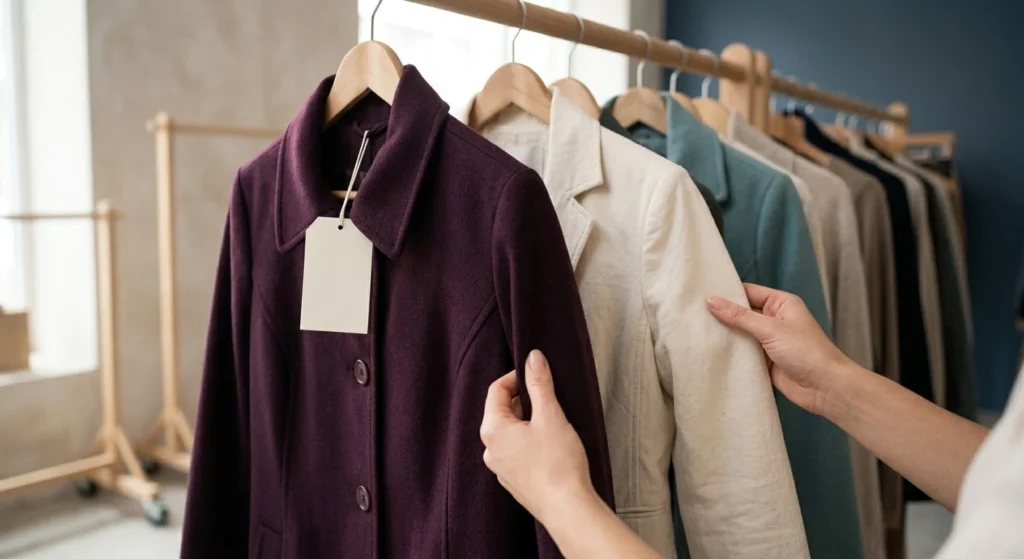
Shopping for women’s clothes, many shoppers use the phrase “name brand” to mean one thing: a label people recognize, a label worth the extra money. The phrase is loose. Some readers mean a bargain-bin chain, some mean a department store staple, and some mean a European label that costs several times as much.
This guide sorts out what the term actually covers. It looks at the labels US shoppers recognize across the mass, mid, and premium ends, explains how to read a care label to find out who really made a garment, how to spot an imitation, and what to check before buying used.
In this guide
- What a name brand actually means
- Brand label, store label, and no label at all
- Mass-market name brands
- Mid-market name brands
- Premium and designer name brands
- How to read a care label and find the real manufacturer
- How to spot an imitation
- What to check before buying secondhand
- Questions that settle the decision
- Frequently asked questions
- Conclusion
What a name brand actually means
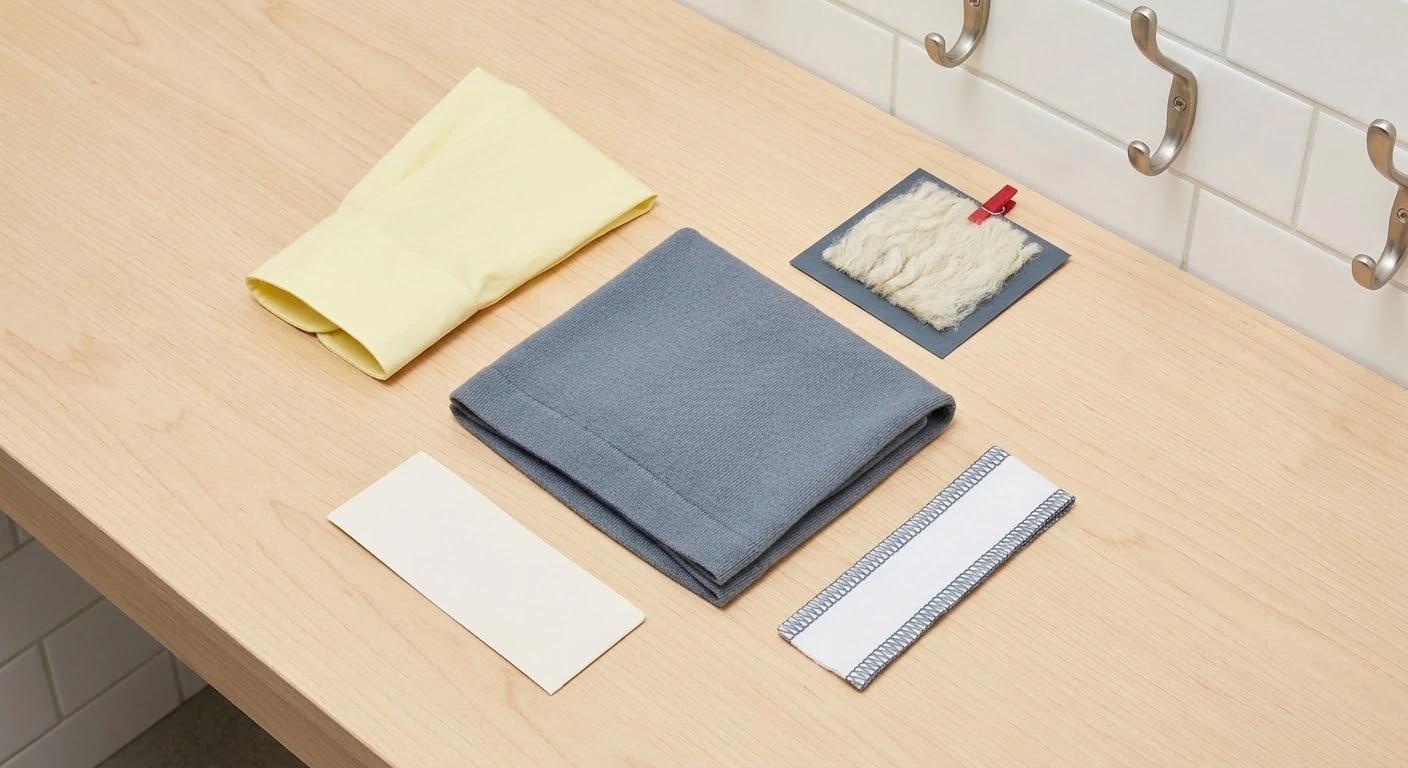
A name brand is a label that has built a reputation shoppers can recognize without reading the tag. That reputation usually comes from something a shopper can check: a consistent size fit across seasons, a fiber content that matches what the label claims, a store presence that lets someone try the item on and return it, or a marketing history long enough that the name carries expectations.
That definition is deliberately loose on purpose. There is no US office that decides which labels count as name brands, and no regulator tracks the phrase. The FTC’s Textile Fiber Rule governs what a label must disclose, not which labels are considered important.
So the honest answer is that a name brand is a label with a reputation a shopper can name. Everything else in this guide follows from that: reputation is built over time, it costs more to build than to copy, and both facts shape what the reader can do in a store.
Brand label, store label, and no label at all
Before listing labels, it helps to separate three things that shoppers often mix together.
A brand label belongs to a company that designs and sells clothes under its own name. Old Navy, J.Crew, and Levi’s are brand labels. Gap Inc. is a company that runs four labels of its own: Old Navy, Gap, Banana Republic, and Athleta.
A store label, often called a private label, belongs to a retailer that designs clothes for its own shelves and sells them under a house name. Many retailers do this, and the clothes appear at several chains at once.
An unlabeled garment carries a fiber-content tag but no brand at all. This is legal and common, especially on racks at off-price stores such as Marshalls, T.J. Maxx, and Ross. The name printed on the tag is the manufacturer, and it may be a label the shopper has never heard of and cannot find anywhere else.
This distinction matters more than it first appears. When a shopper sees a familiar brand on a rack at an off-price store, the label is a genuine signal about who made the garment. When the tag is blank, the only useful information left is fiber content, care instructions, and country of origin.
Mass-market name brands
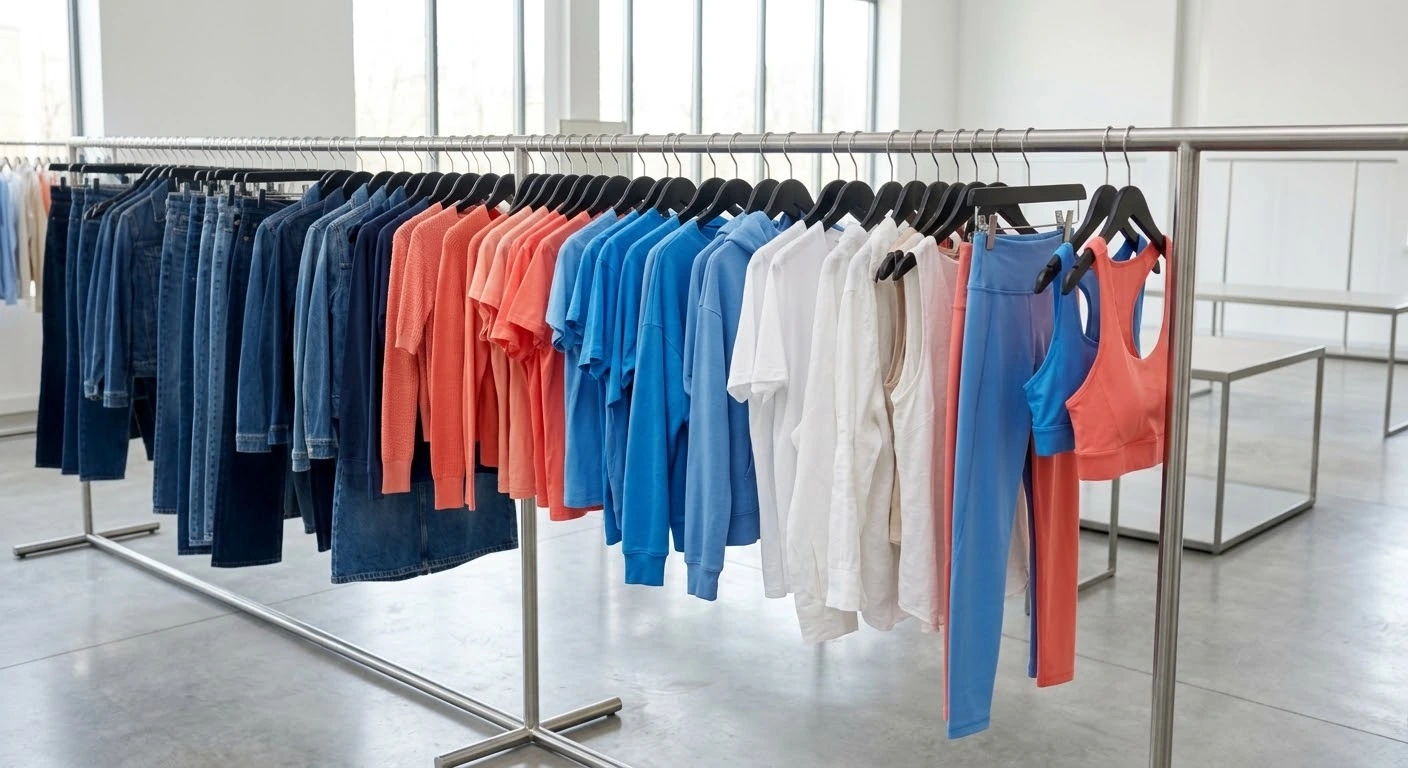
These labels sit at the accessible end. They are widely stocked, heavily advertised, and the ones most shoppers can name without hesitating.
- Old Navy and Gap, both Gap Inc. labels
- H&M, whose parent company also runs COS, Arket, Monki, Weekday, and Tati
- Uniqlo, run by Fast Retailing
- Zara, the main label of Inditex
- Forever 21, which turns over stock quickly to follow trends
- Mango, which follows the same fast-cycle approach
- Nike, adidas, and New Balance, which cross from sportswear into everyday clothing
- Target, Walmart, Marshalls, T.J. Maxx, and Ross, which are better described as retailers than as single labels
A reader looking for name brands should notice how many of these are chains inside larger companies rather than standalone names. That is normal, and it explains why so many store labels share sizing, sourcing, and quality patterns.
Mid-market name brands
These are the labels most US shoppers mean when they say “name brand” without qualifying it. They are a step up in price from the mass end, and they usually sell through their own stores and websites as well as department stores.
- J.Crew and Madewell, both of which lean on natural fabrics
- Banana Republic and Ann Taylor, both aimed at work and everyday dressing
- Loft, which is aimed mainly at women
- Lands’ End, known for outerwear, knitwear, and size-inclusive basics
- Free People and American Eagle, both youth-leaning
- Express, built on denim and casual pieces
- Everlane and Reformation, both narrow-label brands selling directly
- Quince, which markets natural fibers including cashmere, linen, and denim at lower prices than most of this group
- lululemon, a large activewear business that reported full year revenue of $11.1 billion for the fiscal year ending February 1, 2026
- Levi’s, which has sold denim since the nineteenth century
- REISS and Massimo Dutti, both European labels with strong US followings
- COS and Arket, both within the H&M Group but positioned and priced separately from H&M itself
No reliable public source publishes price ranges for these labels that stay true across a season and a category. Any price band a reader has seen elsewhere is someone’s estimate. The useful comparison is between tiers, not between exact figures.
Premium and designer name brands
At the top end, the label itself carries the price, and the shopper is paying for design, materials, and reputation rather than for a specific technique a rival lacks.
- The Row, which is built around minimal, expensive essentials
- Acne Studios, a Stockholm label
- Ganni, a Copenhagen label
- Vince, which sits between the mid and premium ends
- Eileen Fisher and J.Jill, both aimed at women who want their clothes to last
- Ralph Lauren, whose main line sits at the premium end of this group
- TOTEME, a Stockholm label
The useful test here is different from the one that works at the mass end. At this tier a shopper should still read the label, but the deciding question becomes whether the garment is made to a stated standard rather than whether the name is famous.
How to read a care label and find the real manufacturer
US law settles most of this. The FTC’s Apparel and Labeling page states that federal law requires most textile and wool products to carry a label listing fiber content, country of origin, and the identity of the manufacturer or the business responsible for marketing or handling the product.
That gives a reader three things to look for on the tag:
- The fiber content, in generic names and percentages by weight
- The country of origin
- The company name, which is the manufacturer or the marketer, and is the most useful line for identifying a fake
A fourth element is the care instruction. The Care Labeling Rule requires manufacturers and importers to give complete regular-care instructions, or warnings if the garment cannot be cleaned without harm. The FTC also states that a company cannot say “Dryclean Only” without proof that washing would damage the garment. That gives a reader a concrete test for whether a label is lazy or honest.
One detail in the current care labeling regulation catches people out. If a label says “machine wash” without naming a temperature, hot water up to 145 degrees F is considered safe. A garment that cannot take hot water should say so.
The regulation also defines a care label as one that stays attached and readable for the useful life of the garment. A label that peels off after one wash, or that is printed so faintly it cannot be read, does not meet that standard.
How to spot an imitation
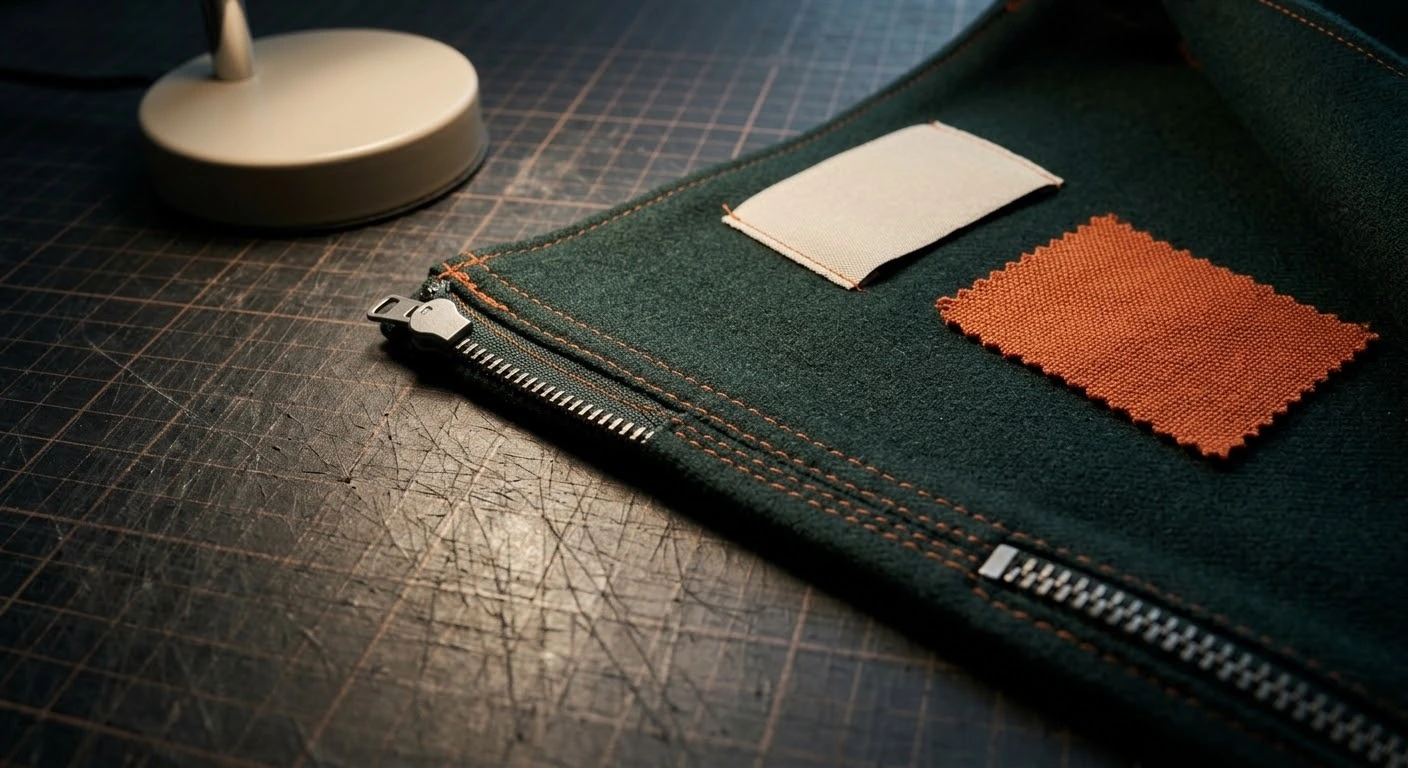
Imitations of famous labels are common enough that US Customs and Border Protection publishes consumer guidance on fake goods. In a 2021 seizure release, CBP officers wrote that counterfeit merchandise is often made of inferior materials, produced under uncontrolled conditions, and labeled with false information.
Several practical checks follow from the labeling rules.
Check the manufacturer line. A real garment names a company that a reader can look up. An imitation often prints a name that does not exist, or one that belongs to a different country entirely.
Compare the fiber list to the price. A garment sold at a designer price and labeled as a cheap synthetic blend does not add up.
Look at the tag’s construction. Loose threads, uneven stitching, and a tag that will not survive a wash are all reasons to walk away, whatever the name says.
Read the care instructions critically. Instructions that contradict the fiber content, such as “dryclean only” on a polyester blouse, are a sign nobody checked.
Be suspicious of condition. A bargain on a label that never discounts is worth examining closely.
What to check before buying secondhand
Buying used is where label checks pay off most, because a counterfeit is often the only cheap version of a famous name on the market. The reader’s own eyes do most of the work here, and a device camera helps with small print.
A short checklist:
- Read the manufacturer line and search the name before paying
- Confirm the fiber content matches what the seller described
- Check that care instructions are printed and readable
- Look for a period-correct tag style and typography for that brand
- Treat a missing label as information: ask why it is gone
- For leather and denim, look at hardware, stitching density, and rivets, which are expensive to copy well
- Ask about wear, repairs, and alterations, and inspect seams and hems closely
Levi’s is a good example of why hardware matters. According to the company’s own history, the company added metal rivets to work pants under a US patent granted in 1873, and later introduced a red tab in 1936 specifically to set its product apart from competitors. Those are small, checkable details.
Questions that settle the decision
Before buying a name brand garment, five questions do most of the work:
Is this brand label or store label? Both are legitimate. The reader should know which one they are paying for.
Who made it? The manufacturer line on the tag settles it, and it costs nothing to look up.
Does the fiber content match the price? A reader who learns to read the fiber list will catch more fakes than any logo check.
Does it fit the wardrobe honestly? A label a shopper will wear often is worth more than a famous name worn twice.
Will it survive? Handled seams, finished hems, and a readable care label are better quality evidence than any marketing claim.
Frequently asked questions
What is the difference between a name brand and a store brand?
A brand label belongs to a company that designs and sells under its own name. A store label belongs to a retailer and is designed for that retailer’s shelves. Both are legal, and both can be well made. The reader can tell them apart by checking which company the tag names.
Does a name brand mean better quality?
No. A famous label is a signal about consistency and about how much the company spent on design and materials. It is not a guarantee about any individual garment. Fiber content, construction, and fit still matter more for a single piece.
Where is the manufacturer listed on a garment?
On the care and fiber label, which must state the manufacturer or the marketer responsible for the product. That same label must list fiber content and country of origin under the Textile Fiber Rule.
Can a garment with no brand still be good quality?
Yes. A blank brand line means the retailer did not put its own name on the piece, which is normal for off-price racks. The fiber content, care instructions, and construction still tell a reader something real.
Is a designer label worth the extra money?
Sometimes, and it depends on the garment. At premium tiers a shopper pays for design and materials, and those qualities are easier to see and feel than at budget tiers. Buying one excellent coat beats buying five cheap coats, and secondhand is a reasonable way to reach that tier.
How can I tell if a label is fake before I buy?
Read the manufacturer line and search it. Check that the fiber content fits the price, and inspect the stitching, hardware, and tag printing. A misspelled brand name or a country that does not fit the brand’s history are strong reasons to walk away.
What should I look for on a secondhand name brand garment?
Confirm the manufacturer name, check the fiber content and care instructions, inspect seams and hems for wear, and ask about repairs. For denim and leather, hardware and stitching density are more telling than the tag.
Conclusion
A name brand is a label with a reputation a shopper can name, and that reputation is built on things a shopper can check. Look at the fiber content, the country of origin, and the company name on every garment, because those three lines are guaranteed by US law and they settle most questions about whether a piece is what it claims to be.
For readers ready to browse, the mass, mid, and premium sections above give a verified starting list for each tier.