
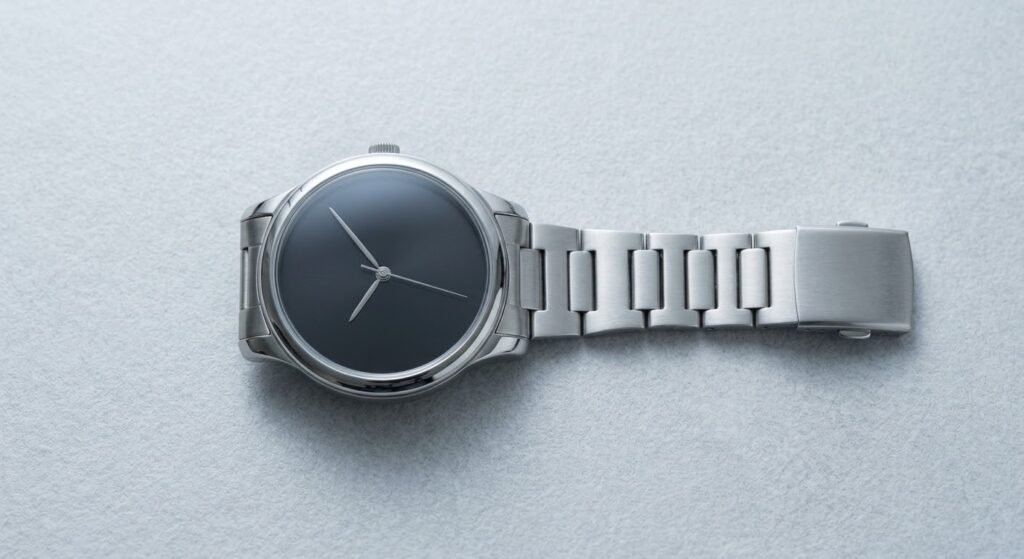
Shopping for a “name brand” watch usually starts with the logo. You see a name you recognize on the dial, you assume the watch underneath is built to match, and you decide from there. The logo is the least useful part of that decision.
Nearly everything that decides whether a watch holds up sits on the spec sheet: movements, crystals, water-resistance ratings, case materials, strap fit, and who services it in ten years. It covers how to read each, how to size a watch for a smaller wrist, and what to confirm before paying.
In this guide
- What “name brand” actually means for a watch
- How to read a movement spec
- Quartz, automatic, or mechanical for everyday wear
- The crystal takes more abuse than the movement
- What “water resistant to 50 m” really means
- Case and strap materials that hold up
- Sizing a watch for a woman’s wrist
- Service and warranty are the part most buyers skip
- How to shop, step by step
- Questions buyers ask most
- What to take away
What “name brand” actually means for a watch
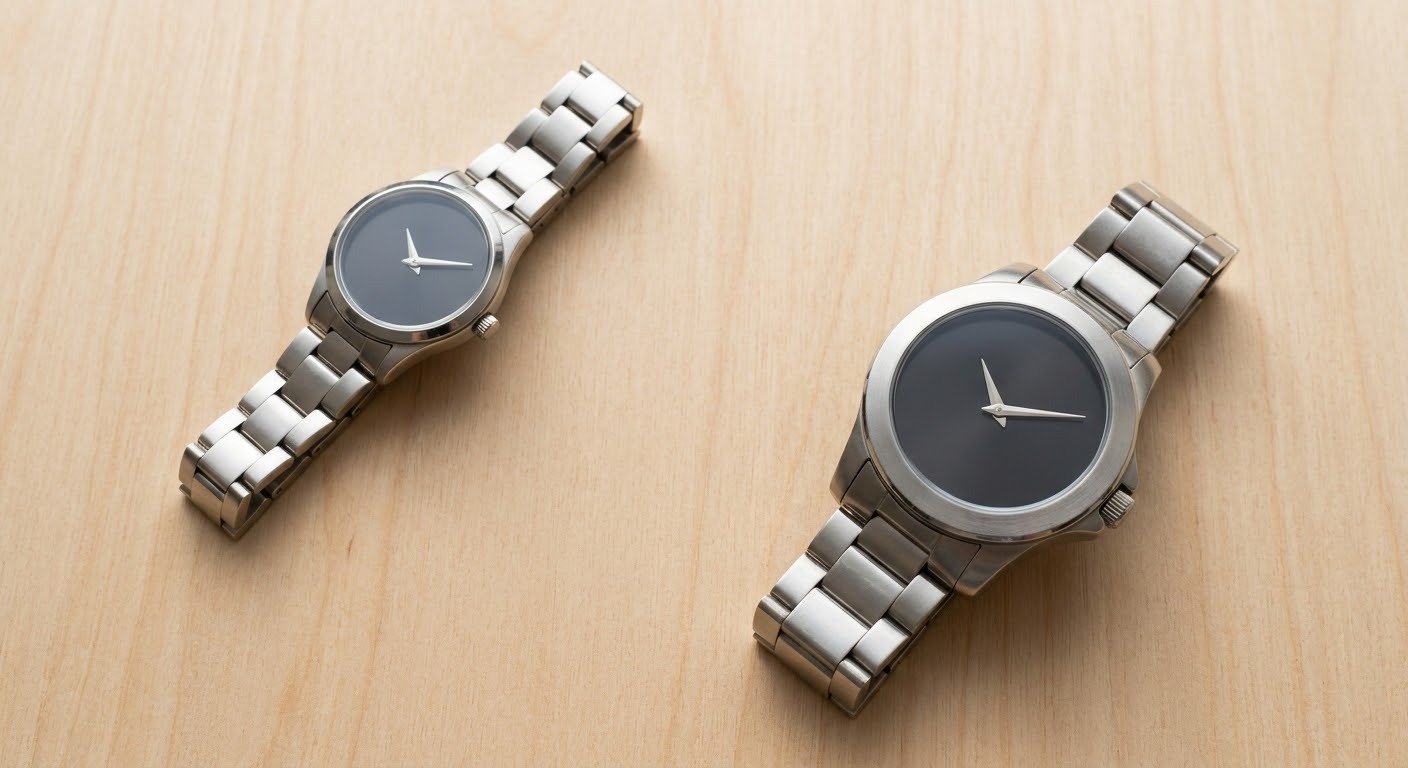
Name brand is a shopping phrase, not a technical category. It covers an enormous range: a step-up quartz at one end, a hand-finished mechanical watch priced in the tens of thousands at the other. Treat the label as a starting point for research, not a quality claim.
Price bands do differ in ways you can check. Movement sourcing and finishing matter most. Hand-finished mechanical movements take more labor per piece than a battery-powered module, and that labor shows up in the price. Materials come second: precious metal cases and sapphire crystals cost more than steel and mineral glass. A brand’s service network comes third, and buyers skip it most. Servicing watches decades after sale is a long bet on parts and staff.
None of that guarantees a good watch in your hands. It tells you what you are paying for. A well-specified watch at the low end of a band can outlast a badly specified one at the top, and the reverse holds too.
How to read a movement spec
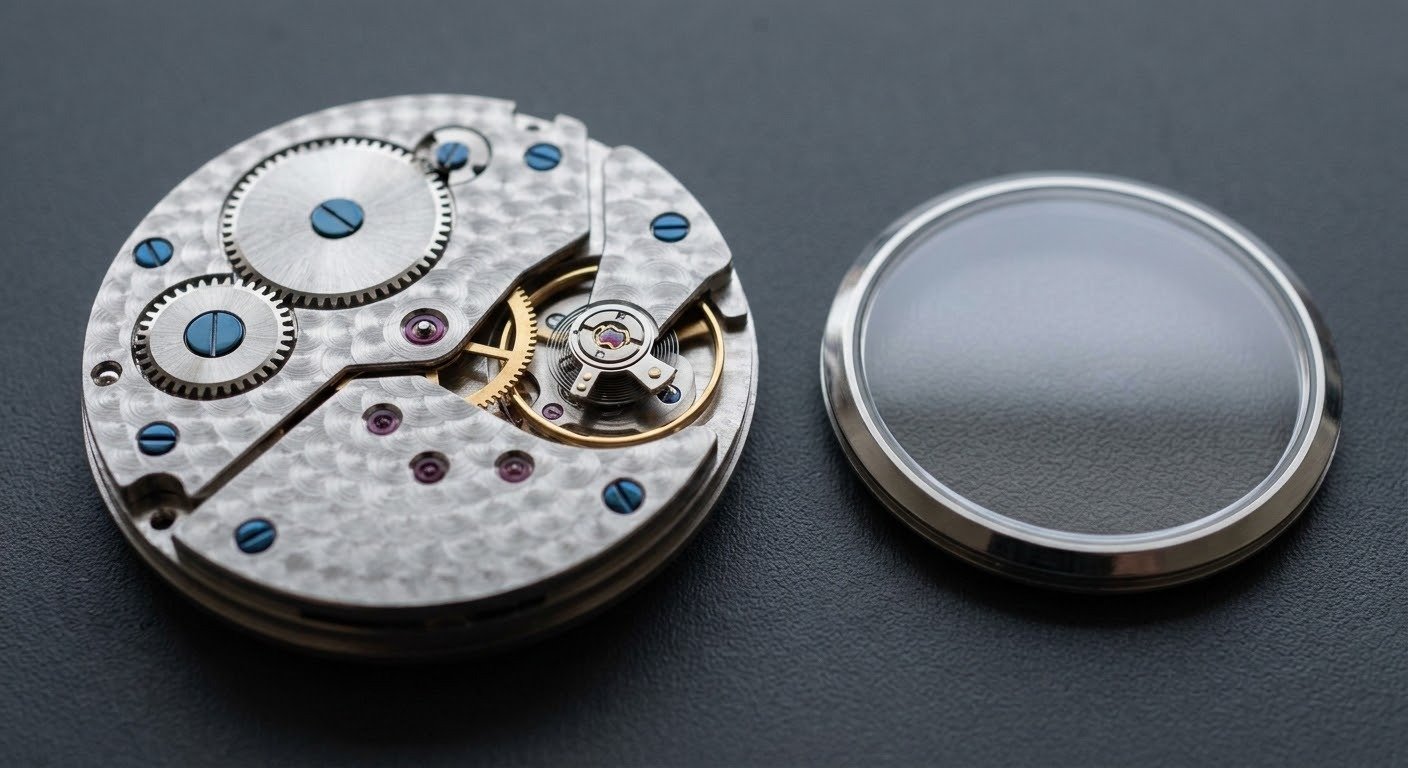
Start with the movement line. Four terms cover almost everything you will meet.
Quartz means a battery-powered electronic movement. Accuracy is quoted in seconds of drift per day rather than months. Battery replacement is a routine service a few times over the watch’s life. A caliber code, such as an alphanumeric model number, tells you where the movement came from: built in house, bought from a supplier, or made by a third party. None is automatically better. Ask and compare.
Automatic means a self-winding mechanical movement. A rotor winds it while you wear the watch. It stops when you stop wearing it, and restarting can mean setting the time, the date, and sometimes the hands. That is a small annoyance, not a defect.
Mechanical means a hand-wound movement. You wind it with the crown. Most mechanical watches in shops today are automatic, so treat “mechanical” on its own as a broad term covering both.
Solar and kinetic movements charge from light or motion and behave like quartz otherwise.
Accuracy matters most on a mechanical watch, and reputable makers publish a rate in seconds per day. If it is not on the spec sheet, ask the seller for the figure in writing.
Quartz, automatic, or mechanical for everyday wear
| Quartz | Automatic or mechanical | |
|---|---|---|
| Power | Battery | Wound by motion or by hand |
| Restart | None, keeps running | Winding needed after sitting unworn |
| Routine maintenance | Battery change | Periodic service to keep accuracy |
| Accuracy | Quoted in seconds per day | Quoted in seconds per day or tolerance |
| Best fit | Low fuss, set and forget | Readers who care about the mechanism |
For everyday wear, quartz wins on convenience and usually on price. Nothing needs setting after a night on the nightstand.
Automatic is the sensible middle for a first serious watch. It rewards wear with visible motion, and maintenance costs a service bill rather than a battery fee. A mechanical movement is a sealed mechanism that needs periodic professional servicing to hold its rated accuracy, and that bill recurs.
Choose mechanical when the mechanism itself is part of what you enjoy. That is a real reason, but not one to overspend on. Much of the appeal is how it feels to wind and wear, not accuracy: no consumer mechanical movement in any tier reaches the accuracy of a good quartz.
The crystal takes more abuse than the movement
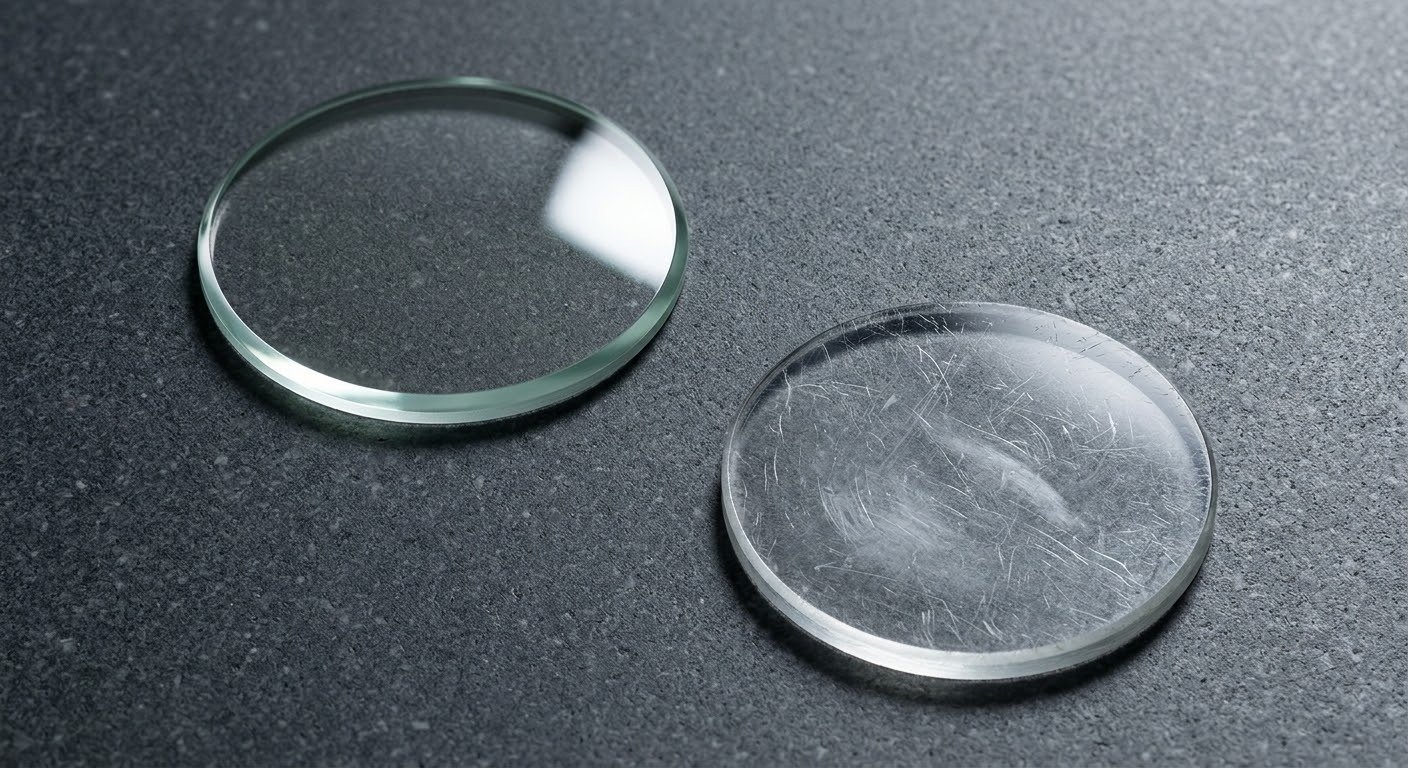
The crystal is the part of a watch that gets hit, scraped, and cleaned most, and buyers spend almost no time on it.
Sapphire is the hardest material used in watches and shrugs off the everyday scratches that ruin other crystals. It costs more and can chip if struck hard at a corner, which is rare.
Mineral glass is the standard crystal on most watches and scratches easily. Coatings can harden it, but a coating is a film on the surface, and coatings scratch and peel.
Acrylic is soft, takes polish out of it, yellows with age, and shows every scratch. It appears on inexpensive and fashion watches.
Two details separate a careful build from a cheap one. First, look at how the crystal meets the case: a clean, even line with no gap or proud edge beats a wavy fit. Second, check whether a seller claiming sapphire means the crystal. Dial sapphire and crystal sapphire are different claims, and jewelry-store listings mix them up.
A scratched anti-reflective coating over sapphire is normal and does not mean the crystal is fake.
What “water resistant to 50 m” really means
Start with the word choice. A watch is water resistant, not waterproof. There is no rating at which a watch is waterproof, and any seller who says otherwise is selling something.
The industry standard for everyday watches is ISO 22810:2010, Horology, Water-resistant watches. It sets test methods for verifying water resistance and defines the marking a maker may put on the watch. It replaced ISO 2281, used from 1990, and covers daily wear and swimming, while dive watches fall under ISO 6425.
ISO gives a plain example. A watch sold as water resistant to 30 meters should not leak for aquatic activities down to that depth. That is the clean version, and it is a laboratory result obtained under controlled static conditions.
Here is what the rating leaves out. Water resistance is a condition that degrades. Seals age and the crown gets pushed and turned. A hard knock can put a dial out of true, and heat makes materials move. Soap, shampoo, lotion, perfume, detergent, acids, sunscreen, insect repellent, and hair dye attack seals. Steam rooms and saunas are conditions to stay out of with any watch you care about, at any rating. None of that changes when you bought it.
The rating applies to the watch head, not the whole package. A steel bracelet or leather strap has its own limits. A 100 m watch with a leather band is still not a 100 m watch in the water.
Treat the chart below as practice, not standard. Your maker’s instructions always win.
| Marking | What it generally covers | What to still do |
|---|---|---|
| 30 m / 3 ATM / 100 ft | Sweat, rain, hand washing | Take it off before showering or swimming |
| 50 m / 5 ATM | Everyday wear and rain | Confirm whether swimming is allowed |
| 100 m / 10 ATM | Swimming and showering, per maker | Rinse with fresh water afterward, dry fully |
| 200 m / 20 ATM and up | Snorkeling and diving-oriented use | Follow the maker’s limits, not a general chart |
Ask what the watch is rated to under ISO 22810, or whether it carries an IP rating instead, since the two are not interchangeable. Then ask whether the maker will reseal and pressure test at service, and get the answer in writing.
Case and strap materials that hold up
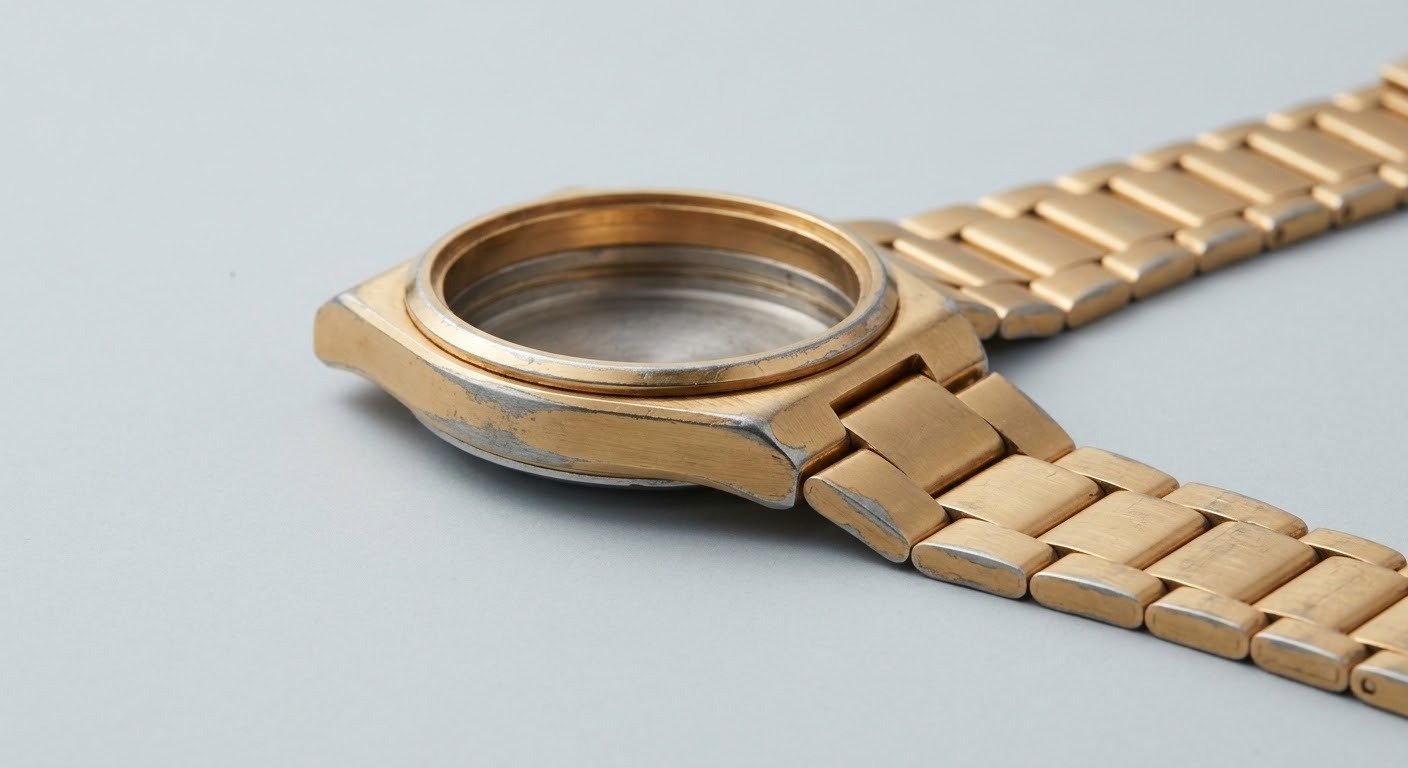
Stainless steel is the default for a reason. It resists corrosion, takes knocks well, and scratches shallowly rather than deeply, which makes it the sensible pick for daily wear.
Plated and PVD-coated metals put a thin colored layer over a base metal. Lower-priced gold-tone and two-tone watches are frequently plated rather than solid. The plating wears through at the edges first, showing different-colored metal. Ask whether the case is solid or plated, and treat an unlabeled “gold-tone” case as plated.
Titanium is light and strong, and darkens slightly at the surface edges over time. Wearers call that a patina, and buyers sometimes mistake it for damage.
Solid precious metal is heavy. That heft is a real feature for some and a daily weight complaint for others. Try before committing.
A bracelet should come with removable links so a jeweler can size it to your wrist. Note whether it uses a pin buckle or a deployant clasp, and remember that a clasp is a frequent service point. Leather reacts badly to water and sweat, so keep a rotation and dry the strap after wear. For a metal bracelet you can swap yourself, check that it uses spring bars, not a screw-in assembly.
Sizing a watch for a woman’s wrist
Most sizing mistakes come from reading case diameter alone. Lug-to-lug is the number that actually decides whether a watch looks right on your wrist, because that is the width that spans your arm.
Measure before you shop. Wrap a soft tape or a strip of paper snugly around your wrist just above the bone, not tight, and write the number down. Then measure a watch you already own and feel how it sits. You want a dial width that leaves a sliver of wrist on each side.
As guidance rather than a rule, a dress watch in the mid-30 millimeter range and up works for smaller wrists. Cases past about 40 millimeters tend to dominate a smaller wrist and can read as costume jewelry. If you love a big case, buy it deliberately and try it on first.
Thickness matters too. A 12 mm case can wear bigger than a 9 mm one of the same diameter, and it slides around on a slim wrist. Lug width decides which straps fit later, so note it before you commit.
Two things make sizing safe to get wrong. Try a watch on before buying, and read the return policy first. Jewelry is frequently final sale, and a watch that fits at 4 p.m. fits differently on a swollen summer afternoon.
Service and warranty are the part most buyers skip
A watch is a mechanical object that needs care, and the brand’s willingness to provide it is the single most useful thing to check before you buy. Ask these questions in the store or over the phone, and get the answers in writing.
- Is there an authorized service center within a reasonable drive or ship distance, and where is the nearest one
- Will the maker service a watch bought elsewhere, and if not, does that affect the warranty
- What does a routine service include, and does it include resealing and a water-resistance test
- How long is the warranty, and does it cover the movement, the case, and the crystal
- What voids the warranty, including third-party battery replacement or anyone opening the caseback
- Is the warranty international, and does it require proof of purchase or the original retailer
Water damage is the exclusion to watch for closely. Many warranties exclude it, which is why the rating, seal maintenance, and service policy belong in the same conversation. A watch that leaks in a shower is a claim you may not be able to make, however the rating was described.
Keep the receipt, the warranty card, and the reference number. If you sell the watch later, the original box and papers matter, and a jeweler’s appraisal does not substitute for a purchase receipt.
How to shop, step by step
- Set your budget before you look at any specific watch, and decide how much goes to the movement versus the case and finish.
- Pick two or three movements you want to live with, quartz or automatic, so you are not choosing on the logo.
- Use an authorized dealer when one is available, and ask for the full spec sheet in writing.
- Confirm the movement caliber, crystal, water-resistance standard, case material, and warranty terms before you pay.
- Try it on with the bracelet or strap you would actually wear, and check the return policy.
- Check that the seller will reseal and pressure test at service, and whether a wrong fit is returnable and what returns cost.
- Keep the receipt, warranty card, and box.
Pre-owned watches are worth considering at any budget. Check that the seller provides the movement serial and service history, that the watch was pressure tested recently, and that the warranty is unspent. Get written confirmation before sending money.
Questions buyers ask most
Is a more expensive watch from a bigger name built better?
Sometimes, and the spec sheet tells you which within minutes. Sometimes it is the same factory with a different dial and a higher price. Judge the watch, not the name.
What does 50 m water resistance actually let me do?
Daily wear, rain, sweat, and hand washing. Confirm with the maker whether swimming is allowed, because the maker’s instructions beat the lab figure.
Should I get quartz, automatic, or mechanical?
Quartz if you want low fuss and the best accuracy for the money. Automatic if you want a mechanical movement you do not wind yourself and will accept periodic servicing. Hand-wound if winding is part of the enjoyment.
What case size suits a smaller wrist?
Measure your wrist and check lug-to-lug rather than diameter alone. Mid-30 millimeter dress watches and up usually suit smaller wrists; anything past 40 millimeters should be tried on first.
Do I have to buy from an authorized dealer?
No, but an authorized dealer is the cleanest route to a full warranty, since many require proof of purchase from one. Pre-owned and resale watches can still be good value.
How often does a watch need service?
Quartz needs a battery change when the battery dies. Mechanical movements need periodic professional service to hold their rated accuracy. Ask the maker or an authorized center for the schedule for your model.
Is a sapphire crystal worth the extra money?
It is the most scratch-resistant option and holds up best over years of daily wear. If the price gap is large, mineral glass with a good case and a solid movement is a reasonable place to save.
What to take away
Judge the watch, not the logo. The movement, the crystal, the water-resistance standard, the case material, the fit, and the service policy are all checkable before you buy. Each one tells you more than a name on the dial.
Write down your wrist measurement, pick two movements, and ask one authorized dealer for the spec sheet and warranty terms in writing. Then decide. That conversation answers more of your questions than any list will.