

Name earrings for men used to mean one narrow thing: small hoops with a single letter. That is still out there, but the category has grown up. A man shopping for earrings with a name on them today can pick a stud that reads like a signet, a hoop that curves around the lobe, or a no-piercing cuff. The name can be his own, a nickname, a partner’s, his kids’ names, a date, or something only he knows the meaning of.
Most buying mistakes happen in the gap between those choices. Gauge, metal, and how a name gets cut matter more than the picture on the listing. This guide covers each of those, then what to engrave, how to give one as a gift, and how to keep it looking right.
In this guide
- What name earrings for men actually look like
- Studs, hoops, and cuffs
- Getting the gauge right
- Material and skin come before style
- How names get cut into metal
- What to engrave
- Gifting one without guessing wrong
- Caring for engraved earrings
- Frequently asked questions
- Where to start
What name earrings for men actually look like

Name earrings are earrings with lettering, and the lettering comes in a few repeatable forms. Knowing which form you want saves you from browsing listings that were never going to work.
Full name. First names, or a first and last, spelled across the front. It reads loudly and suits smaller letterforms like script or thin block type.
First name or nickname. The most common and the most forgiving. Short names fit in small hoops and studs, and a nickname usually means more to the wearer than the legal version.
Initials. One letter per ear, so the pair makes a name together. They are the closest the category gets to plain jewelry, and they layer well.
Multiple names. Kids’ names, a partner’s name, a surname that means one family something, or a memorial name. These need hoops or larger studs because the lettering needs room.
Words, dates, and coordinates. A meaningful word, a year, coordinates, a date in Roman numerals. None is a name in the strict sense, and all of them are what people search for when they type the phrase.
All five share one constraint. Engraving needs flat space or a curve a cutter can follow, so plain metal does the most names well.
Studs, hoops, and cuffs
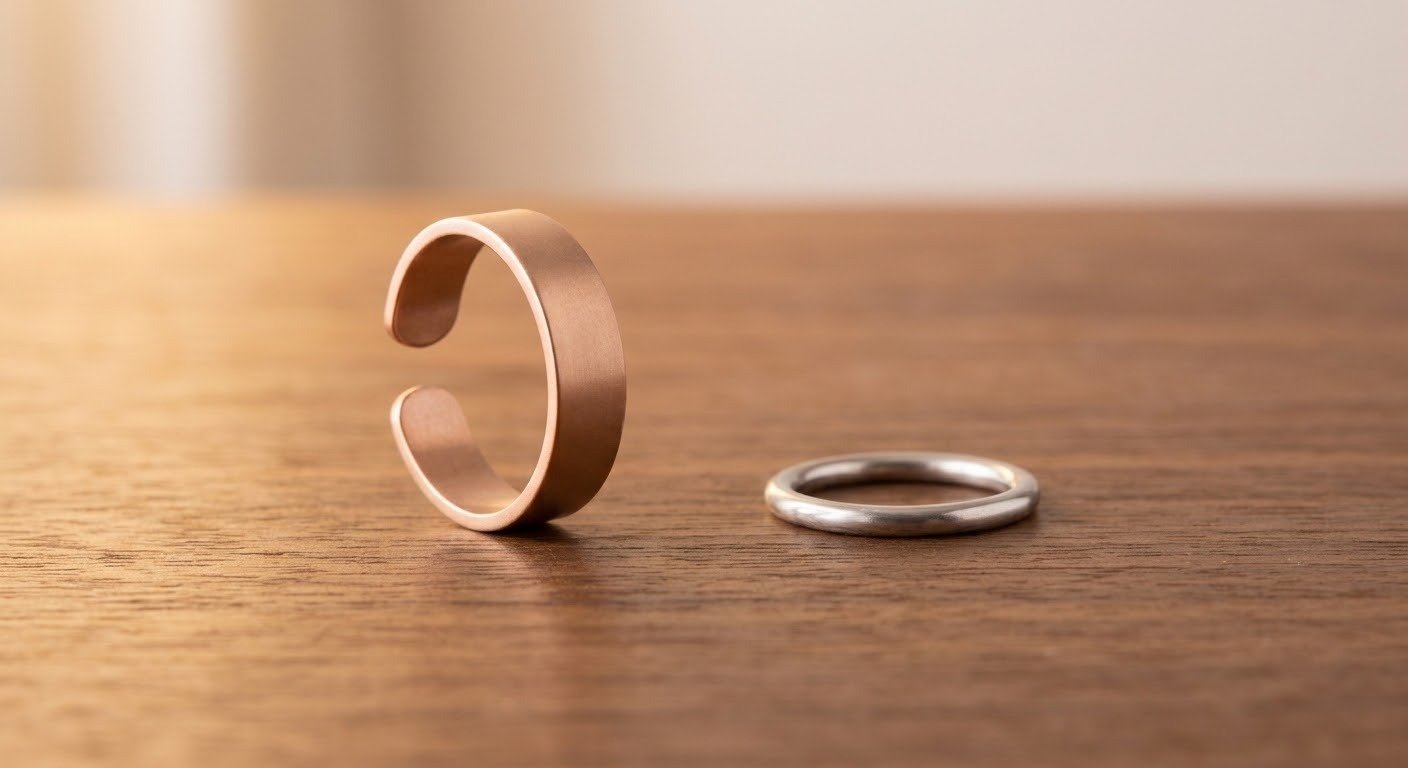
The shape decides where the name sits, how big the lettering can be, and whether you can change it later.
Name stud earrings
A stud sits against the front of the lobe and can carry a full name, an initial, or a short word. It is the least noticeable option and the most comfortable for sleeping, the gym, and shirt collars. Small studs with initials read as ordinary jewelry across a room and personal only up close.
Studs engrave cleanly because the front face gives the cutter a flat target, which is why they carry the longest names. Sellers publish a character limit because long text in a small font gets fuzzy.
Name hoops and huggies
A hoop or huggie wraps the lobe, and the name runs along the curve. Hoops carry bigger lettering than studs, which is why they show up for full names, kids’ names, and script. One hoop is often readable without the other.
Huggies are the close-to-the-lobe version. They carry initials and short names and sit well next to other piercings. The diameter limits the lettering, so a huggie with a seven-letter name looks cramped.
Cuffs and non-pierced options
A cuff clamps around the outer rim of the ear and needs no hole. It is the only version here a man can put on the same afternoon with no appointment. Cuffs slide on and off, so one cuff can cover two piercings.
What you give up is range. Cuffs cannot hold long text or a wraparound name, and the clamp gives less surface to engrave. For a first pair, a cuff is the least committal way to test the idea.
Mixed pairs
One stud and one hoop is a real option, not a compromise. The two sides balance, the eye reads the pair as one design, and it hides the fact that one side always wears first.
Getting the gauge right
Gauge is the most common reason an earring does not fit, and the system confuses everyone at first. The numbers count backwards: a 4g is bigger than an 18g, so the larger the hole, the smaller the number.
The scale came from measuring wire in the British wire industry, where thickness was a fraction of an inch. A sixteenth of an inch became 16g and an eighth became 8g. That is why the same hole gets described three ways on different listings, and why a gauge conversion chart helps while you shop.
Here are the sizes that come up most. Standard piercings are usually 20g or 18g, about 0.8 to 1mm, which is where most name studs and small hoops live.
| Gauge | Diameter | What it usually means |
|---|---|---|
| 20g | 0.8mm | Standard piercing size |
| 18g | 1.0mm | Other common standard piercing size |
| 16g | 1.2mm | Some piercers start here |
| 14g | 1.6mm | Usual first stretch step |
| 12g | 2mm | Noticeably roomy |
| 10g | 2.4mm | Where larger lettering starts to fit |
| 8g | 3mm | Small hoops, wider bands |
| 6g | 4mm | Big hoops and gauges |
| 4g | 5mm | Gauges, thick bands |
| 2g | 6mm | Large gauge wear |
| 0g | 8mm | Near the practical limit |
| 00g | 10mm | Usually the last size before lobes stay open |
Going much past 0g to 00g limits your chance of ever closing back up. Most stretchers advise staying under 2g, because from there most people can still shrink the hole. For a pair you can wear forever, stay at 18g or thinner.
Check the stated gauge first, then check that a gauge is listed at all. Jewelry sold for stretched lobes often skips the number, and that usually means the piece is bigger than you think. If you are unsure of your size, measure a piece you already wear from the inside, or ask your piercer.
Material and skin come before style

Nickel is one of the most common causes of contact allergic dermatitis, and the earlobe is one of the most common places it shows up. It can start at any age, and once it appears it tends to stay. Nickel-free metal is the safe default, and you should be able to confirm that from the listing.
What each common choice is like:
Solid 14K or 18K gold. The longest-lasting option, and it does not tarnish. It carries the highest price and forgives the least when the sizing is wrong.
925 sterling silver. Ninety-two and a half percent pure silver, the balance alloyed for strength, usually hallmarked .925 or STER. The most accessible real precious metal, and it takes an engraved name well. It tarnishes faster than people expect.
Vermeil and gold plated. A thin gold layer over a base metal, and that layer wears through with regular wear. Check the base metal first, especially for anything you sleep in. This is also the category most often labeled nickel-free with nothing behind the claim.
Surgical steel. Durable, affordable, and standard in body jewelry. It still contains trace nickel, so it is no good for a reactive lobe.
Titanium. Light, corrosion resistant, and nickel-free when it is implant grade. Sold mostly as body jewelry, so it shows up in plugs and gauges more than in name hoops.
For daily wear, nickel-free solid gold, implant-grade titanium, or sterling silver from a seller who states the alloy covers almost everyone. Save plated pieces for occasional wear.
How names get cut into metal
Three methods, and the method shapes the finished look.
Laser engraving is the most common. A laser marks the surface without cutting in, so it works on curved surfaces like hoops and huggies and on nearly any metal. Thin script and small fonts reproduce well. Marks read as dark grey or black on silver and can look soft on a high polish.
Machine engraving uses a rotating bit to cut the letters. It produces deeper, cleaner edges that hold up to abrasion and polishing, and most sterling silver name hoops and studs are cut this way. A deep cut into a thin hoop leaves less metal behind it.
Cast or stamped letters means the name was formed separately and attached, or pressed into the metal. Stamping gives a crisp, traditional look at a modest price. Casting lets a seller offer front and back faces, as on danglers.
Before you order, check the character limit and whether the font renders your name cleanly, since script fonts turn capitals into flourishes that are hard to read. Matte hides fine laser lines and high polish shows them.
These pieces are usually made to order and often cannot be returned, so the seller’s spelling is your job. Read the preview three times before you hit order.
What to engrave
Most people land on one of about eight options.
Your own first name. Clean and readable, in script on a hoop or block on a stud.
Your last name. Rarer than a first name, and it reads more grown up. Good for anyone who wants a piece that never dates.
A nickname. Often the most meaningful choice. Nicknames carry the inside joke that made them, so the piece starts a conversation instead of just accessorizing.
A partner’s or a parent’s name. The classic gift engraving, and it lands better with a short note about the reason.
Your kids’ names. Several names, several dates, or initials for each child. Hoops handle this better than studs because of the room.
A date. A wedding date, a birthday, the day a child was born. Roman numerals look good on a minimal silver stud.
Coordinates. Latitude and longitude for a place that matters. The least obvious engraving here, and it reliably produces a “what does that say?” question.
A private reference. A jersey number, a road name, a band, a call sign. These mean something to one person, which is the point.
Whichever you pick, check that the name fits the shape before you fall for the shape. A long name and a small huggie do not work together, and the character limit settles it.
Gifting one without guessing wrong
Personalized jewelry fails as a gift for one reason: the giver guessed at something only the wearer knows. Four questions avoid that.
Ask these: “Do you have pierced ears, and what gauge?” “Do you want your own name, or somebody else’s?” “Metal preference, or do you want me to choose?” “Do you know your gauge number?” That last one matters most, because a wrong gauge is the only mistake that makes a gift unwearable.
Useful occasions: a birthday, a graduation, a new job, a new piercing, an anniversary, and the father’s day card that needs something small. A memorial name on an anniversary or the date of a loss lands better with a handwritten note.
On budget: a solid gold piece is a serious purchase and fine if that is what you want to give. Sterling silver and vermeil cover most gift occasions, and sterling silver is a good default because it reads as real jewelry, holds an engraving well, and costs less than a mistake would.
Two mistakes to avoid. Sizing by the lobe instead of the hole, and engraving a name without confirming the spelling out loud. Both take thirty seconds to fix beforehand and neither can be fixed after.
Caring for engraved earrings
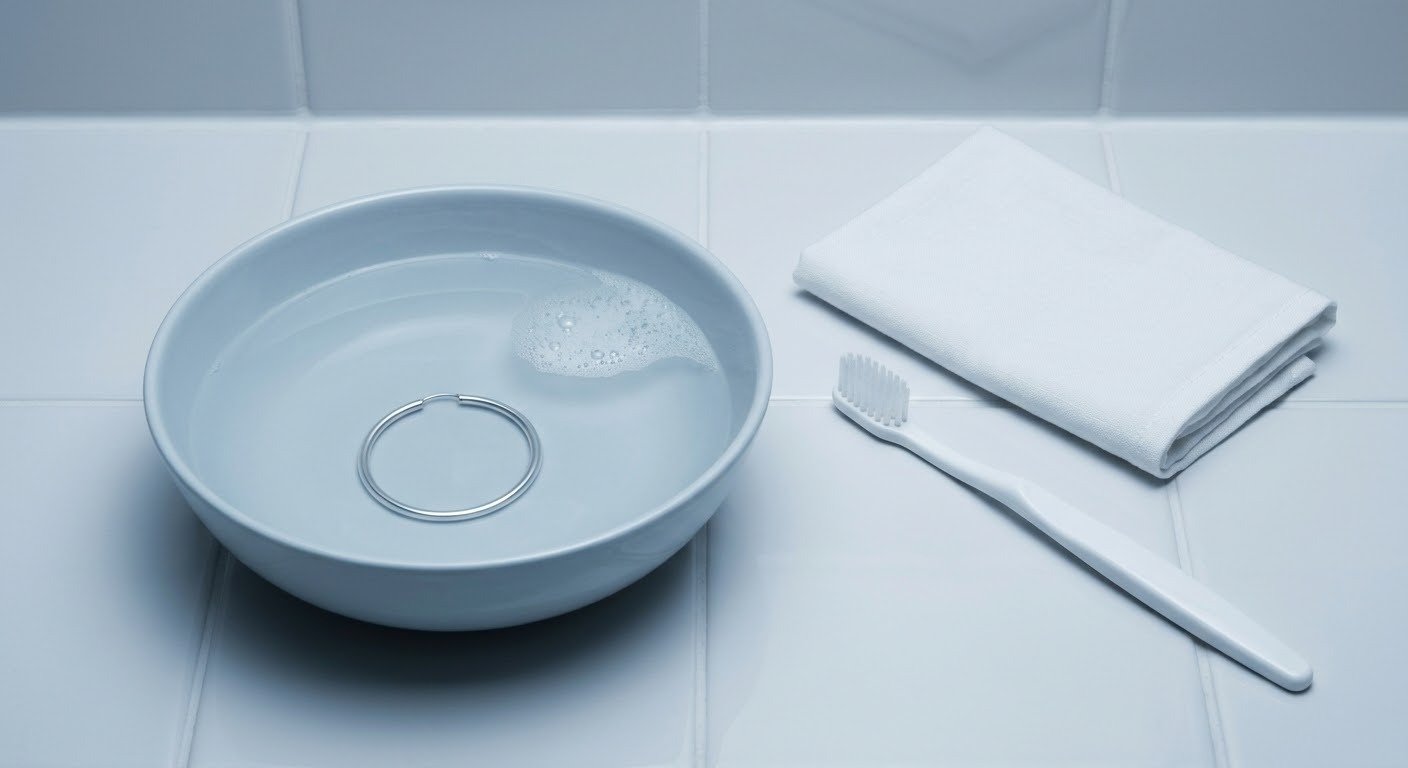
Engraved pieces need more care than plain ones, since cut edges and recesses collect oil and soap.
Clean with lukewarm water and a drop of mild, fragrance-free soap. A soft bristle brush gets into the lettering and around the post. Rinse in cool water and dry with a lint-free cloth. Weekly is enough for daily wear, and that routine is safe for titanium, solid gold, sterling silver, and surgical steel. Keep the soak short for plated pieces.
Take them off before the shower, the gym, and sleep. Keep perfume, hair spray, and lotion off the metal, and put jewelry on after those dry. Store pieces in an airtight bag away from moisture, the biggest cause of tarnish. Sterling silver darkens regardless, so a polishing cloth matters.
If a piercing turns red, itchy, swollen, or starts weeping, take the earrings out. Nickel causes most contact reactions on the lobe, and a jeweler or doctor can tell you whether the piece is the problem.
Frequently asked questions
What is the most popular style of name earrings for men?
A first name on a small hoop, or an initial on a stud. Both read as regular jewelry at a distance, carry the shortest lettering, and fit a standard piercing.
What gauge is best for name earrings?
Standard piercings are usually 20g or 18g, about 0.8 to 1mm, and most name studs and huggies are made for that. Go thicker only if you are already stretched.
Can I get a full name on a small earring?
Yes, on a hoop. Hoops have more surface than studs, and machine engraving cuts letterforms deep enough to stay readable. The seller’s character limit is the real limit.
Is sterling silver or gold better for engraved names?
Sterling silver for the budget and the crisp look. Solid 14K or 18K gold for the long life and no tarnish. Gold plated is the compromise, and the layer wears through.
Are engraved earrings okay for sensitive ears?
Only if the metal is confirmed nickel-free. Solid gold, implant-grade titanium, and nickel-free sterling silver are the safe picks. “Surgical steel” still contains trace nickel, so it does not suit a lobe that already reacts.
How much text fits on one earring?
Enough to read from about a foot away in a font you can parse. Longer text needs a hoop, a larger font, or both.
Can I wear name earrings to work?
Yes, with small studs or close huggies in a plain metal. Keep the lettering to initials or a short name, and expect anyone leaning in to read it.
Where to start
Pick the shape first, because it decides how much text you have to work with. Hoops for anything longer than a nickname, studs and huggies for initials and short names, a cuff if you want no commitment. Then pick a metal you can wear daily without thinking about it, which for most men means nickel-free sterling silver, titanium, or solid gold. Check the gauge against what you already wear, not the size of your lobe. Last, confirm the spelling and the character limit, since engraved pieces rarely come back.
Once the right name is on the right shape in the right metal, the rest is not losing it.