

If you have ever read a horse sale page and paused at “mare,” you are not alone. The word looks simple enough, yet most people first meet the full set of equine terms at the exact moment they need them. That is usually a sale catalogue, a vet’s report, or a barn full of people who already speak the language fluently.
The direct answer is short. An adult female horse is a mare. A young female horse is a filly. The rest of this guide builds outward from those two words. It covers where the age line falls, which terms describe males, and why catalogues use phrases like “dry mare” that mean nothing outside the industry.
In this guide
- The short answer is mare
- Mare or filly: where the age line falls
- Horse terms by sex and age at a glance
- What the male terms mean
- Why pony is a height word, not a sex word
- Reading a sale catalogue without guessing
- Jargon that trips up new horse owners
- Why mare has three meanings in the dictionary
- What to say when you talk about your own horse
- Frequently asked questions
- The takeaway
The short answer is mare
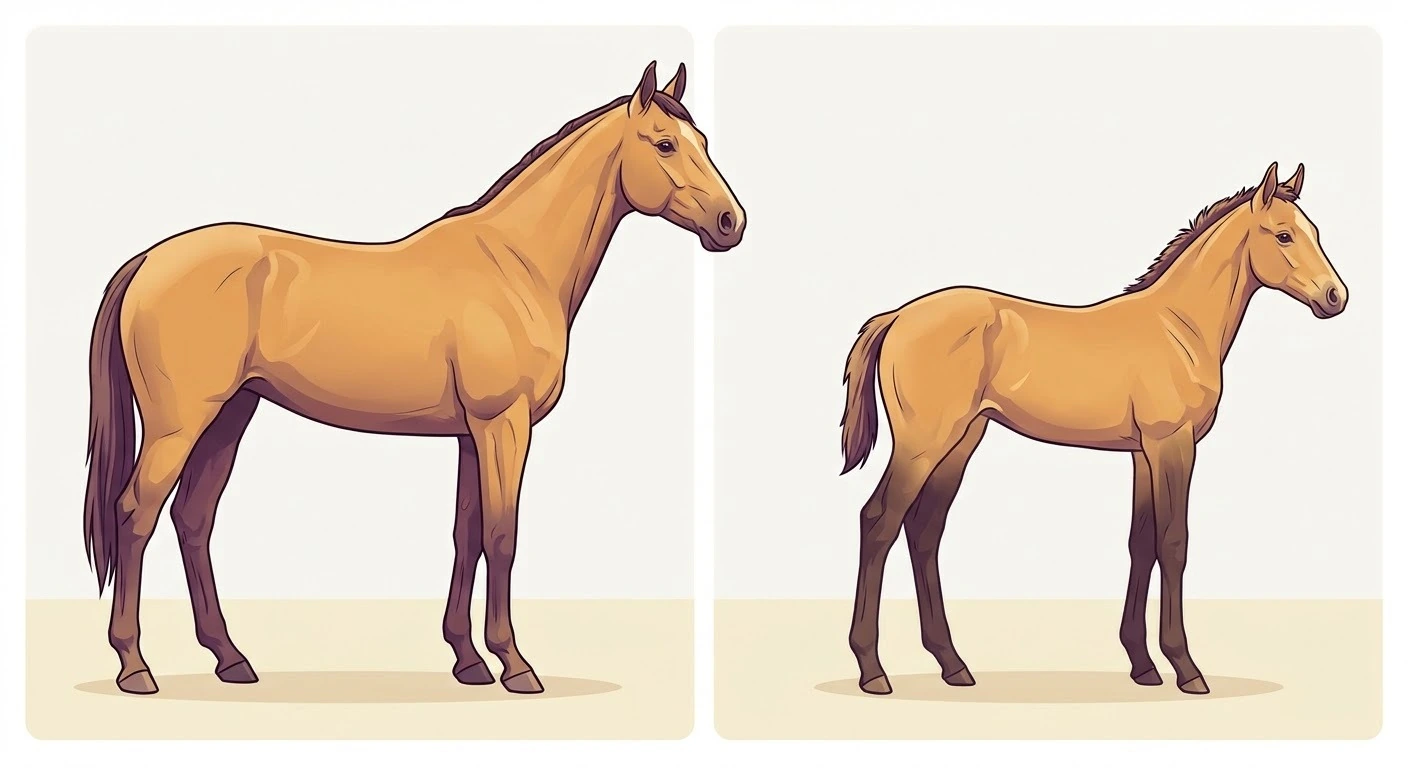
Mare is the general English word for an adult female horse. Merriam-Webster defines it as a female horse or other animal, “especially when fully mature or of breeding age.” The Iowa State University equine glossary puts it more tersely: “Mature female four years or older.”
The word itself is old. Merriam-Webster traces it to Old English mere. The entry carries a gloss reading “a mature female horse,” and dates the sense to before the 12th century. So this is not industry jargon invented to sound technical. It is plain English that happens to be exactly right.
One wrinkle catches people. “Mare” also works for other female animals, such as zebras. A mare can also mean a female mule. But when you are naming a female horse, there is no competing word. Mare is it.
Mare or filly: where the age line falls
Filly is the other half of the answer, and it is the one that causes more confusion. Merriam-Webster calls a filly “a young female horse usually less than four years old.” The word “usually” is doing real work there, because the actual cutoff moves with context.
Most general sources draw the line at three. Iowa State defines a filly as a female horse up to three years of age, then adds that in Thoroughbreds the term may include four-year-olds. Bloodstock and racing sources draw it at four. Inglis, one of Australia’s oldest auction houses, defines a mare as “a female horse 4 years and over.” It defines a filly as “a female horse 3 years and under.” Standardbred Canada uses the same four-year line.
So the honest answer is that the divide sits somewhere between three and four, and the exact year depends on who is speaking. Two explanations account for nearly all of that spread. Registries and racing codes want a fixed, auditable date, so they pick one and apply it everywhere. General riders use filly more loosely, to mean “young and still growing.”
Merriam-Webster’s entry for colt explains the convention nicely. A colt is a young male horse that has not “attained an arbitrarily designated age (such as four years).” Arbitrarily designated is the key phrase. The number is a rule people agreed on, not a birthday the horse marks.
In practice, if someone tells you a horse’s age, you can classify her without much worry. The label matters far less than getting the age right.
Horse terms by sex and age at a glance
This table is the reference most readers end up bookmarking. The first three columns come from Iowa State’s glossary and the Merriam-Webster definitions.
| Term | What it is | Sex | Rough age | Where you hear it |
|---|---|---|---|---|
| Foal | A young equine of either sex | Either | Up to about 1 year | Barns, vets, extension offices |
| Filly | A young female horse | Female | Under 3, sometimes 4 | Everywhere |
| Colt | A young male, not yet gelded | Male | Under 3, sometimes 4 | Barns, sales |
| Mare | A mature female | Female | 4 and over | Everywhere |
| Stallion | An intact adult male | Male | 4 and over | Breeding, racing |
| Entire | A male that is not gelded | Male | Any | Breeding, catalogues |
| Gelding | A castrated male | Male | Any | Everywhere |
| Weanling | Weaned from its dam | Either | Under 1 | Breeding, sales |
| Yearling | The band after year one | Either | 1 to 2 | Sales, racing |
Two rows deserve a note. Weanling and yearling describe age, not sex. A weanling filly and a weanling colt are both weanlings. Iowa State defines a yearling by calendar dates. The band runs from January 1 of the year the horse turns one to January 1 of the year it turns two. That January 1 birthday matters more than you would expect, and it comes back in the catalogue section.
What the male terms mean
You will hear the male terms constantly, so it is worth having them straight even though your question was about females.
A stallion is an uncastrated male horse, and in practice one kept for breeding. A gelding is a castrated male, and the word applies at any age. That last point trips people up. Standardbred Canada’s trainer guide describes a gelding as “a neutered (castrated) male horse of any age.” A two-year-old gelding is still a gelding, not a colt.
Entire is the term for a male that has not been gelded. Iowa State and Inglis both list it as a synonym for uncastrated. You will see it in breeding paperwork and in Australian racing. Inglis uses “horse” itself that way, meaning an entire male of four years or over.
The general lesson is that the female vocabulary is mostly age-based while the male vocabulary is mostly status-based. A female changes label when she turns a certain age. A male changes label when he is altered.
Why pony is a height word, not a sex word
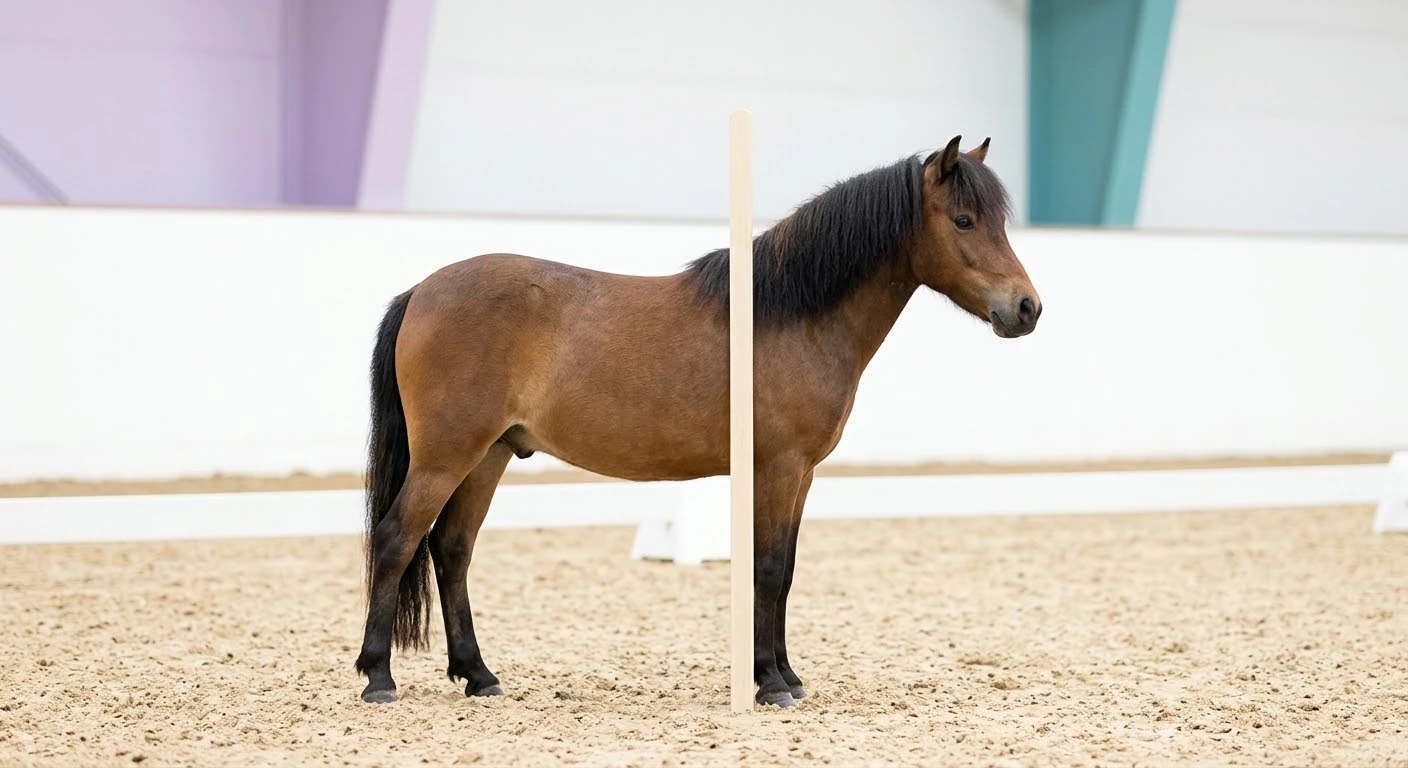
Pony is the term that most often gets filed in the wrong category. It has nothing to do with sex and nothing to do with age.
Iowa State defines a pony as “a small horse, standing 14.1 or 14.2 hands or less.” It adds an important caveat: the height requirement depends on the association. Merriam-Webster keeps it general, calling a pony “a small horse” of very compact breeds. The University of Calgary veterinary program gives 14.2 hands or less. It also explains that a hand is the main unit of height in North America, and that it equals four inches.
So a female pony can be a pony filly and then a pony mare, and she remains a pony the whole time. The word stacks with the sex term rather than replacing it.
The same stacking applies to type and breed words. A cob is a type rather than a breed, per Iowa State: a stocky horse built to carry heavy riders. A Hackney is a breed of compact, high-stepping English horses. A palfrey is simply a riding horse, mostly of historical interest. None of these tell you anything about sex, so none of them replace mare or filly.
Reading a sale catalogue without guessing
Sale catalogues compress this vocabulary into single letters. Standardbred Canada’s trainer guide lists the standard set:
| Code | Means |
|---|---|
| f | filly |
| c | colt |
| g | gelding |
| m | mare |
| h | horse |
| rig | ridgling |
That single-letter code is one of the clearest demonstrations that mare is the standard term. The letter m is doing the same job the word does.
Two catalogue details catch first-time buyers. The yearling band runs on January 1 boundaries, not on the horse’s actual birthday. And a line marked “rig” or “ridgling” flags a reproductive-status question. The abbreviation appears without a definition in the source, so the right move is to ask the seller directly rather than guess.
If you are buying rather than browsing, ask what the catalogue code means in that particular sale. Conventions differ between Thoroughbred, standardbred, and sport horse sales, and the seller will know their own paperwork.
Jargon that trips up new horse owners
A handful of phrases in breeding and racing writing will stop you cold. None of them are general vocabulary.
Broodmare is a mare kept for producing offspring. Inglis defines it as “a filly or mare that has been bred and is used to produce offspring.” Note the first two words. A young female can be a broodmare before she is ever called a mare in casual speech.
In foal means pregnant. Inglis defines it exactly that way, and the phrase appears constantly in sale descriptions. The related word “dam” means the mother of a horse, and “sire” means the father. You will see pedigree descriptions written as “by stallion out of mare,” where “out of” refers to the dam.
Dry mare is the phrase that confuses people most. In professional breeding writing it describes a mare who is not pregnant and not nursing a foal. Oklahoma State University Extension pairs the terms directly, noting that artificial lighting helps “dry or open mares” cycle earlier. Open is the near-synonym in that same field. Worth knowing: this word is standard in the trade but poorly defined in reference sources, so you will not find it in a dictionary.
Maiden in a racing context means a horse that has never won. Standardbred Canada defines it as a horse that has never won a heat or race at the gait it is entered in. It describes a record, not a sex.
A useful test for any equine term you do not know: ask whether it describes sex, age, size, reproductive status, or racing record. Every confusing word lands in one of those five buckets.
Why mare has three meanings in the dictionary
If you look mare up and get results about oceans or about nightmares, nothing is wrong. The word is genuinely three separate words.
Merriam-Webster lists all three senses. The first is the female horse, from Old English, in use before the 12th century. The second comes from New Latin and from the Latin word for sea, first recorded in 1860. The third is a nocturnal malevolent spirit, also old, and its relatives include words for a nightmare witch in several European languages.
The entry also notes that the oldest form of the equine word was the feminine form of the language’s word for horse. That explains the plainness of it. We are not choosing a technical term because it sounds precise. We are using the word English already had.
What to say when you talk about your own horse
Here is a short set of habits that will keep you from sounding unsure.
Lead with age, then sex. “She is a six-year-old mare” is unambiguous. Once the age is past four, the word mare is safe in ordinary conversation.
Use filly only while she is genuinely young, and expect a sale barn to use it loosely. If you are describing a horse to a seller or vet, give the age and let them apply the label.
Do not use pony, cob, or a breed name as a substitute for a sex term. You can say “a gray mare,” “a palomino mare,” or “a pony mare,” and all three are correct.
Keep the jargon out of general conversation. “My mare is dry” is standard among breeders and will puzzle everyone else. “My mare is not pregnant and has no foal nursing” says the same thing.
And when you read a catalogue, remember what the letters mean. Most confusion in an equine transaction traces back to a single abbreviation that nobody explained.
Frequently asked questions
What do you call a female horse?
An adult female horse is a mare. A female horse younger than about three or four is a filly. The dictionary definition covers a female horse that is fully mature or of breeding age.
Is a mare a horse or a pony?
Both words describe horses, and a mare can be either. Pony refers to size and breed type, usually a height of 14.2 hands or less. A female pony can be a filly or a mare.
What is the difference between a mare and a filly?
It is age, and the exact cutoff depends on context. General sources say three years. Racing and bloodstock sources usually say four. Merriam-Webster says “usually less than four years old.”
Can a gelding be a mare?
No. A gelding is a castrated male horse, so the terms never overlap. A male is a colt while young, then a stallion if left intact, or a gelding if castrated.
What does “dry mare” mean?
It means a mare who is not pregnant and not nursing a foal. The phrase is standard in breeding and sales writing, where it often appears next to “open mare.” It is not a dictionary word.
What does “in foal” mean?
It means pregnant. Inglis and other bloodstock sources use the term this way. A mare who is pregnant is “in foal,” and a mare with a foal due is often described as “foaling down” or “to foal.”
Is a mare always a mother?
No. A broodmare is a mare kept specifically to produce offspring, so she is a mother. A mare bought for riding, competing, or companionship may never have a foal at all.
What does the letter m mean in a horse sale catalogue?
It means mare. Sale catalogues use single letters for sex. The code is f for filly, c for colt, g for gelding, m for mare, and h for an intact adult male.
The takeaway
A female horse is a mare once she is an adult, and a filly before that. Everything else worth knowing follows from one habit: sort any equine term by whether it describes sex, age, size, reproductive status, or racing record. That single question resolves mare versus filly, explains why pony stacks with both, and makes terms like dry mare and in foal stop being strange.
The next time you read a sale page, find the letter code and the age first. Those two tell you everything else.